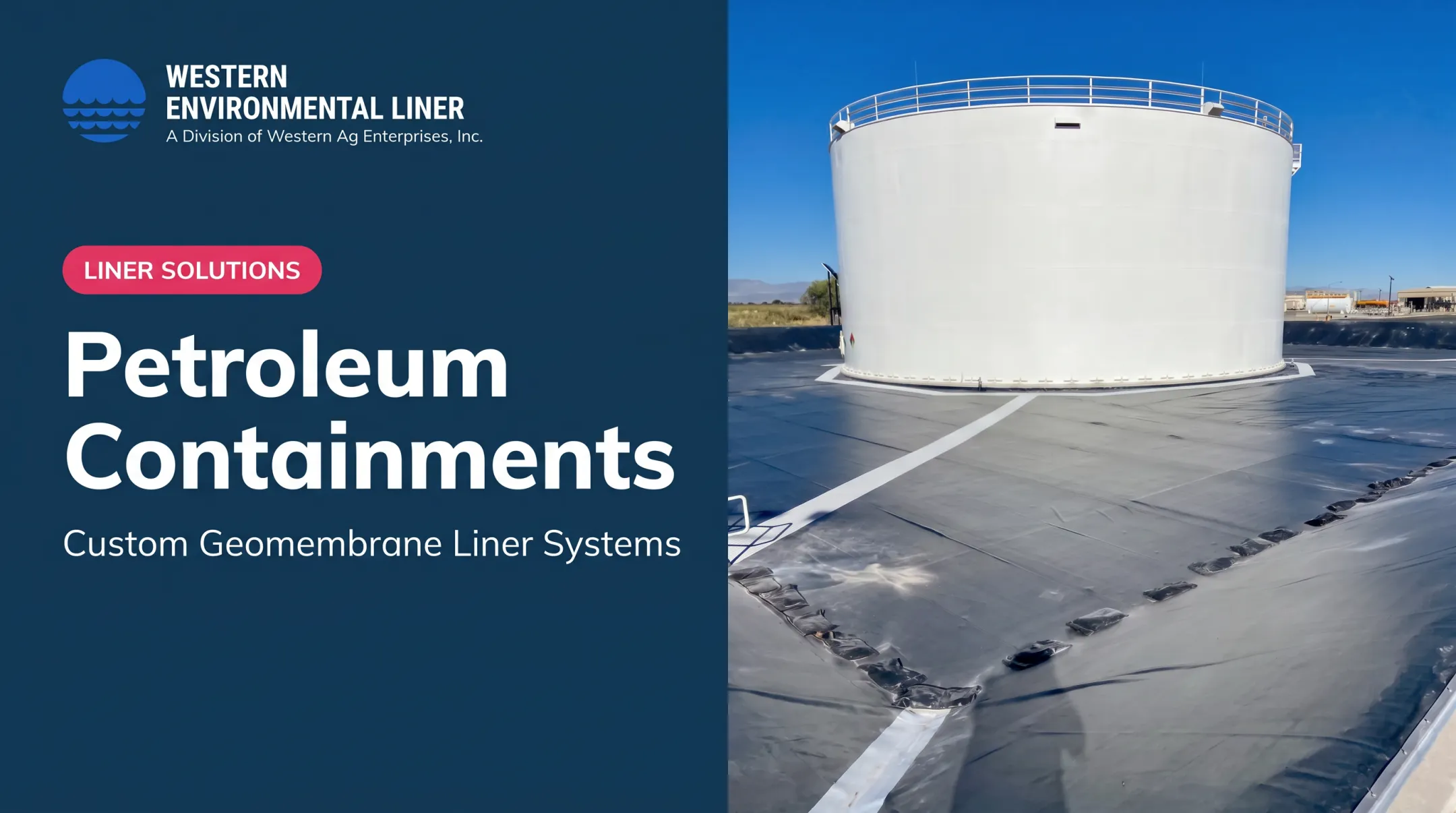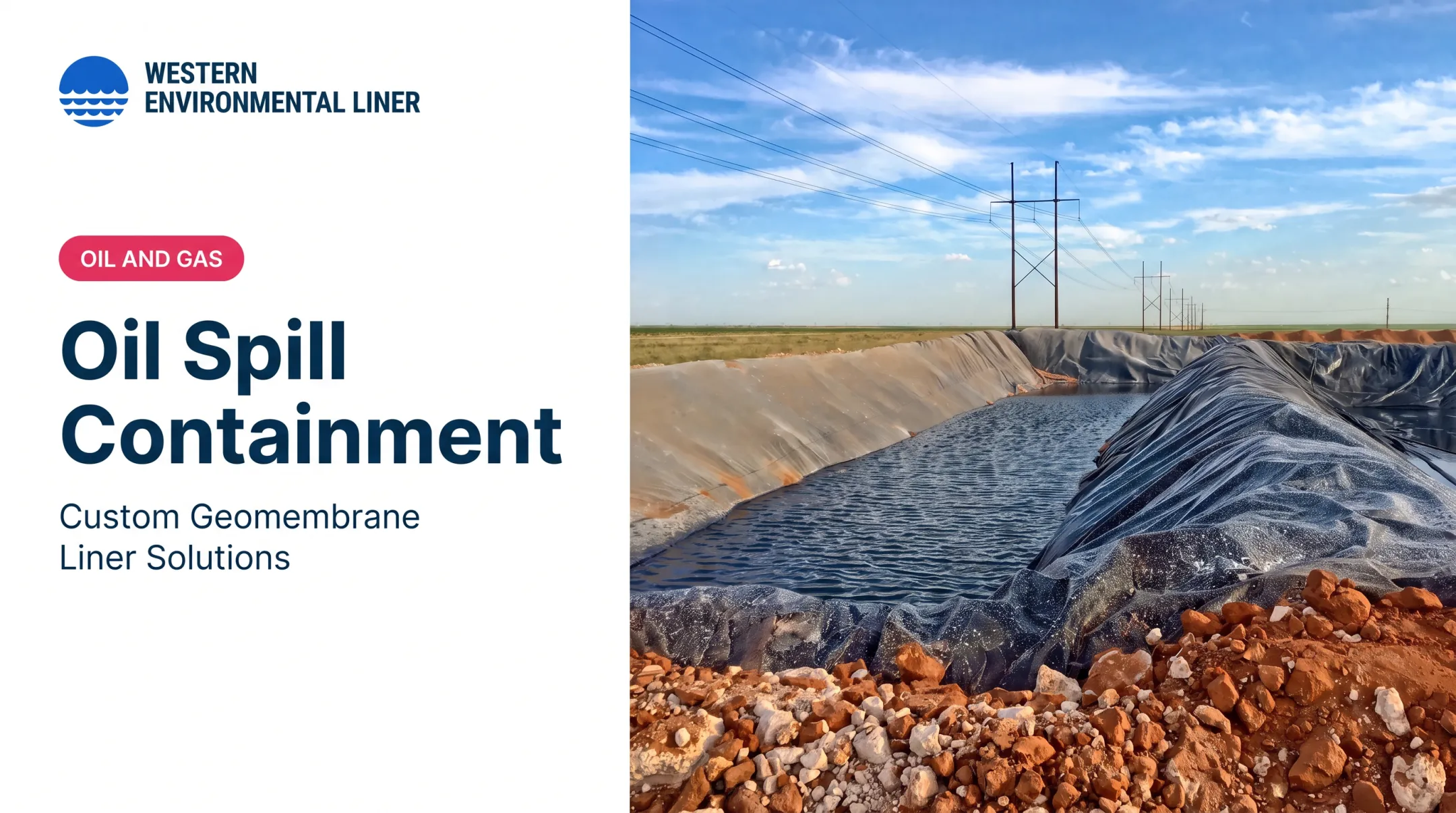

Secondary oil containment is the engineered backup that captures oil escaping from the transformer's tank or attached components before it reaches soil, stormwater, groundwater, or surface water.
This guide covers release risks, US regulatory considerations, containment types, design factors, maintenance, and how to evaluate a liner-based solution.
Key Takeaways
- Secondary containment limits environmental damage and supports compliance after a leak or failure.
- EPA SPCC, OSHA, fire, stormwater, state, and local rules each cover different issues.
- Oil volume, rainfall, soil, drainage, fire risk, and access drive system selection.
- Concrete, berms, liners, drainage, filtration, and hybrids can be combined per site.
What Transformer Secondary Oil Containment Does and Why It Matters
An oil-immersed transformer surrounds its internal components with insulating liquid. According to the DOE's resilience report, that liquid provides cooling and electrical insulation. The fluid may be mineral oil, natural ester, or synthetic ester.
Primary vs. secondary containment
Primary containment is the transformer tank, radiators, valves, and gaskets. Secondary containment is what catches a release when those fail: a concrete pit or vault, berm, wall, or liner system.
How releases happen
- Gasket deterioration and valve leaks
- Radiator or bushing leaks and corrosion
- Internal faults that overpressure and rupture the tank
- Mechanical impact, vandalism, or maintenance errors
When those failures occur, oil volume at risk varies widely. Eaton's catalog lists 50 gallons for a 45 kVA pad-mount unit and 255 gallons for 750 kVA. A 2,500 kVA oil-cooled unit from Larson holds about 530 gallons. Large substation units hold far more.
What an uncontrolled release costs
An uncontrolled release can lead to:
- Soil and groundwater contamination
- Stormwater pollution and fire exposure
- Outages, cleanup costs, and regulatory penalties
After a 1998 explosion at Allegheny Power's Belmont substation released 19,000 gallons into tributaries of Cow Creek, EPA's settlement notice reported roughly $450,000 in cleanup, plus a separate $252,000 penalty.
Containment is not fire protection
A basin or liner controls where fluid goes. Firewalls, separation distances, fire-quenching stone, detection, and suppression control fire behavior. FM Data Sheet 5-4 describes burning oil pools after tank rupture and addresses them through separation and barriers, not containment alone.
Gravel can quench fire without providing compliant oil containment. Design both functions together, and confirm requirements with the fire marshal or insurer.
US Compliance: EPA SPCC, OSHA, and Other Requirements
EPA SPCC under 40 CFR Part 112
SPCC generally applies to nontransportation-related facilities that could reasonably discharge harmful quantities of oil to navigable waters or adjoining shorelines and have aggregate aboveground oil capacity over 1,320 gallons. Containers of 55 gallons or more count. Oil includes mineral, synthetic, and vegetable oils, so esters are not exempt.
For transformers, SPCC treats oil-filled equipment differently:
- Section 112.2 classifies transformers as oil-filled operational equipment, not bulk storage containers.
- Section 112.7(c) requires containment addressing the typical failure mode and most likely discharge quantity. No universal 110% transformer formula appears there.
- Largest-container-plus-freeboard sizing under 112.8(c)(2) applies to bulk storage, not automatically to operating transformers.
- Section 112.7(k) offers an alternative: inspection and monitoring, a contingency plan, and written commitment of personnel, equipment, and materials. Eligibility depends on a clean three-year discharge history.
Plans typically document:
- Oil volumes and containment capacity
- Precipitation management and drainage controls
- Inspections, training, response equipment, and records
Keep inspection records for three years. Review the plan at least every five years; a professional engineer generally certifies it. Confirm current requirements in 40 CFR 112 and EPA's 2013 inspector guidance.

What OSHA covers
OSHA addresses worker protection, not transformer containment volume. Relevant provisions include:
- 1910.269 (power generation, transmission, and distribution work)
- 1910.120 (emergency response)
- 1910.38 (emergency action plans)
- 1910.1200 (hazard communication)
None of these sets a gallon capacity or percentage for secondary containment.
Other authorities
- Clean Water Act reporting: a sheen can be a harmful discharge. Call the National Response Center at 800-424-8802 immediately.
- NPDES stormwater permits set sector- and site-specific limits.
- State agencies, such as Washington Ecology's 90-day reporting rule for oil spills to ground.
- Fire marshals, building officials, and local code adoption, including IFC and NFPA 70 Article 450.
- Utility standards and the authority having jurisdiction.
Compliance checklist
- Confirm SPCC applicability using current EPA sources.
- Get qualified engineering review.
- Document inspections and training.
- Align the design with the emergency response plan.
Types and Design Considerations for Transformer Oil Containment
Common approaches
Concrete pits, moats, vaults, and walls are durable and familiar, but need structural design, space, and drain details. Retrofits can be disruptive. Penetrations and cracks need inspection.
Berms with geomembrane liners use a low-permeability liner to stop oil migrating into the ground. Success depends on subgrade preparation, puncture protection, anchoring, seams, penetrations, and fluid compatibility.
Hybrid systems combine liners with berms, walls, stone, sumps, separators, pumps, or filters. For example, the Bonneville Power Administration's 2012 Santiam project used an impermeable liner, three separator vaults, and manual shutoff. Avista has contrasted a lined below-grade basin with a concrete moat in its own lifecycle analysis.
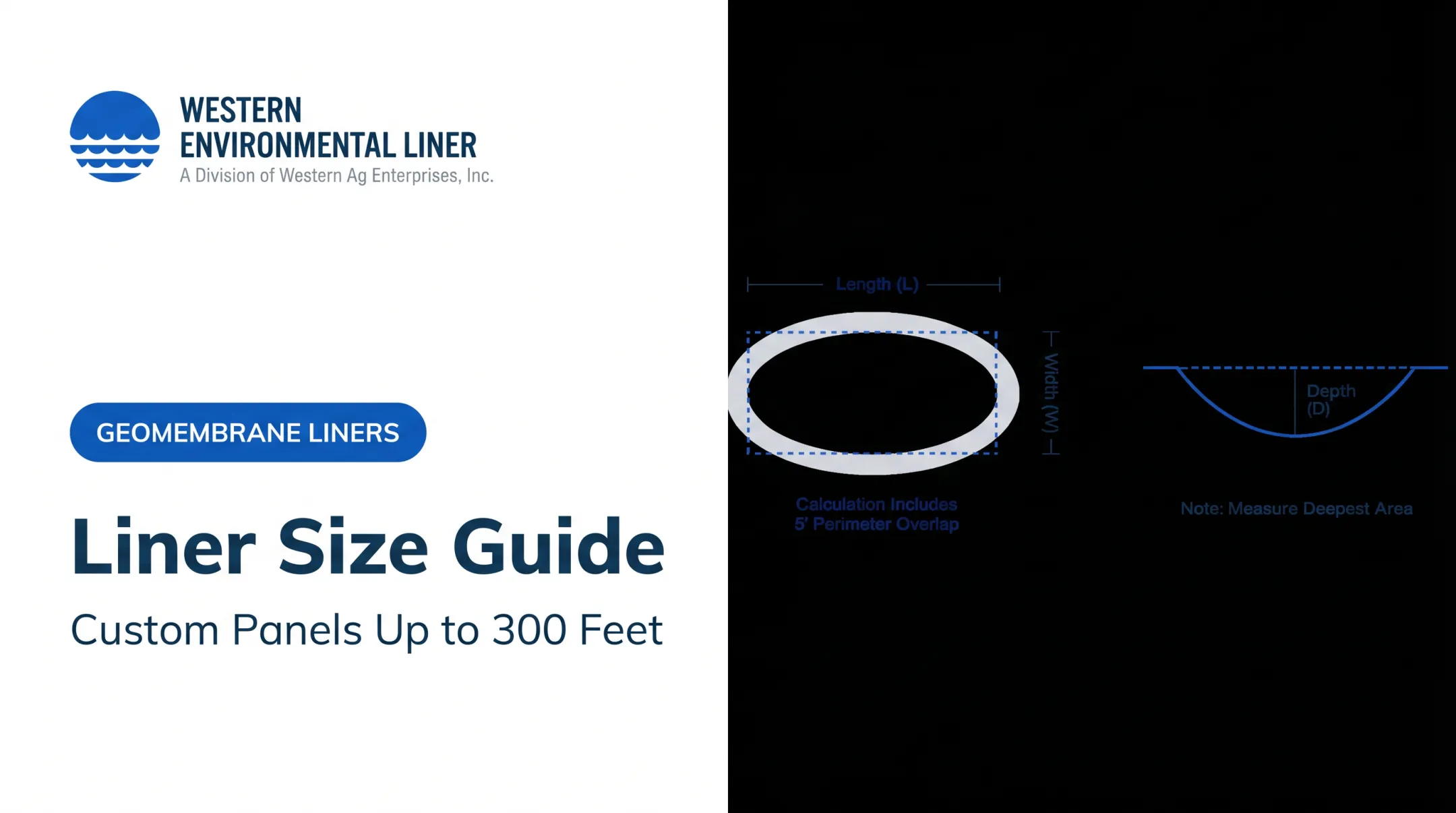
Western Environmental Liner fabricates custom geomembrane liners with factory-welded panels up to 300' x 300', plus turnkey installation support. It does not perform earthwork or engineering design, so the project engineer still owns the subgrade and containment design.
Liner material compatibility
Not every liner suits oil. Standard PVC and polyethylene are not recommended for long-term hydrocarbon containment. Titan's 2024 chart rates generic transformer oil A for HDPE and C for PVC, but that rating does not extend automatically to ester fluids.
XR-5 is rated A for transformer oil after 28-day room-temperature immersion testing. Those results are guidance only, so confirm suitability with your specific fluid. Consult ASTM D5322 and D5747 for immersion testing.

Drainage, rain, and fire coordination
Rain, snowmelt, and runoff eat into containment capacity. Options for handling them:
- Manual valves, which are simple but need disciplined operation
- Oil-sensing pumps that move water, not oil
- Oil-water separators
- Passive filters, such as Petro-Pit units tested at under 0.1 mg/L on new mineral-oil filters (product test only, not a permit)
Your discharge permit controls what leaves the site. Coordinate drainage with firewalls, spacing, fire-quenching stone, suppression, emergency access, and the manufacturer's requirements. Gravel drainage must not become a conduit to surface water.
Choosing a system
Weigh these factors:
- Oil volume, number of units, and fluid type
- Failure scenarios
- Soil permeability and groundwater sensitivity
- Rainfall, footprint, and access roads
- Underground utilities and grounding grids
- Future expansion
Count lifecycle cost, not purchase price. Include:
- Excavation and structural work
- Liner fabrication and installation
- Drainage parts and separator maintenance
- Filter replacement, inspections, and repairs
- Spill-response readiness
No transferable installed-price benchmark exists, so get site-specific quotes.
Installation, Inspection, and Spill Response
Preconstruction
- Confirm transformer dimensions and fluid volume.
- Survey grades and drainage.
- Investigate soil and groundwater.
- Locate utilities and grounding components.
- Set design elevations.
- Obtain engineering and authority approvals.

Installation quality controls
Focus quality controls on these details:
- Subgrade preparation and puncture protection
- Anchoring and wall transitions
- Sump details and drainage connections
- As-built documentation
Custom pipe boots seal pipe penetrations through the liner.
Seams matter most. ASTM D6392 covers destructive seam testing, and ASTM D7006 covers nondestructive ultrasonic examination. They are not interchangeable.
Factory-welded panels reduce field seams. IAGI certification speaks to installer qualification, not project acceptance. Western Environmental Liner offers nationwide installation support and IAGI-certified installation, working alongside your engineer and regulator.
Inspection and maintenance
During routine checks, look for:
- Cracks, settlement, and erosion
- Punctures and exposed liner
- Blocked drains and failed valves
- Damaged filters
- Oil sheen and standing water
- Changes to transformer equipment
Tie these checks to your SPCC plan's written procedures and keep signed records.
Spill response
- Protect personnel.
- Isolate the release when safe.
- Keep oil from drains and waterways.
- Notify the National Response Center immediately if the discharge is harmful, and other required parties.
- Document the event and recover contaminated material.
A single discharge over 1,000 gallons, or two over 42 gallons each within 12 months, also requires information to EPA's Regional Administrator within 60 days. Follow your approved emergency procedures.
Frequently Asked Questions
What is an oil-immersed transformer?
An oil-immersed transformer uses insulating fluid, usually mineral oil or another approved transformer fluid, to carry heat away from internal components and provide dielectric insulation.
What is a transformer fire extinguishing system?
A transformer fire extinguishing system includes detection, suppression, firewalls, and fire-quenching media that limit fire exposure. Secondary containment controls oil movement. Check the applicable fire code, utility standard, or authority having jurisdiction.
Do transformers require secondary containment?
Requirements depend on oil quantity, discharge potential, ownership, site conditions, and federal, state, local, and utility rules. Confirm current EPA SPCC and site-specific requirements.
What are the types of secondary containment for transformer oil?
Common options are concrete pits or vaults, berms, geomembrane liners, and hybrids with sumps, controlled drainage, separators, passive filters, or oil-sensing pumps. The right mix depends on the site.
What is the OSHA requirement for secondary containment?
OSHA focuses on worker protection, including electrical safety, emergency response, and hazard communication. The cited provisions set no containment volume, which comes from EPA and local rules.
What are the EPA oil containment requirements for transformers?
Evaluate SPCC applicability, aggregate oil capacity, and discharge potential. Transformers fall under oil-filled operational equipment, which allows general containment or the 112.7(k) alternative, plus inspections, training, and records.