
Most people get tripped up by the terminology. Some sources say "solar pond" to describe a salinity-gradient system that stores heat. A solar evaporation pond does something different: it evaporates water and keeps the salts and other dissolved solids behind.
This guide covers how the ponds work, what they're used for, how to design and line them, and what to watch for environmentally.
Key Takeaways
- Performance depends on climate, pond geometry, water chemistry, and containment design together.
- Evaporation removes water but leaves salts, minerals, and many contaminants behind, more concentrated.
- A suitable liner, stable subgrade, and monitoring plan protect groundwater and soil.
- Local weather data and a site water balance beat any universal evaporation rate.
What Is a Solar Evaporation Pond?
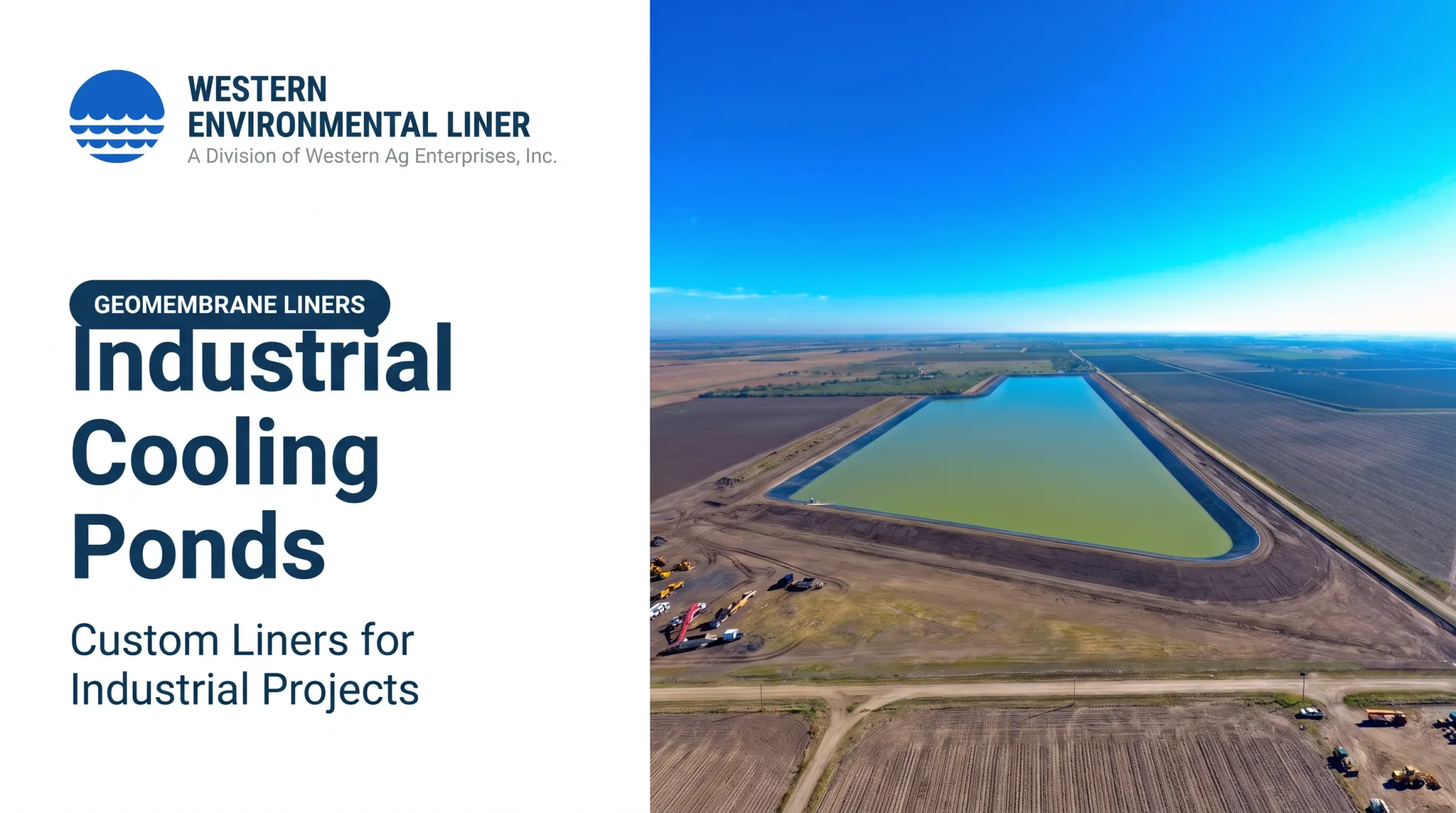
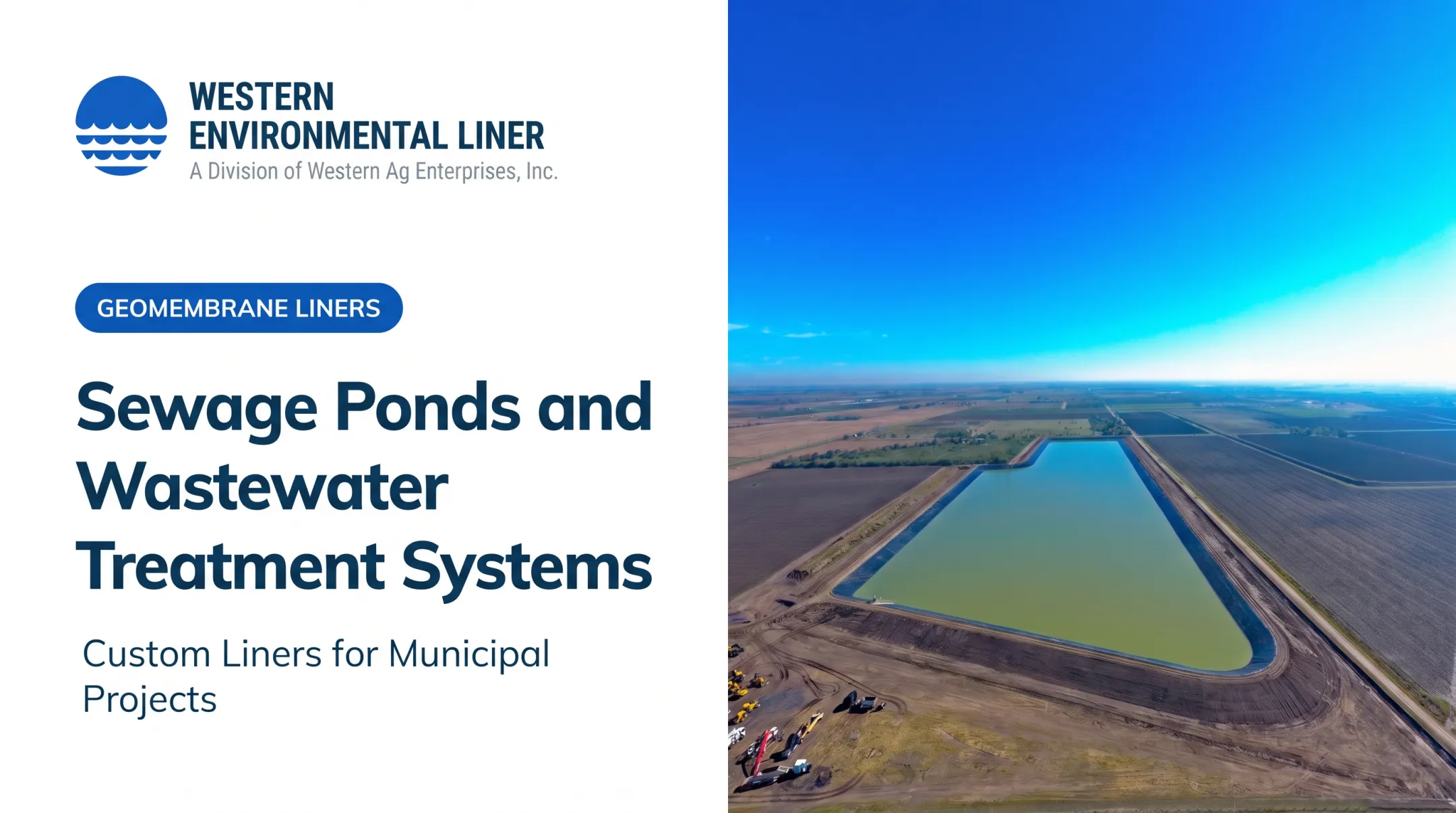
A solar evaporation pond is a shallow, engineered basin that uses solar energy, heat, wind, and exposed surface area to evaporate water. Dissolved solids and concentrated residuals stay in the basin. One 2013 conference paper describes the result as sludge or concentrated slurry.
The Water Balance
Not all water loss is evaporation. A proper balance tracks:
- Incoming liquid
- Precipitation and runoff
- Evaporation
- Seepage
- Withdrawals and transfers
- Change in storage
EPA's pond design handbook sizes complete-retention systems to evaporate annual wastewater input plus precipitation. It calls for monthly climate data and consideration of wet years and low-evaporation conditions.
Solar Evaporation Pond vs. Solar Thermal Pond
The two systems share a name and little else.
| Term | Purpose |
|---|---|
| Solar evaporation pond | Removes water from wastewater or brine; concentrated liquid and solids remain |
| Salinity-gradient solar pond | Stores solar heat in a dense lower layer; the salt gradient suppresses convection |
| Solar salt works | Connected ponds that evaporate and crystallize salt for production |
Use "solar thermal pond" or "salinity-gradient solar pond" when the topic is heat extraction or power generation. Don't treat it as interchangeable with a wastewater evaporation pond.
A salt evaporation pond is a related application aimed at recovering salt and minerals. Not every evaporation pond makes a saleable product, though.
An evaporation pond is also one component of a larger system. It doesn't replace pretreatment, discharge controls, mechanical evaporation, crystallization, or regulatory compliance.
How Does a Solar Evaporation Pond Work?
Solar evaporation ponds use sunlight to drive a simple phase change. Liquid water gains enough energy to become vapor and leave the surface, while dissolved salts and other nonvolatile materials stay behind.
Broad, shallow surfaces speed that process. Shading, high humidity, rainfall, and still air slow it down.
Factors That Influence Evaporation Rate
- Solar radiation: supplies the energy; cloud cover reduces it
- Temperature: warmer water loses molecules to the air faster
- Humidity: moister air reduces evaporation potential
- Wind: removes and replaces humid air over the surface
- Salinity: higher salinity lowers evaporation, and Texas Water Development Board methods apply a correction
- Depth: the TWDB study finds rate isn't greatly affected by depth, though very shallow operation can expose and dry liners
There's no single "normal" rate. New Mexico State University reports Class A pan evaporation from near 56 inches a year in northern mountains to more than 110 inches in southeastern valleys. Pan readings aren't the same as net brine evaporation, so design estimates need local weather records, precipitation data, and a site-specific water-balance model.
Sequential Pond Operation
Multi-cell layouts can feed incoming liquid into one pond, concentrate brine in later cells, and finish with solids or salt recovery where appropriate. Series, parallel, and reserve cells serve different purposes, so don't assume one universal sequence.

Operational controls include:
- Maintaining freeboard (New Mexico requires 3 feet at covered ponds; Texas general permit WQG100000 requires at least 2 feet above normal operating level)
- Managing inflow rates
- Characterizing and planning disposal before removing accumulated solids
- Keeping concentrated residuals from overtopping or touching unprotected soil
What Are Solar Evaporation Ponds Used For?
Solar evaporation ponds reduce liquid volume with sun and wind instead of mechanical treatment. Suitability depends on climate, land, liquid composition, groundwater protection rules, wildlife controls, and permits.
- Mining and industrial: Brine concentration, mineral recovery, and difficult-to-discharge streams. A proposed uranium mill design in Utah included 10 cells, each 300 by 600 feet.
- Municipal and desalination: reverse-osmosis concentrate management. Gila Bend and Chandler, Arizona, have used evaporation ponds for this, according to a Bureau of Reclamation study.
- Oil and gas: produced-water management, though California's pond program covers storage and disposal impoundments more broadly.
- Agricultural and commercial: permitted uses only, and distinct from irrigation reservoirs, stormwater retention ponds, and ordinary storage ponds.
Brine ponds were traditionally used for salt harvesting, and they expanded alongside natural gas development.
How Are Solar Evaporation Ponds Designed and Lined?
Site Selection and Geometry
Start with climate, seasonal evaporation, rainfall, flood risk, groundwater, land, access, prevailing winds, and expected volume. Geometry then balances evaporation against construction cost, land use, embankment stability, freeboard, maintenance access, and safe handling of residuals.
Containment Options
- Compacted clay
- Geomembranes
- Composite systems
- Underlayments and drainage layers
- Double liners with leak detection where risk or chemistry warrants
Requirements vary by jurisdiction. Texas WQG100000 requires a liner and allows clay or a synthetic membrane. New Mexico requires primary and secondary liners with leak detection at covered facilities, using 30-mil flexible PVC or 60-mil HDPE or an approved equivalent. A California order for Cambria specified two 60-mil HDPE layers plus a geosynthetic clay liner. That's one project's permit, not a national minimum.

Selecting and Specifying a Geomembrane
Judge liners on:
- Chemical compatibility (EPA Method 9090A uses immersion tests of at least 120 days)
- Temperature range and UV exposure
- Puncture and tear resistance
- Settlement and slope conditions
- Seam performance
- Design life
Thickness or price alone is the wrong test. GRI GM13 covers HDPE manufacturing quality control, and GM17 covers LLDPE.
Western Environmental Liner is a custom geomembrane manufacturer and installer for large containment projects. It offers factory-fabricated panels up to 300' x 300', one-piece liners up to 150,000 square feet, on-site installation, and technical support for anchoring, slopes, and subgrade preparation. Its brine pond liners are made to resist high salinity and chemical exposure. Earthwork and subgrade engineering are outside its scope. Verify any capability, panel size, certification, or warranty against current project specifications, and don't let it replace an engineer's compatibility review.
Installation and Quality Control
Good installation starts with the subgrade. Bureau of Reclamation guidance calls for firm ground free of sharp rocks, debris, and standing water, plus secure anchor trenches.
- Prepare a smooth, dry subgrade and remove sharp objects
- Add geotextile protection where needed
- Anchor the liner in trenches
- Test field seams, both nondestructively and in the lab
- Seal penetrations with tested details such as pipe boots
- Document QA/CQA
Leak location methods include ASTM D6747, D7002 (exposed liners), and D7007 (liners covered by water or earth). California's Blythe Energy order requires weekly leachate-sump monitoring and quarterly vadose-zone monitoring. None of this guarantees a leak-proof liner, but it catches problems early.
Benefits, Limitations, and Environmental Considerations
Benefits
- Low-energy natural evaporation
- Relatively simple operation
- Concentrates salts and brines
- Fits into wider wastewater or industrial systems
Limitations
- Large land needs and liner costs
- Weather dependence, with slower performance in cool or wet periods
- Accumulating residuals
- Odors from decomposing solids on exposed slopes when organics are present
- Difficulty managing fluctuating liquid volumes
Environmental Protection
Two real-world cases show separate risks.
A 2023 Department of Energy assessment of the Shiprock, New Mexico, pond found degrading liner material and multiple penetrations. Repairs in early 2022 restored function, but further deterioration was expected. That's an aging case, not proven groundwater contamination.
At Kesterson, California, USGS found selenium in biota averaging about 100 times the level at a nearby reference site. USGS said it may explain dead and deformed bird embryos.

The Fish and Wildlife Service notes birds can mistake produced-water ponds for safe wetlands. It recommends exclusion without entanglement, though netting large ponds is hard to maintain.
Other protective measures include:
- Leak detection and groundwater monitoring
- Stormwater controls and emergency capacity
- Permit compliance
Evaporation doesn't destroy dissolved contaminants. It concentrates them, so residual solids and brine need a documented management, recovery, or disposal plan.
Conclusion: Planning a Solar Evaporation Pond
Success comes down to matching the application to the climate, building an accurate water balance, and controlling what's left after the water leaves. Bring environmental, civil, and geosynthetic professionals in early so geometry, liner system, monitoring, and permits are coordinated before construction.
Frequently Asked Questions
How much evaporation is normal for a pond?
It varies with temperature, sunlight, humidity, wind, rainfall, surface area, depth, and water chemistry. Local data is needed for a reliable estimate.
What is a salt evaporation pond?
A shallow pond that evaporates water from saltwater or brine, so salt and other minerals become concentrated or can be recovered.
What is solar evaporation?
It's the use of sunlight and atmospheric conditions to turn surface water into vapor, leaving many dissolved solids behind.
What is an evaporation pond?
An engineered basin that uses natural evaporation to reduce liquid volume or concentrate wastewater, brine, salts, minerals, or other dissolved materials.
Does evaporated water always come back?
It rejoins the water cycle, but may fall as precipitation far away and at a different time. Dissolved contaminants generally stay behind.