
Introduction
A cracked hose fitting or a failed tank weld can put petroleum into soil, groundwater, storm drains, and nearby waterways in minutes. The cleanup can last decades.
USGS has tracked oil from the 1979 Bemidji pipeline spill of about 450,000 gallons, and subsurface oil remained long after most of the product was recovered.
Petroleum containment is the combination of physical barriers, collection areas, monitoring, and response measures that keep petroleum products inside a controlled area.
This guide covers containment types, liner materials, design factors, U.S. compliance, installation, and maintenance.
Key Takeaways
- Containment is a full system: berms, liners, sumps, drainage, monitoring, and response gear.
- Product, volume, climate, soil, and regulations decide the right design.
- Factory-fabricated liners reduce field seams.
- Inspections, records, and prompt repairs matter after installation.
What Is Petroleum Containment?
Primary containment is the tank, drum, vessel, pipeline, or equipment that holds the petroleum. Secondary containment is the surrounding system that captures a release if the primary fails. EPA guidance describes it as a way to contain oil temporarily until cleanup occurs.
Main Components
- Berms or dikes
- Impermeable geomembrane liners
- Drainage or collection points and sumps
- Monitoring equipment
- Spill-response supplies
Localized vs. Large-Scale Containment
Localized containment covers tank and dispenser sumps. Larger systems include lined tank farms, oilfield pads, pits, lagoons, and containment basins.
How the system works matters as much as its size. Passive barriers hold product without anyone acting. Active tools such as sensors, sorbents, and booms detect a release and help you respond quickly.
The strongest sites use both.

Petroleum Containment Types and Applications
Tank Farms, Aboveground Tanks, and Drum Storage
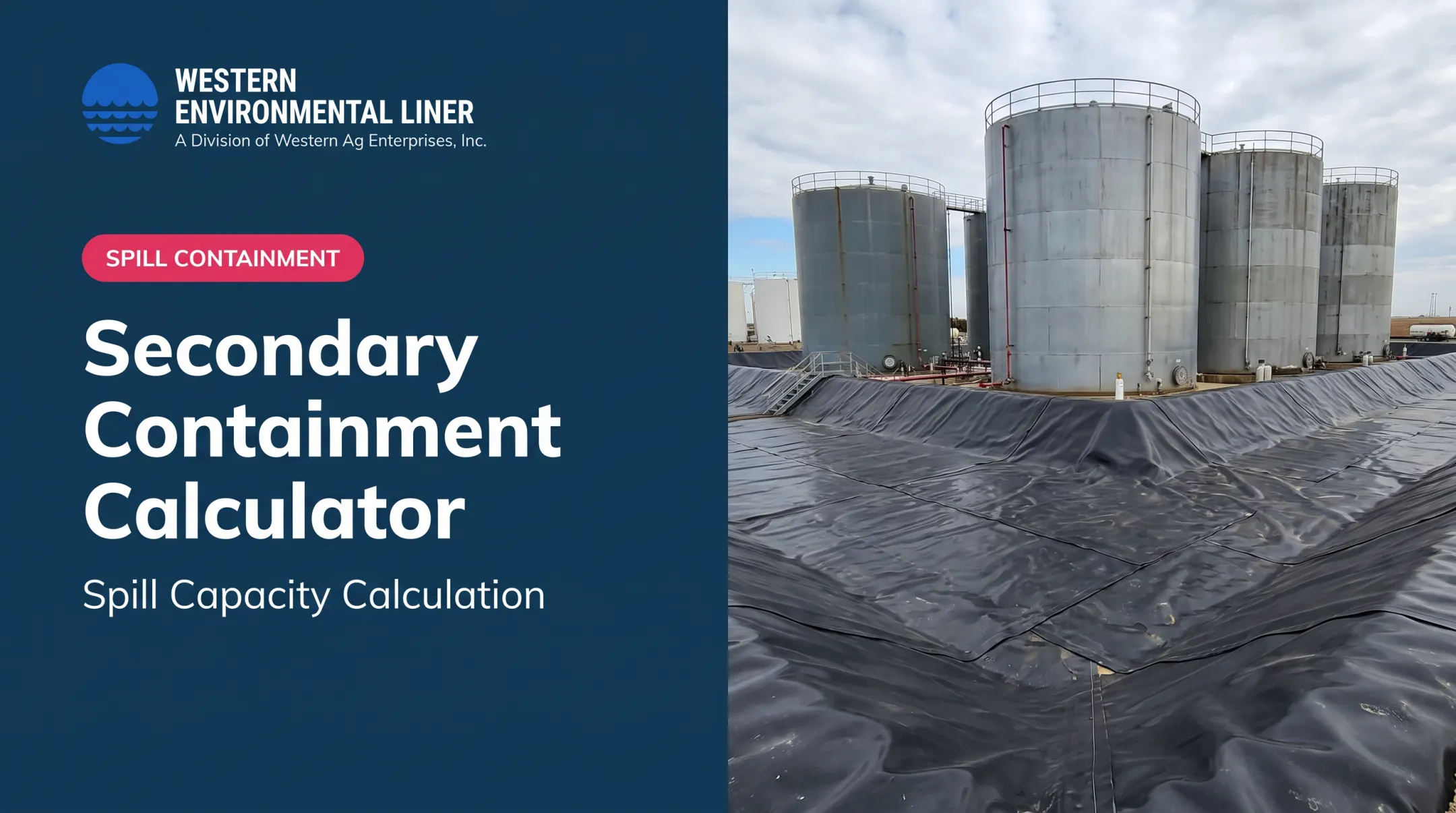
Lined berms, dikes, and curbed areas capture leaks and rainfall and direct liquids to a point for inspection or removal. Under federal SPCC rules, dikes around bulk tanks must hold the largest single container plus enough freeboard for precipitation, and diked areas must be sufficiently impervious.
Final capacity and layout must follow the governing requirements, not a rule of thumb. 110% is not a universal federal sizing rule.
Loading, Unloading, and Fuel Transfer Areas
Hose connections, loading racks, and fueling areas see frequent small drips and occasional large failures. Protect them with spill pads, trench drains, sumps, and compatible liners. Where drainage does not reach a suitable catchment basin, SPCC rack provisions call for containment of at least the largest tank-truck or tank-car compartment. That requirement differs from the tank-dike test.
Oilfield and Energy-Site Containment
Frac pads, tank batteries, temporary fluid storage, and produced-water areas cover large footprints and face heavy equipment, traffic, and weather. Liners must resist puncture and the fluids on site. Secondary liners under fracturing machinery, pipes, and trucks are common.
SPCC applies largest-container-plus-freeboard containment to tank batteries at onshore production facilities. State rules differ:
- North Dakota: largest tank plus one day's fluid production
- Colorado: at least 150% of the largest tank for covered new or significantly modified tanks
- California: largest equipment's gross capacity, confining a release for at least 72 hours
Lined Pits, Basins, Lagoons, and Ditches
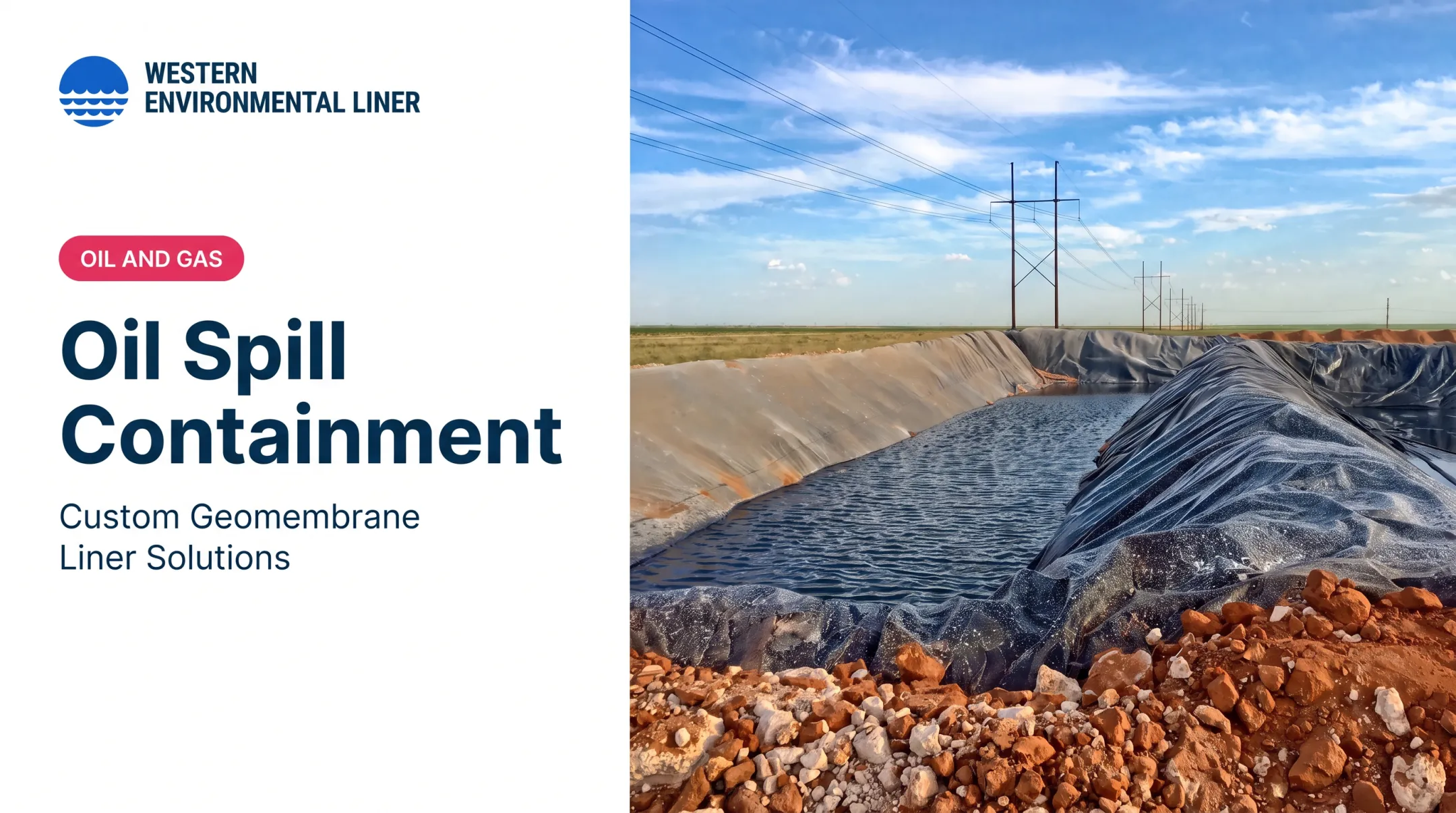
Geomembrane-lined pits, basins, lagoons, and channels provide larger-scale containment for petroleum-related liquids. Design must address slopes, anchoring, access, erosion protection, and subgrade preparation.
Temporary and Emergency Containment
Portable berms, sorbents, floating booms, and covers help in an emergency. EPA accepts active measures only when detection and deployment can stop oil reaching navigable waters. Having the equipment is not proof it is adequate.
Temporary gear supplements permanent containment and never replaces it for ongoing storage.
Petroleum Containment Materials and Design Considerations
Material Compatibility and Environmental Exposure
Petroleum type, additives, temperature, UV, weather, and service life all drive selection. No single liner is best for everything.
Published compatibility charts make the tradeoffs clear. One reinforced polyethylene berm guide from UltraTech rates diesel "B" (minor to moderate effect) and gasoline "C" (do not store), and describes short-duration containment followed by cleanup.

Always get the manufacturer's compatibility data for your exact product and exposure, and have an engineer confirm it.
Geomembrane and Protective Layer Options
- Reinforced polyethylene: flexible, strong, and widely used for pits and pads; check product-specific fuel data.
- Reinforced polypropylene: available in 36 and 45 mil with heat-seamed assemblies and chemical, abrasion, and puncture resistance.
- Elvaloy-containing and XR-5 geomembranes: often recommended for long-term oil and fuel containment, while standard PVC and polyethylene are not normally recommended for long-term hydrocarbon service.
A nonwoven geotextile can cushion a liner against stones and subgrade irregularities. It is not a substitute for an impermeable liner.
Capacity, Freeboard, Drainage, and Site Geometry
Design capacity around more than tank volume alone. Factor in:
- Stored volume and location
- Spill scenarios and freeboard
- Rainfall, drainage paths, and slope stability
- Vehicle access and safe liquid removal
Rainwater inside a dike needs a plan too. SPCC calls for bypass valves kept sealed closed, inspection of retained water, and drainage records. Online calculators give only preliminary material estimates. Qualified engineers and the applicable regulations set final sizing.
Subgrade Preparation, Anchoring, Penetrations, and Seams
Even a good liner fails on a bad foundation.
- Clear and grade the site, and remove sharp objects.
- Compact the subgrade and add geotextile cushioning where needed.
- Build anchor trenches as shown on project drawings.
- Detail pipe boots, penetrations, and corners carefully.
- Orient seams down the slope where possible.
IAGI's installation guideline calls for documented surface acceptance before placement. Poor detailing creates leak paths regardless of material.
Factory Fabrication and Custom Liner Sizing
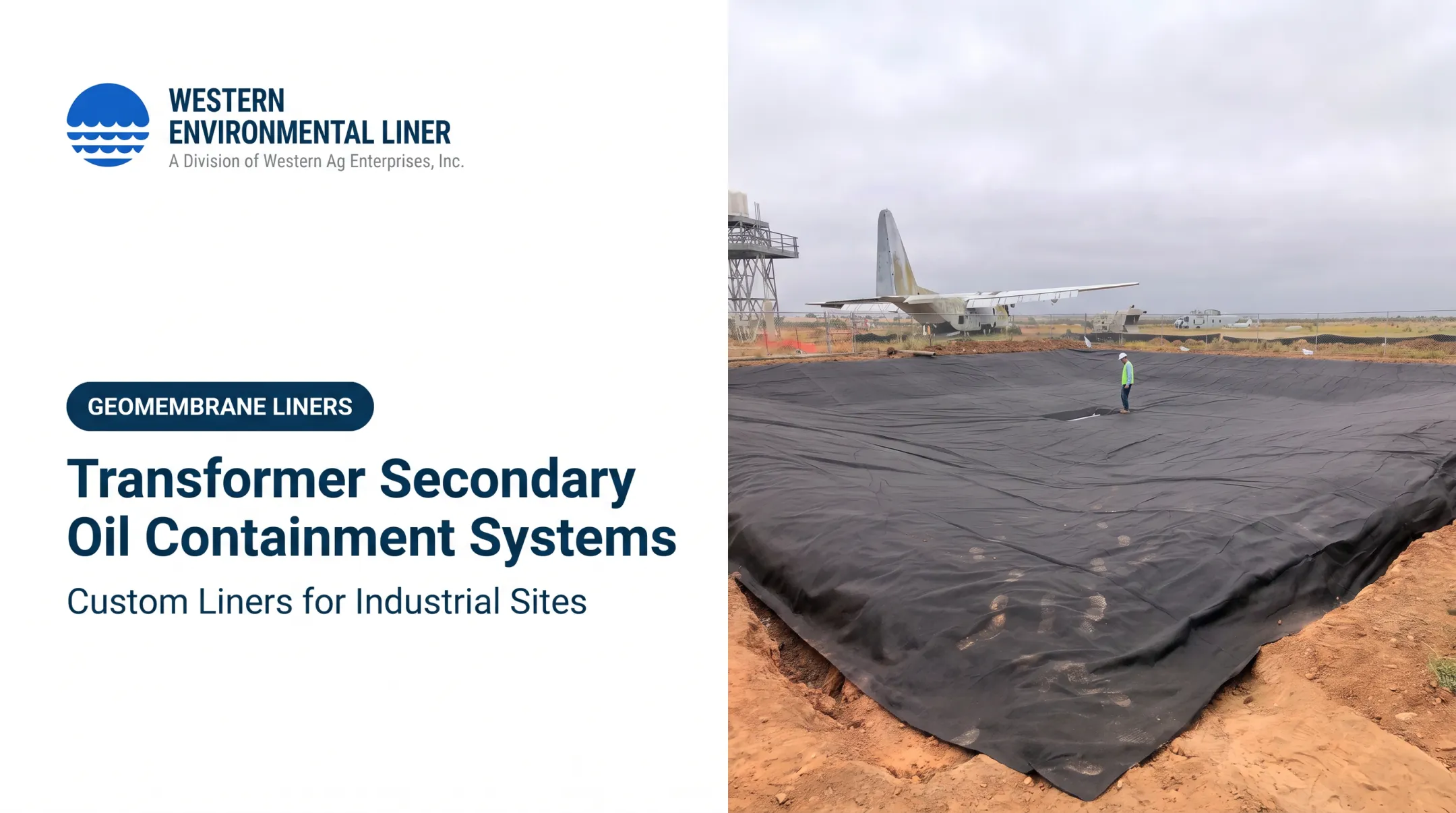
Large factory-welded panels reduce field welds and simplify installation. Western Environmental Liner fabricates custom geomembranes in reinforced polyethylene and polypropylene, with factory-welded panels up to 300' x 300' from facilities in Arizona, New York, and Kansas. One-piece liners are available up to 150,000 square feet, and custom fabrication is offered for projects over 10,000 square feet.
U.S. Regulatory and Compliance Considerations
Federal, State, and Local Requirements
The EPA's SPCC rule (40 CFR Part 112) covers non-transportation facilities with reasonable potential for a harmful oil discharge to covered waters. Plans are generally required for aboveground capacity over 1,320 gallons or buried capacity over 42,000 gallons, counting containers of 55 gallons or more.
Other layers apply:
- UST rules (40 CFR 280.20): tanks and piping installed after April 11, 2016 generally need secondary containment and interstitial monitoring.
- OSHA 1910.106: flammable-liquid tanks need drainage or diking.
- International Fire Code: applies where locally adopted.
- Stormwater: the oil-and-gas exemption covers uncontaminated runoff only.
Requirements depend on facility, product, quantity, and site.
Written Plans, Inspections, and Records
- Review the SPCC Plan at least every 5 years and amend within 6 months of material changes.
- Keep signed inspection and test records for 3 years.
- Follow written inspection procedures and document drainage events.
- Maintain spill-response procedures.
SPCC sets no universal tank-testing interval. Industry standards, tank characteristics, permits, and state rules govern. One Texas permit, for example, requires monthly inspections, but that is facility-specific.
Engineering Review and Compliance Limits
A liner alone does not make a site compliant. Expect to need a licensed Professional Engineer, permitting review, and site-specific calculations. This article is educational and is not legal or engineering advice.
Installation, Inspection, and Choosing a Qualified Provider
Petroleum Containment Installation Workflow
- Assess the site and review the stored fluids.
- Complete design with the engineer.
- Prepare the subgrade.
- Fabricate and deliver liner panels.
- Deploy, weld, and anchor.
- Detail penetrations.
- Run quality control, commission, and hand over to the owner.

Quality Assurance and Commissioning
Seam testing depends on the liner:
- ASTM D6392 covers destructive testing of nonreinforced thermofusion seams and does not automatically apply to reinforced products
- ASTM D5820 checks air-channel seams for continuity but not strength
- ASTM D5641 uses vacuum chambers on seams and patches
Records should capture panel and seam locations, welders, equipment, trial seams, tests, and repairs. Repair and retest any defects. Protect the liner during backfilling and equipment placement, then confirm drainage, collection, access, and monitoring work as intended.
Routine Inspection and Preventive Maintenance
Look for:
- Punctures, cuts, and abrasion
- Seam separation
- UV or weather damage
- Animal activity
- Standing liquid, sediment, and blocked drains
- Damaged anchors
- Unauthorized vehicle traffic
Document findings and fix them promptly. Add inspections after severe weather, construction, or a spill.
Response After a Leak or Spill
- Stop or isolate the source when safe.
- Prevent migration and protect workers.
- Recover the petroleum.
- Notify authorities. A sheen on covered waters triggers immediate National Response Center reporting at 800-424-8802, with EPA reporting rules setting no minimum quantity.
- Inspect, repair, or replace damaged components.
- Document the event and corrective action.
Beyond the immediate NRC call, SPCC requires a separate report to the EPA Regional Administrator within 60 days after a discharge over 1,000 gallons to covered waters, or two discharges over 42 gallons within 12 months.
Selecting a Containment Manufacturer or Installer
Ask each candidate about:
- Petroleum-containment experience
- Compatibility data for your product
- Fabrication capacity and panel sizes
- Installation quality assurance
- Technical support
- Warranty terms
- Coordination with your engineer and regulators
Western Environmental Liner offers turnkey installation and on-site technical support for slopes, anchoring, and subgrade questions. The company is an IAGI-certified installer. IAGI certification evaluates an individual welder's skills; it does not certify facility compliance or material compatibility. Earthwork and engineering design fall outside the company's scope.
Frequently Asked Questions
What is petroleum containment?
It is the set of barriers, collection areas, monitoring, and response measures that keep petroleum in a controlled area. Primary containment is the tank or vessel; secondary containment captures leaks if it fails.
What are the main types of petroleum containment?
Common types are lined berms and dikes, tank and dispenser sumps, lined pits and basins, transfer-area containment, and temporary spill-response equipment.
What material is best for petroleum containment?
It depends on the product, temperature, UV exposure, mechanical demands, geometry, and specifications. Use manufacturer compatibility data and engineering guidance.
How is a petroleum containment system designed?
Designers weigh stored volume, spill scenarios, rainfall, freeboard, drainage, subgrade, slopes, anchoring, penetrations, seams, and regulations.
Are petroleum containment systems required by law in the United States?
It varies by facility and jurisdiction. Check current EPA, state, local, fire-safety, and environmental rules rather than assuming one universal requirement.
How often should petroleum containment be inspected?
Frequency depends on the system, site risks, procedures, permits, and regulations. Inspect additionally after severe weather, construction, or a spill.