
Introduction
A stormwater management system does more than push rain off a site. It controls flooding and erosion, limits pollutant transport, encourages infiltration or reuse, and protects downstream waterways.
This guide is for municipalities, contractors, agricultural and industrial operators, commercial property owners, and developers. It separates stormwater management from wastewater treatment (a different source and treatment path) and from basic drainage (which only conveys water).
Many teams struggle because runoff rises as sites develop, while budgets and maintenance staff stay flat. ASCE's 2025 report card gave U.S. stormwater infrastructure a D.
We cover system types, components, site selection, SWMM modeling, maintenance, compliance, and where lined basins fit.
Key Takeaways
- Effective systems combine several practices instead of relying on one pipe, pond, or device.
- Rainfall, soils, groundwater, pollutants, space, permits, and maintenance capacity drive selection.
- Gray, green, storage, treatment, infiltration, and reuse practices work best as a treatment train.
- Geomembrane liners control seepage in basins; they do not replace the full system.
What Is a Stormwater Management System and How Does It Work?
According to the EPA, sustainable stormwater management focuses on reducing runoff and improving water quality. A stormwater management system is the coordinated set of practices and infrastructure that controls runoff quantity, reduces pollution, supports infiltration or reuse, and manages discharge.
Roofs, roads, parking lots, and compacted soil keep rain from soaking in. Runoff leaves faster and in larger volumes, carrying sediment, nutrients, metals, oil and grease, trash, and bacteria such as E. coli.
Stormwater is not wastewater. Separate storm sewers (MS4s) carry runoff only, while combined sewers carry sanitary wastewater and stormwater together. Requirements vary by site and jurisdiction.
In the Southwest, long dry spells followed by sudden, intense storms can overwhelm drainage, and many municipalities require developers to include retention ponds in site design.
How Stormwater Moves Through a System
A typical sequence runs from rainfall and runoff to source control, collection, conveyance, pretreatment, storage or treatment, infiltration or reuse, and controlled discharge. Not every site uses every step.

- Gutters, ditches, and inlets collect runoff and admit it to storm drains
- Swales, pipes, channels, culverts, and pumps convey flow
- Oil/grit separators and forebays catch solids and floatables before the main basin
- Dry detention and wet ponds store water temporarily or permanently
- Risers, weirs, orifices, and emergency spillways control and route releases
- Monitoring points support inspections and model comparison
Types of Stormwater Management Systems
Gray Infrastructure and Conventional Drainage
Inlets, catch basins, pipes, culverts, channels, pumps, and outlet structures move water efficiently. Used alone, they provide no storage and no treatment, so they simply pass peak flows and pollutants downstream.
Storage-Based Systems
Detention holds water temporarily to cut peak flow and let solids settle. Retention keeps a permanent pool, adding settling and biological nutrient uptake. Underground chambers, vaults, and pipes serve sites where land is tight.
Pond performance varies. Minnesota's manual cites compilation medians of 88% and 80% TSS removal and roughly 50% total phosphorus removal. Those are benchmarks, not guarantees, and ponds retain dissolved phosphorus poorly.
Green Infrastructure and Low-Impact Development
- Rain gardens and bioretention systems hold runoff and filter it through soil and plants
- Bioswales convey water; filter strips pretreat sheet flow
- Green roofs retain water for infiltration and evapotranspiration
- Permeable pavement lets water pass through the surface
- Infiltration trenches need pretreatment to avoid clogging
Treatment, Wetland, and Reuse Systems
Constructed wetlands, sediment forebays, and oil/grit separators treat runoff, while rainwater harvesting supplies irrigation, flushing, washing, or cooling. Pollutant type and local rules decide which practice fits, and reuse treatment depends on the end use.
Lined Basins and Stormwater Storage Structures
Minnesota's guidance points to liners where there is active karst, groundwater-contamination risk, hotspot runoff, inadequate separation, or permanent pools over permeable soils or fractured bedrock. These are state-specific criteria, but the logic carries over.
A lined basin controls seepage. It is one component, not a complete system.
How to Plan and Select a Stormwater Management System
Start With the Site
EPA's Burlington, Iowa study weighed permeability, contamination, slope, flood zones, bedrock, buffers, and available area. Your assessment should cover:
- Drainage areas and impervious surfaces
- Topography and rainfall patterns
- Soil permeability and groundwater
- Existing infrastructure and receiving waters
- Pollutant sources, available land, and future development
Set Objectives and Build a Treatment Train
Decide what matters most for the site:
- Peak discharge and flood prevention
- Water quality and erosion control
- Infiltration, harvesting, and groundwater protection
- Permit conditions
Then combine practices into a treatment train. Minnesota places bioretention near runoff sources, often upstream of other practices, with pretreatment to limit sediment. One component alone leaves gaps: a pond without pretreatment fills with sediment, and a trench without it clogs.
Model With EPA SWMM
EPA's Storm Water Management Model simulates rainfall-runoff for single events or continuous periods. It handles pipe and channel routing, storage, pumps, infiltration, low-impact development (LID), and pollutant buildup and washoff. The latest EPA download is version 5.2.4 (August 2023), with a Version 5.2 user's manual.

Results depend on inputs: rainfall, imperviousness, slope, roughness, infiltration, conduit geometry, and storage curves. Washoff functions usually need site calibration, and every run needs a reasonableness check.
Rainfall itself is uncertain. NOAA Atlas 14 remains the standard, and Atlas 15 (nonstationary estimates) is scheduled no earlier than September 2027.
Design and Constructability Checks
Before finalizing the design, confirm constructability and long-term operations:
- Outlet capacity and overflow routing
- Inspection access and sediment removal
- Vegetation management and emergency conditions
- Worker safety and fencing
- Coordination among owner, engineer, contractor, regulator, and maintenance crew
Stormwater System Challenges, Maintenance, and Compliance
Common Pressures and Responses
| Challenge | Response |
|---|---|
| More impervious area | Add source control and infiltration |
| Intense rainfall | Size outlets and overflow with margin |
| Aging or undersized assets | Inspect, repair, and phase upgrades |
| Sediment and erosion | Pretreatment and scheduled cleanout |
| Limited budgets and staff | Simple designs, training, documentation |
Intense rainfall is becoming more frequent. The Fifth National Climate Assessment reports a 49% increase in days with 2+ inches of precipitation in the Northeast from 1958 to 2022.
A Practical Maintenance Program
- Routine inspections and post-storm checks
- Inlet and catch-basin cleaning
- Sediment removal from forebays and ponds
- Vegetation and erosion control
- Outlet inspection and structural repairs
- Written records of problems and fixes
Published examples vary by asset. Massachusetts calls for at least annual pond inspections and deep-sump catch basin checks four times a year. Minnesota suggests checking bioretention ponding semiannually and 48 hours after rain. These are examples, not national schedules.
Compliance
Verify current requirements for your project and state. Common instruments:
- MS4: small systems in urbanized areas, six minimum control measures, records kept at least 3 years
- Construction General Permit: sites disturbing 1+ acre; inspections every 7 days, or every 14 days plus within 24 hours of 0.25 inches of rain
- Industrial (MSGP): the 2021 permit expired February 28, 2026 and remains administratively continued for previously covered operators. New facilities cannot obtain coverage by a new NOI during continuation
State and local conditions may add to these. Keep SWPPPs, inspection reports, corrective-action logs, and discharge records for the periods your permit requires.
How Geomembrane Liners Fit Into Stormwater Management
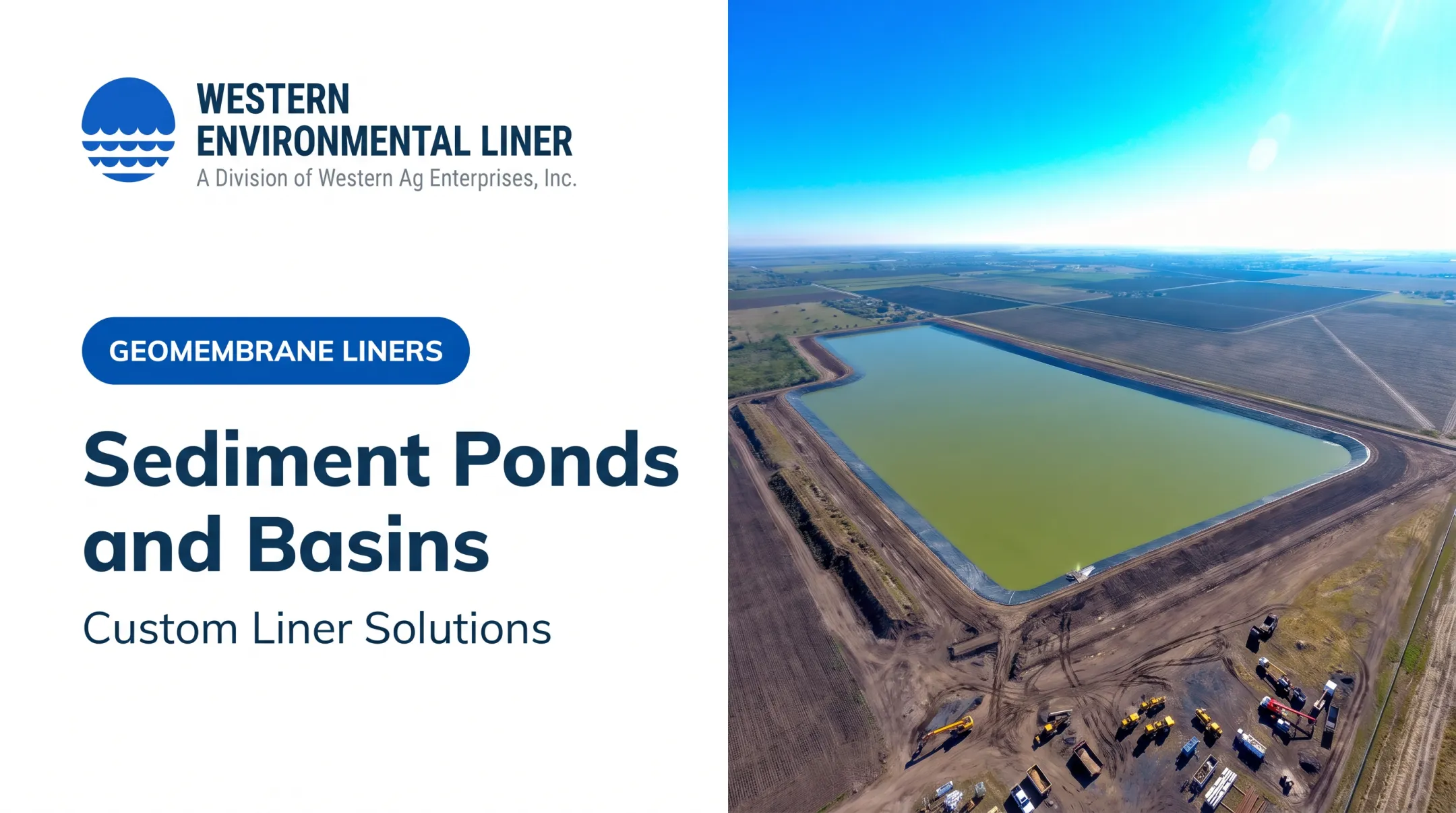
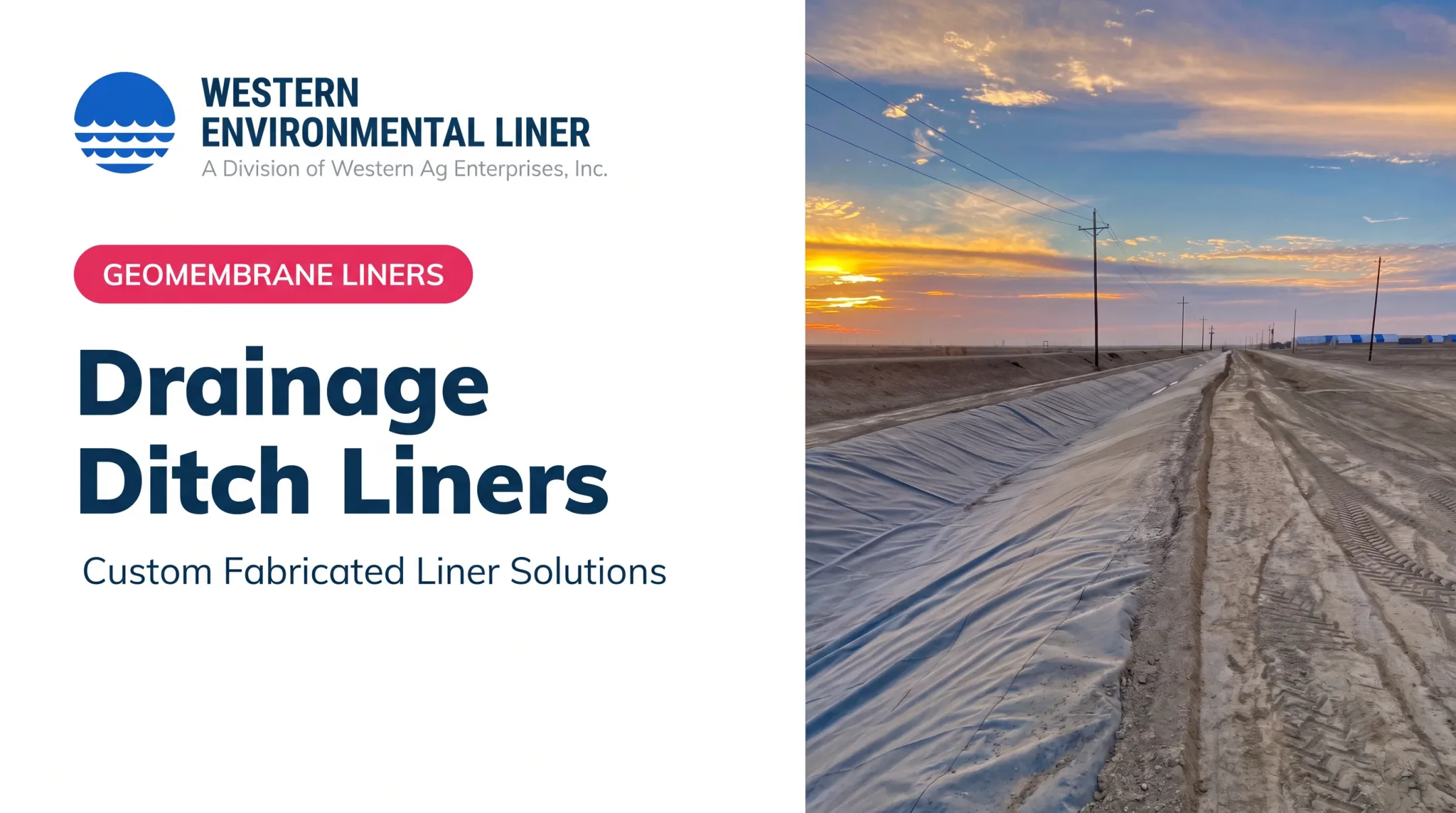
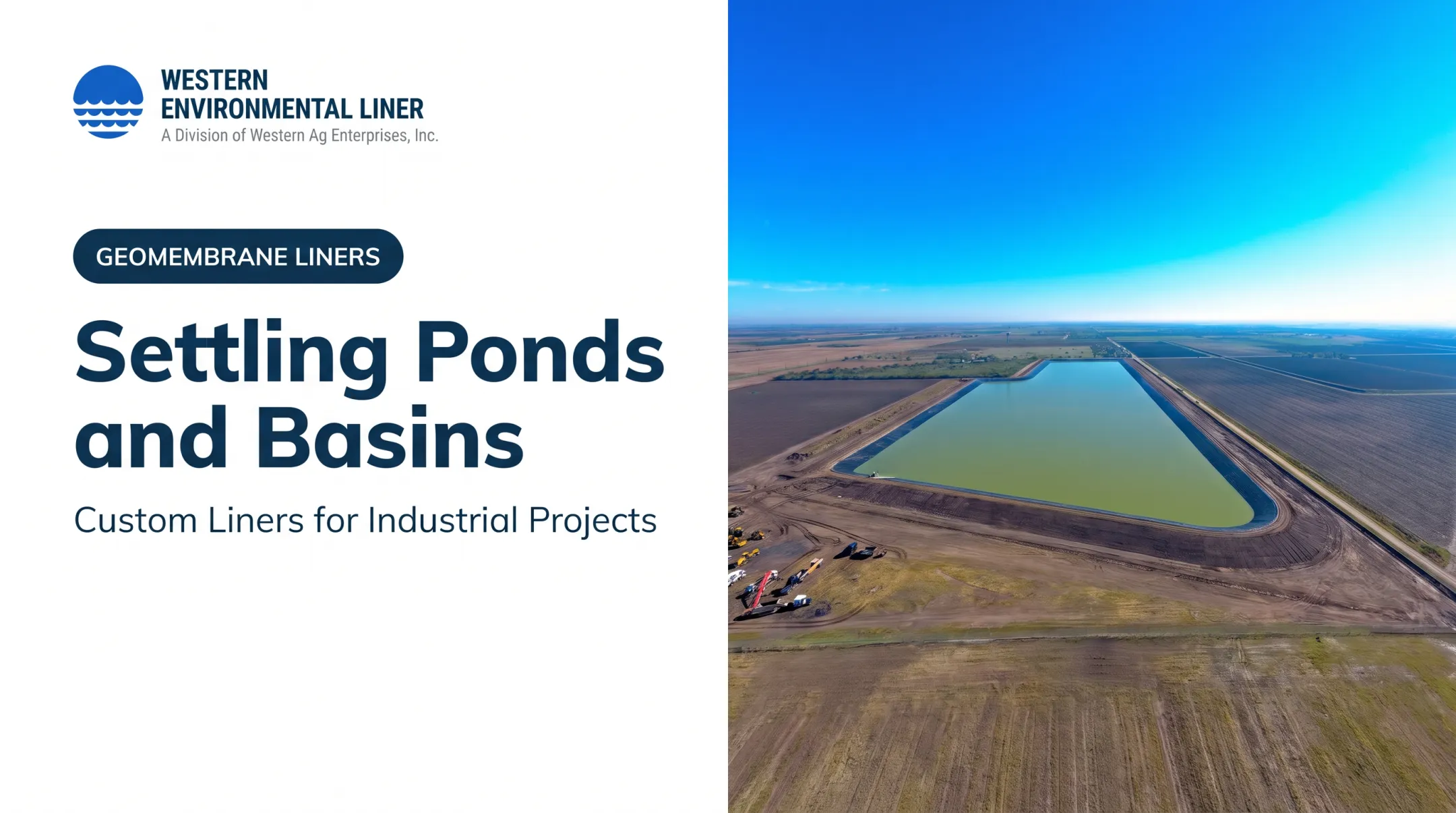
Western Environmental Liner fabricates custom geomembrane liners for lined detention and retention basins, ponds, lagoons, canals, ditches, and other containment structures where seepage control is part of the engineered design. Factory panels reach 300' x 300' from plants in Tolleson, AZ; Romulus, NY; and Great Bend, KS. One-piece liners can cover up to 150,000 square feet.
Factors That Guide Liner and Installation Decisions
- Material compatibility, water chemistry, and UV and weather exposure
- Subgrade preparation: firm, smooth, and free of damaging projections
- Slopes, anchor trenches, and compacted backfill
- Pipe penetrations sealed with fabricated boots
- Seam quality: ASTM D6392 destructive tests for thermofusion seams; NRCS specs call for full-length nondestructive testing
- Uplift from gas or groundwater beneath the liner, handled with ballast or underdrainage
- Design life: standards such as GRI-GM13 set material requirements, not a universal installed lifespan
Buried Aqua-series reinforced polyethylene carries a guarantee of well over 20 years for stormwater use, and Western Environmental Liner products carry 10 to 20 year weathering and UV warranties. The team advises on slope ratios, anchoring, and subgrade preparation, but earthwork and subgrade engineering stay with your engineer and contractor.

Where a project needs filtering and erosion control, geotextiles from 4 oz to 32 oz can sit alongside the liner. For a real-world example, Geosynthetics Magazine described a custom geomembrane and nonwoven geotextile forming a watertight stormwater cistern under a California motor court.
Vendor-Selection Checklist
- Factory fabrication quality and ASTM-based quality control
- Panel layout that minimizes field seams
- Field-welding procedures and seam testing
- Installer certification (Western Environmental Liner is IAGI certified) and relevant experience
- Technical support and warranty terms in writing
- Willingness to coordinate with your project engineer
Planning a lined basin? Contact Western Environmental Liner for a free quote on a custom liner or installation.
Frequently Asked Questions
What is a stormwater management system?
It is the coordinated set of infrastructure and practices that collect, slow, treat, infiltrate, reuse, store, or safely discharge stormwater runoff.
What are some solutions for managing stormwater runoff?
Options include storm drains and culverts, detention and retention ponds, rain gardens, bioswales, permeable pavement, wetlands, rainwater harvesting, and lined basins. The best mix depends on site conditions and regulations.
How does SWMM work?
EPA SWMM simulates rainfall-runoff and routes flow through pipes, channels, storage, and treatment elements. It relies on project-specific inputs and assumptions.
What is the difference between stormwater management and stormwater drainage?
Drainage mainly collects and conveys water. Management also addresses quantity, quality, infiltration, storage, reuse, and discharge.
What are the main components of a stormwater management system?
Source controls, collection and conveyance, storage, treatment, infiltration or reuse features, outlets, monitoring, and a maintenance process.
How often should stormwater systems be inspected and maintained?
It depends on system type, permit conditions, site risk, weather, and sediment loading. Plans typically combine routine inspections with post-storm checks.