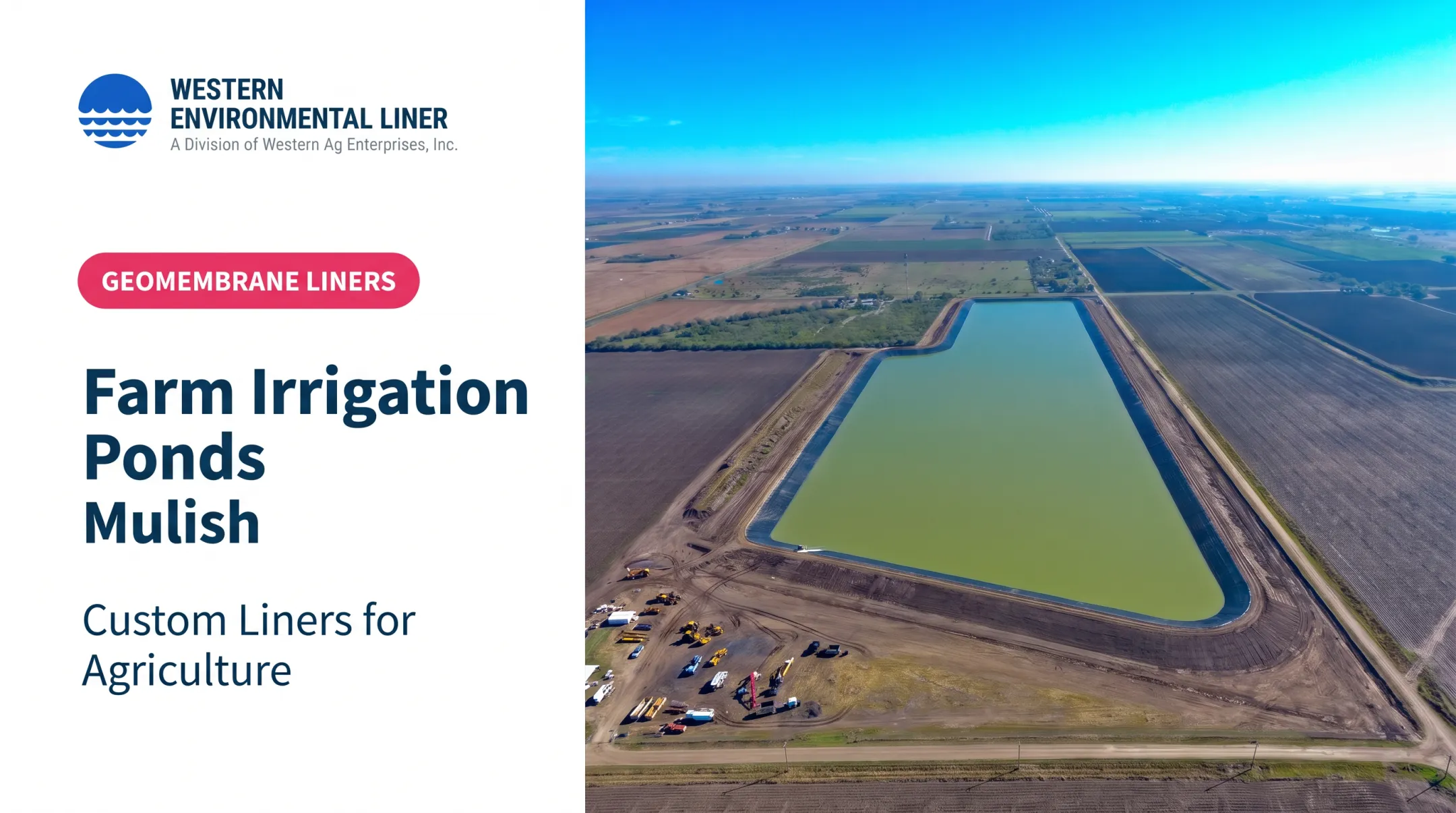

This guide covers what snow-making ponds are, how water travels from the pond to the slopes, how to plan capacity and infrastructure, and when a geomembrane liner makes sense for long-term containment.
Key Takeaways
- A snow-making pond stores water; pumps, compressors, pipes, and guns turn it into snow.
- Size the pond from a site-specific water budget, not a rule of thumb.
- Plan for seepage, freeboard, slopes, sediment, intake, overflow, safety, and U.S. permits.
- A well-selected, properly installed geomembrane can cut seepage where site conditions call for lining.
What Is a Snow-Making Pond?
A snow-making pond is a purpose-built reservoir or retention basin that stores water for a resort's snowmaking system. It does not make snow. It holds the supply.
The rest of the system does the work. Water leaves through an intake, passes through pumps and distribution piping, meets compressed air at the snow gun, and is dispersed over the terrain.
Resorts build dedicated ponds for practical reasons:
- Water must be stored before cold weather arrives
- Production windows are short, so supply has to be ready on demand
- Storage reduces dependence on immediate snowfall or stream flow
Vermont's environmental agency describes the approach plainly: withdraw water during high streamflow, store it, and use it later for snowmaking while maintaining conservation flows. Scale varies widely. Mount Snow in Vermont operates a 120-million-gallon reservoir with three pumphouses delivering water up the mountain.
How Snow-Making Ponds Supply Water for Snow Production
The Water Path
Water follows a fixed route:
- Source or runoff capture feeds the pond
- The intake structure draws water out
- A pump station adds pressure
- Filtration removes sediment
- Buried lines carry water up the mountain
- Hydrants, hoses, and guns put it on the snow surface

Each step depends on the one before it, so a failure at intake, pump, or filtration stops snow production farther up the line.
Freezing Conditions
Guns atomize water into fine droplets. Compressed air, fans, or nucleators create ice nuclei so droplets freeze before landing.
Wet-bulb temperature, which combines air temperature and humidity, matters more than air temperature alone. TechnoAlpin cites a start threshold of -2.5 °C (27.5 °F) wet bulb. Warm water works against you: each 4 °C (7 °F) rise in water temperature requires about a 1 °C (2 °F) colder wet bulb, according to that manufacturer.
How Much Water Does Snow Take?
There's no universal conversion. Stratton Mountain reports that 160,000 gallons typically produce one acre-foot of snow under ideal conditions. Real output shifts with temperature, wind, machine output, snow quality, and operating hours. Treat that figure as a benchmark, then build your own numbers from target coverage area, base depth, and expected runtime.
Pumps, Filters, and Controls
Components that keep the system running:
- Screens and filters protect pumps and prevent nozzle clogging
- Pressure controls and valves hold steady flow
- Weather stations and automation adjust output as temperature, humidity, and wind change
Seasonal Water Movement
The pond fills during high-flow periods, draws down through winter, and refills from spring meltwater or runoff where permitted. Plan refill time carefully. Water temperature, sediment loads, and variable inflows all affect startup timing and equipment performance.
Snow-Making Pond Design Considerations
Start With a Water Budget
Build the budget before any excavation. Include:
- Snow-covered area and target base depth
- Snowmaking equipment and expected operating windows
- Refill rate and available sources
- Evaporation and seepage losses
- Permitted withdrawals
- Contingency storage and future expansion
Geometry and Earthwork
Key elements are side slopes, depth, freeboard, embankment stability, erosion protection, equipment access, safe maintenance areas, and overflow routing.
NRCS reference standards offer useful benchmarks: lined slopes no steeper than 2H:1V, and at least 1 foot between auxiliary-spillway design high water and the settled crest for low-hazard dams. These are reference criteria, not universal permit standards.

Check local, state, federal, and dam-safety requirements. Some states, Vermont for one, require an experienced registered engineer and sealed plans for regulated dams.
Subgrade Preparation
A liner is only as good as what's under it. Aim for a smooth, firm surface free of rocks, roots, and rubble.
Where the subgrade can't be perfect, Western Environmental Liner suggests at least 6 inches of compacted bedding above the highest obstruction, plus geotextile cushioning (8-ounce is the most common). Address drainage or gas relief where groundwater is shallow.
Intakes, Outlets, and Penetrations
- Install screens or trash racks sized for debris and ice
- Control sediment near the intake
- Provide emergency overflow that discharges safely downstream
- Use custom pipe boots and solid anchoring at penetrations
- Keep concentrated flow off the liner and slopes
Environmental and Operational Planning
Confirm water rights and permits early. EPA generally requires a Section 404 permit before dredged or fill material enters waters of the United States, and construction stormwater coverage generally applies at one acre or more.
Plan for runoff management, aquatic habitat, snowmelt discharge, fencing, signage, and inspection access year-round.
Choosing and Installing a Liner for a Snow-Making Pond
When Lining Makes Sense
Lining fits sites with permeable soils, water conservation goals, groundwater protection concerns, or a need for predictable retention. Where suitable clay or compacted soil is available and seepage control is adequate, a natural or compacted soil system may work. Let geotechnical review decide.
Comparing Materials
No single material wins everywhere. Compare on:
- UV exposure and expected service life
- Cold-weather flexibility
- Puncture and tear resistance
- Expected settlement
- Seam welding and water compatibility
- Installation conditions
Reinforced polyethylene and reinforced polypropylene are common choices. Western Environmental Liner offers RPE from 12 to 60 mil, and RPP in 36 and 45 mil with UV and weathering warranties of 15 and 20 years respectively. Engineers may specify other materials, such as HDPE, LLDPE, PVC, or EPDM, and each has tradeoffs. HDPE, for instance, can stiffen in cold weather.

Why Factory Fabrication Helps
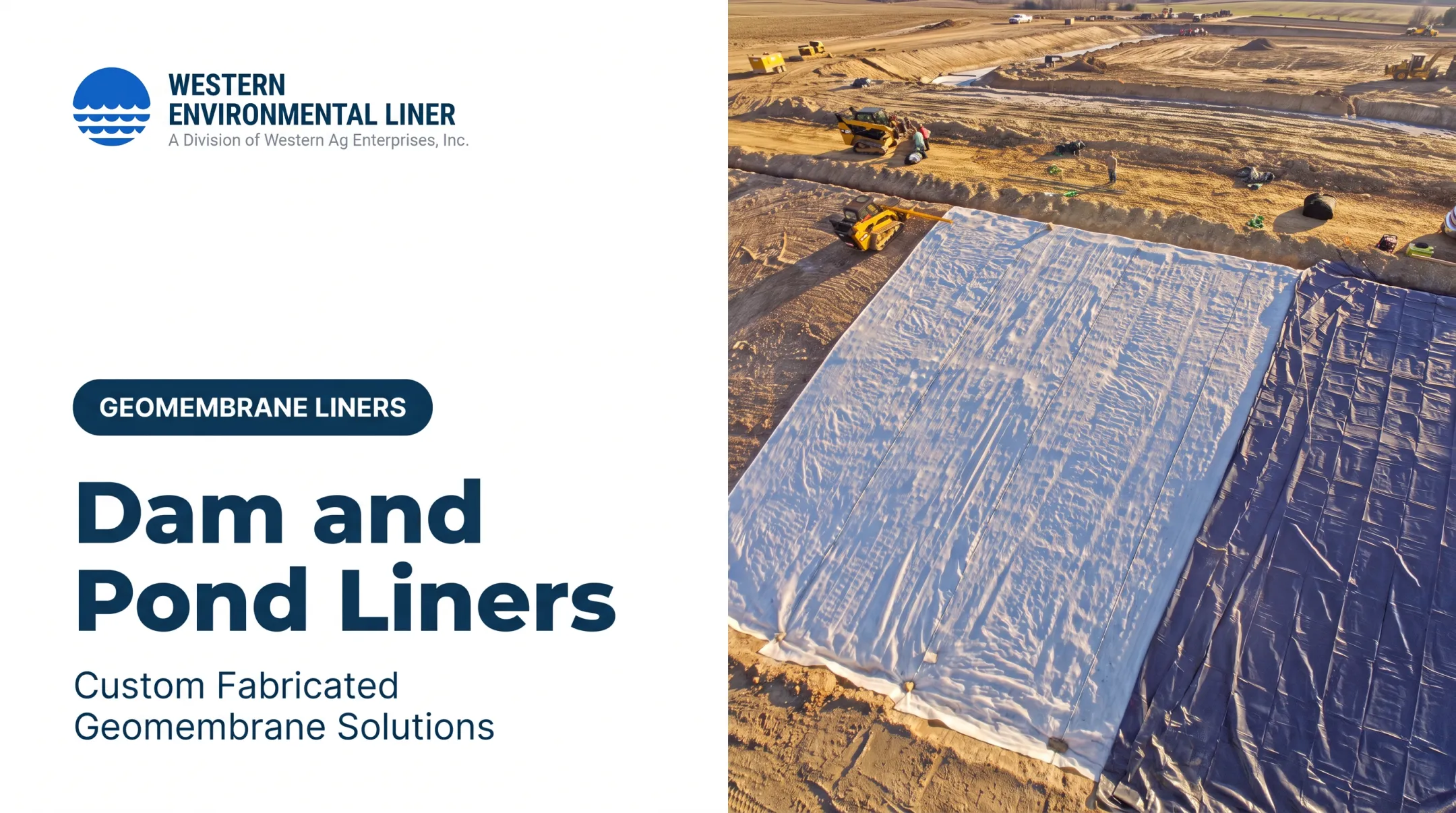
Large reservoirs benefit from factory-welded panels. Controlled conditions produce more consistent welds, and fewer field seams mean less labor and fewer leak points. Western Environmental Liner fabricates custom liners for projects over 10,000 square feet, with one-piece liners up to 150,000 square feet.
Installation Practices
Good installs follow a sequence:
- Engineered subgrade preparation
- Geotextile placement where needed
- Panel layout and deployment
- Seam welding
- Destructive and nondestructive seam testing
- Perimeter anchoring, pipe boots, and penetrations
- Repairs and final inspection before filling
Testing standards differ by material. ASTM D7747 covers reinforced thermo-fusion seams, while D6392 covers nonreinforced ones. For dual seams, D5820 checks air-channel continuity. Anchoring against wind uplift should follow the manufacturer's recommendations and the project engineer's design.
Working With Western Environmental Liner
Western Environmental Liner is a U.S. custom geomembrane manufacturer and installer with factories in Tolleson, Arizona; Romulus, New York; and Great Bend, Kansas. It offers reinforced polyethylene and polypropylene options, turnkey installation, IAGI-certified installation, and technical support on anchoring, slopes, and subgrade preparation.
The company does not perform earthwork or engineer subgrades, so those stay with your engineer and contractor. If you're weighing a lined reservoir, request a project review and quote to see what fits your site. Liner design and warranty terms are confirmed only after that review.
Operating, Maintaining, and Planning a Snow-Making Pond
Seasonal Inspection Checklist
Check these items each season:
- Exposed liner for tears, punctures, and ballooning
- Anchor areas and pond slopes
- Erosion and sediment accumulation
- Intake screens, pumps, and valves
- Overflow structures and pipe connections
- Signs of leakage or settlement
Cold-Weather Practices
- Monitor water levels and weather daily during production
- Manage ice and snow around intakes
- Drain or winterize equipment where required
- Inspect liners, intakes, and anchors after spring thaw
Ice is a real liner risk. At Canyons in Park City, Utah, a 20-million-gallon snowmaking reservoir faces repeated winter drawdown and moving ice. Rock-filled GEOWEB cells and tendons protect the liner without penetrating anchors.
New Hampshire's environmental agency recommends return-flow or drainback lines rather than end-line valves to prevent pipe freezing.
Long-Term Capacity Planning
Track these metrics over time:
- Inflows and withdrawals
- Snowmaking hours and refill time
- Sediment buildup and discharge
Those records sharpen future water budgets and show when to desilt, expand, or upgrade. Storage redundancy and diversified supply also build resilience as winters get less predictable.
Frequently Asked Questions
How do resorts make snow?
Resorts pump water from storage through pressurized pipes to snow guns, where it's atomized and mixed with compressed or fan-driven air. Freezing depends on wet-bulb temperature, humidity, wind, and hang time.
How much water is required to make snow?
There's no single amount. Stratton cites about 160,000 gallons per acre-foot of snow under ideal conditions. Demand shifts with coverage area, base depth, machine output, weather, and operating time.
What is the purpose of a snow-making pond?
It stores and manages the water supply for snowmaking. That lets a resort operate during suitable weather windows without relying solely on immediate inflow or snowfall.
Do snow-making ponds need liners?
Not always. Lining is site-dependent and can reduce seepage, conserve water, and protect soil and groundwater. Decide after geotechnical, hydraulic, environmental, and regulatory review.
How should a snow-making pond be sized?
Build a project-specific water budget covering snow volume, equipment output, schedule, refill rate, evaporation, permitted sources, freeboard, sediment storage, and contingency capacity.