
Geotextiles are permeable fabrics built to separate, filter, drain, reinforce, or protect. This guide covers their functions, the main types, common construction uses, how to choose a product, and the basics of installation.
Key Takeaways
- Geotextiles separate, filter, drain, reinforce, or protect, depending on the product.
- Woven and nonwoven fabrics are not interchangeable; load, soil, and water flow decide.
- Typical uses include roads, drains, slopes, riprap, and liner protection.
- Subgrade prep, specifications, cover, and inspection determine real performance.
What Are Geotextiles and What Is Their Purpose?
ASTM D4439 defines a geotextile as "a permeable geosynthetic comprised solely of textiles." It sits in contact with soil, aggregate, or rock. According to the GMA Handbook, almost all US geotextiles are polyester or polypropylene. Natural fibers such as jute, coir, and sisal serve temporary roles while vegetation establishes.
The fabric acts as a controlled interface. It lets water pass while holding soil back, keeps layers apart, or adds tensile capacity.
Geotextiles vs. Geomembranes
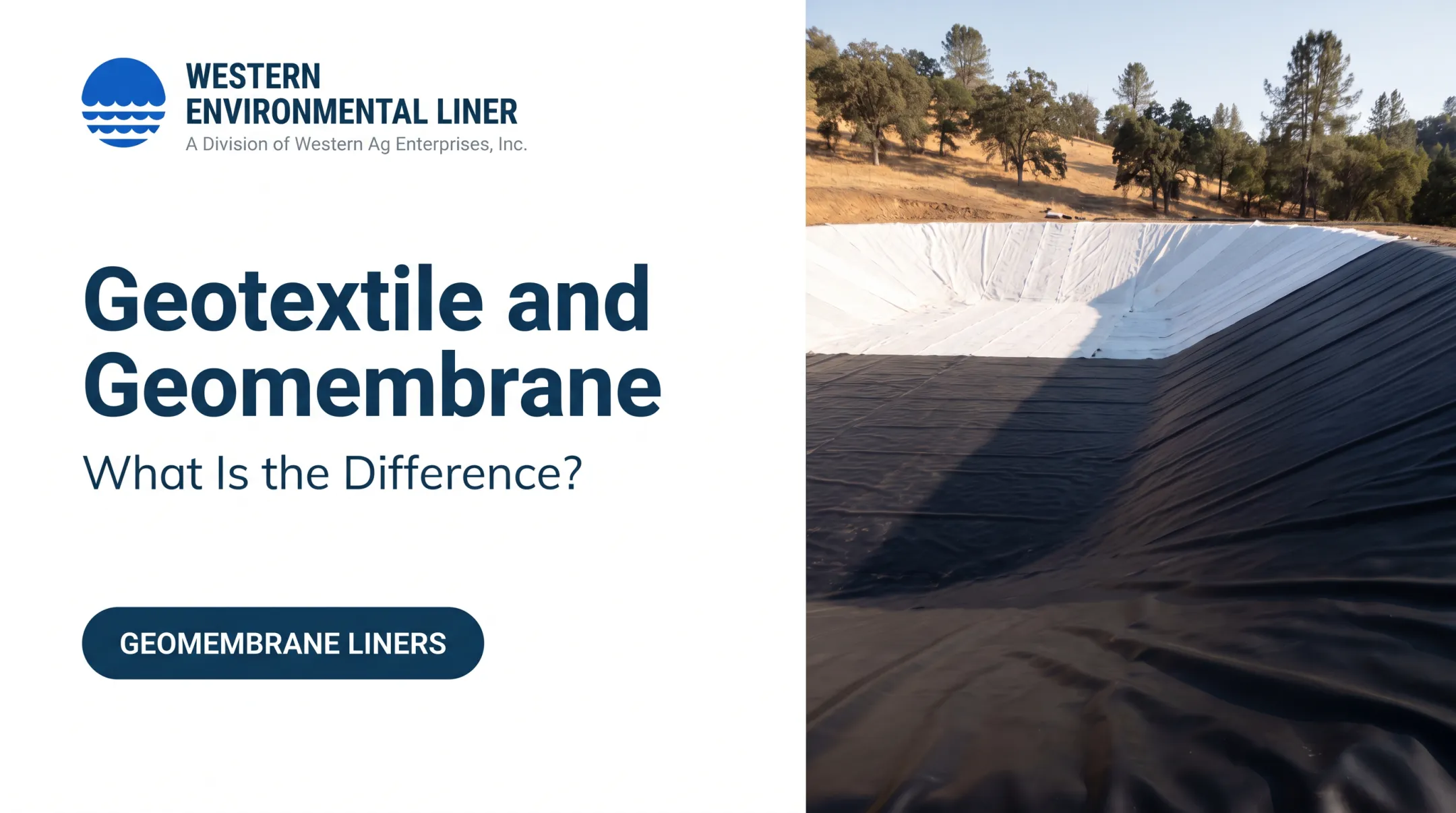
A geotextile is permeable. A geomembrane is a relatively impermeable plastic sheet made to contain liquids or gas. A geotextile is never a waterproof liner. Western Environmental Liner's Aqua reinforced polyethylene, for example, is a geomembrane, while its needle-punched polypropylene geotextile is permeable.
The Five Functions
| Function | Problem | What the fabric does |
|---|---|---|
| Separation | Soft subgrade mixes with base stone | Keeps layers distinct |
| Filtration | Fines clog a drain trench | Passes water, retains soil |
| Drainage | Water needs a path through the soil | Carries water in-plane (thick nonwovens) |
| Reinforcement | Weak soil under a slope or wall | Adds tensile resistance |
| Protection | Angular stone threatens a liner | Cushions against puncture |
The word "geotextile" alone tells you nothing about performance. Check product data, project specifications, soil conditions, and hydraulic requirements first.
Types of Geotextiles Used in Construction
Woven Geotextiles
Woven products interlace yarns or filaments. The result is high tensile strength and modulus with low strain, per Iowa DOT guidance. Typical uses include:
- Roadway separation
- Aggregate stabilization
- Embankments and working platforms
- Reinforcement
Grades vary widely:
- Slit-film wovens: relatively poor permeability
- Monofilament wovens: better drainage
- Multifilament wovens: the high-strength option
Never assume all wovens perform alike.
Nonwoven Geotextiles
Nonwovens bond fibers by needle-punching, heat bonding, or other methods. The fabric is flexible and typically high-strain, and it is usually the first choice for filtration and drainage.
Common uses:
- Drainage trenches and retaining-wall drains
- Erosion-control layers
- Cushioning over rough subgrades
- Protection around geomembranes
Review pore structure, apparent opening size (AOS), permittivity, thickness, and puncture resistance. As an example, Western Environmental Liner's 8-oz needle-punched polypropylene geotextile lists 205 lb grab tensile strength, 120 lb puncture resistance (ASTM D4833), a 0.180 mm AOS, and 1.35 sec⁻¹ permittivity. Its data sheet calls these typical values, not limiting specifications.

Knitted, Composite, and Specialty Products
Knitted and stitch-bonded fabrics are occasional specialty options. Composites combine functions, such as high-strength yarn knitted into a nonwoven for strength plus controlled permeability. Choose by required function, not category, and take unusual or high-risk applications to the project engineer.
Woven vs. Nonwoven at a Glance
| Dimension | Woven | Nonwoven |
|---|---|---|
| Strength | High, low strain | Lower, high strain |
| Typical function | Separation, reinforcement | Filtration, separation, drainage |
| Filtration | Only specially made products | Generally most effective |
| Flexibility and cushioning | Limited | Good |
Start with the function and site conditions, then verify tested properties. Don't choose by appearance, weight, or a generic label.
Geotextile Functions and Construction Applications
Separation in Roads, Pavements, and Working Platforms
A separation fabric stops fine subgrade soil from mixing into aggregate, preserving the designed base thickness. FHWA treats separation and filtration as stabilization functions that leave structural pavement design unchanged.
It suits sites where aggregate contamination and rutting are the main risks:
- Roads and parking areas
- Access roads and temporary construction access
- Rail-related foundations over weak or wet subgrades
Filtration and Drainage
Filtration retains soil while water passes through the fabric. Drainage moves water through or along the system. The hydraulic demands differ.
Common placements include:
- Wrapped perforated pipes
- Lined drainage trenches
- Behind retaining walls and under embankments
Clogging deserves real attention. An EPA landfill investigation found three sites excessively clogged, including systems with fabric wrapped directly around perforated pipes.
Reinforcement and Stabilization
High-strength geotextiles add tensile resistance, spread loads, and stabilize weak subgrades, slopes, embankments, and retaining structures. A fabric can both separate and reinforce, but confirm tensile strength, elongation, interface behavior, and survivability for your project.

Erosion Control and Surface Protection
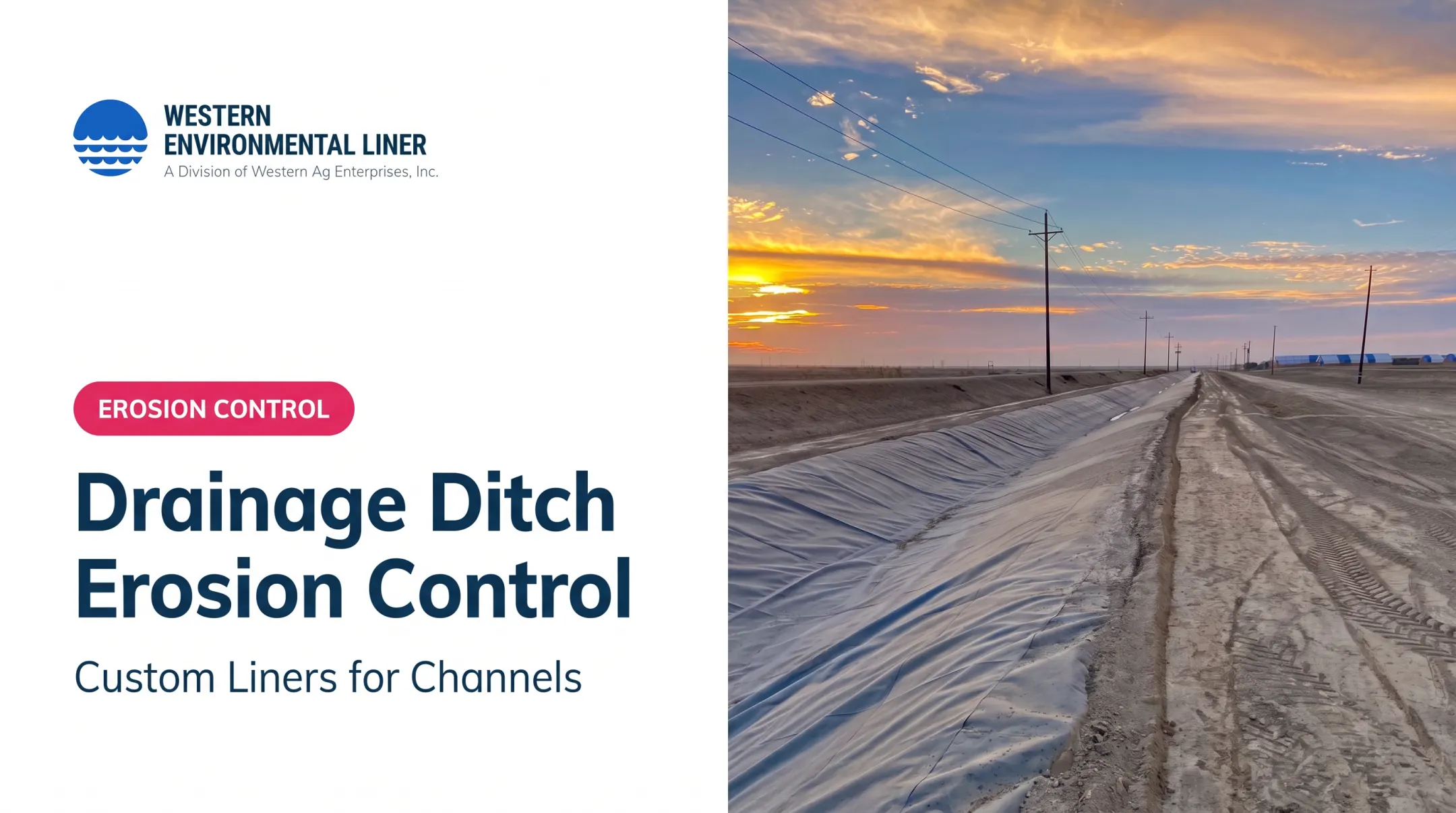
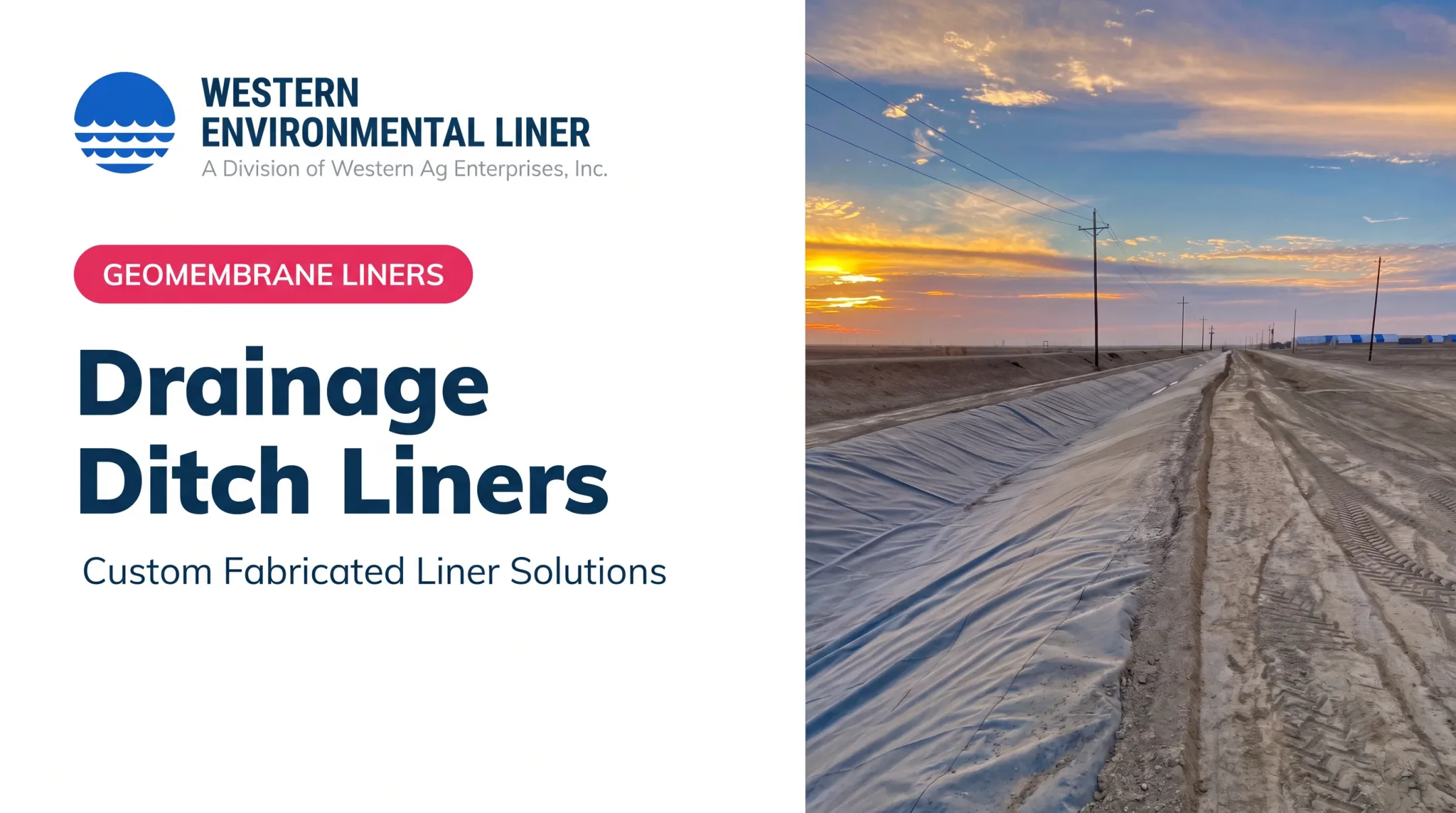
Fabric beneath riprap, under channels, and along banks keeps flowing water from mobilizing soil. It must stay covered or anchored as specified. Water flow, wind, traffic, and UV exposure can all undermine an exposed fabric.
Containment, Environmental, and Site Applications
Geotextiles appear across containment and environmental work:
- Landfills and stormwater facilities
- Irrigation and waste ponds
- Aquaculture and nursery ponds
- Industrial containment
They handle separation, drainage, cushioning, or protection. Pairing with a geomembrane is common.
Western Environmental Liner supplies permeable geotextiles alongside custom geomembrane liners. The geomembrane forms the barrier; the geotextile cushions it or drains beside it.
For example, an 8-, 12-, or 16-oz fabric can sit above the liner under backfill, beneath it as underlayment, or on both sides. NRCS standard 521 permits nonwoven cushioning of 10 oz/yd² or heavier where sharp angular particles threaten a geomembrane.
How to Choose the Right Geotextile
Start with the job the fabric must do: separation, filtration, drainage, reinforcement, protection, erosion control, or a mix. Then match the product to site conditions:
- Soil type and moisture
- Loads and slope
- Hydraulics
- Installation stress and service environment
Review these properties:
- Tensile strength and elongation
- Puncture and tear resistance
- Apparent opening size and permittivity
- Thickness and permeability
- UV exposure and chemical compatibility
- Survivability during aggregate placement
Standards help narrow the field from there. AASHTO M288 sorts fabrics into Class 1 (most severe installation conditions) through Class 3 (least severe). Per Solmax's guidance, M288 is a material specification, not a design guideline.
Iowa DOT guidance calls for fabric permeability at least equal to soil permeability in less critical conditions, and at least 10 times higher in critical ones. UV limits vary by source: FHWA FP-24 caps exposure at under 10 days, while Solmax cites 14 days for nonwovens without site-specific data.
Verify the product against plans, specifications, DOT requirements, manufacturer data, and engineering guidance. The cheapest or heaviest-looking fabric may fail at the job it was bought for.
How Geotextiles Are Installed
Install to the project specification. The values below come from FHWA's FP-24 and are not universal.
- Prepare the subgrade. Remove sharp objects and large rocks, and fill holes for a smooth surface.
- Unroll the fabric. Lay it smooth, taut, and wrinkle-free, following the specified direction.
- Overlap or seam. FP-24 requires at least 24 inches for roadway overlaps, unless sewn. Follow your own design for anchoring, trenching, and edges.
- Place cover. Backfill from the edge or from previously covered ground. Don't drive equipment directly on the fabric, and keep at least a 6-inch lift.
- Inspect and repair. Fix tears or punctures per manufacturer recommendations.

Don't dump aggregate abruptly onto exposed fabric, and cover it promptly so construction and weather don't damage it.
For liner projects, Western Environmental Liner recommends at least 6 inches of compacted bedding above the highest obstruction when a subgrade can't be kept smooth and free of puncture hazards. Subgrade preparation itself is earthwork and falls to your contractor or engineer.
Frequently Asked Questions
How are geotextiles installed in construction projects?
Crews prepare a smooth subgrade, lay the fabric taut, and overlap or seam it as specified. They anchor where required, cover it without driving directly on it, and inspect per project specifications.
When should you use woven vs nonwoven geotextiles for construction?
Woven products are commonly considered when strength, separation, or reinforcement is central. Nonwovens suit filtration, drainage, flexibility, or cushioning. Product data and site conditions make the final call.
What types of geotextiles are used in construction?
Woven (separation, reinforcement), nonwoven (filtration, drainage, cushioning), knitted, composite, and specialty fabrics for combined functions.
What is the purpose of geotextiles in construction?
They separate, filter, drain, reinforce, protect, and control erosion. The fabric must match the project's soil and load conditions.
Do geotextiles for construction allow water to pass through?
Generally yes, since they are permeable by definition. Flow rate and direction depend on product structure, soil interface, hydraulic conditions, and clogging.