
Introduction
Geosynthetic materials are manufactured products used with soil, rock, water, and other earth materials to improve how construction and containment systems perform. The NYSDOT Geotechnical Design Manual defines them as polymeric products used as an integral part of a project, structure, or system.
They show up in roads, slopes, drainage systems, ponds, canals, landfills, and lagoons. Done right, they control seepage, reinforce weak soils, reduce erosion, and speed up construction. Done wrong, they fail quietly and expensively.
This guide defines geosynthetics, walks through the main types and their uses, and explains how to choose one based on site conditions rather than familiarity or price.
Key Takeaways
- Geosynthetics handle reinforcement, separation, filtration, drainage, protection, erosion control, and containment.
- Product families such as geotextiles, geogrids, geocells, geonets, geopipes, geofoam, geocomposites, geomembranes, and GCLs are not interchangeable.
- Drainage products and geotextiles move water; geomembranes and GCLs block it.
- Soil, loads, fluids, climate, installation, regulations, and service life drive selection.
What Are Geosynthetic Materials?
In plain terms, geosynthetics are manufactured, mostly polymer-based products placed in or around soil to solve geotechnical, hydraulic, transportation, agricultural, or containment problems.
They come as fabrics, grids, sheets, three-dimensional cells, drainage cores, pipes, composite layers, and lightweight blocks. Structure decides how each one interacts with soil, aggregate, and fluid.
The Seven Core Functions
The Geosynthetic Society's function definitions give a useful framework:
- Separation: keeps soil layers with different particle sizes apart
- Reinforcement: improves the strength and deformation behavior of soil
- Filtration: lets water through while retaining soil particles
- Drainage: carries fluid through or alongside less-permeable soil
- Protection: reduces localized stress that could damage another layer
- Erosion control: reduces soil loss from rain and runoff
- Containment: restricts fluid or gas movement
Filtration and drainage get confused often. Filtration is passage through a filter with soil retention. Drainage is conveyance of fluid. One product can do several jobs, especially when combined with others.
What Goes Wrong With the Wrong Choice
Mismatched materials often lead to:
- Poor drainage and aggregate contamination
- Settlement, seepage, and erosion
- Liner punctures and early repairs
Fabric openings can clog with soil particles, and a puncture during installation can wipe out filtration performance. Correct design and installation matter as much as the material category.
Types of Geosynthetic Materials and Their Uses
No single type is "best." Selection follows structure, permeability, strength, chemical resistance, dimensional stability, and intended function.
Geotextiles
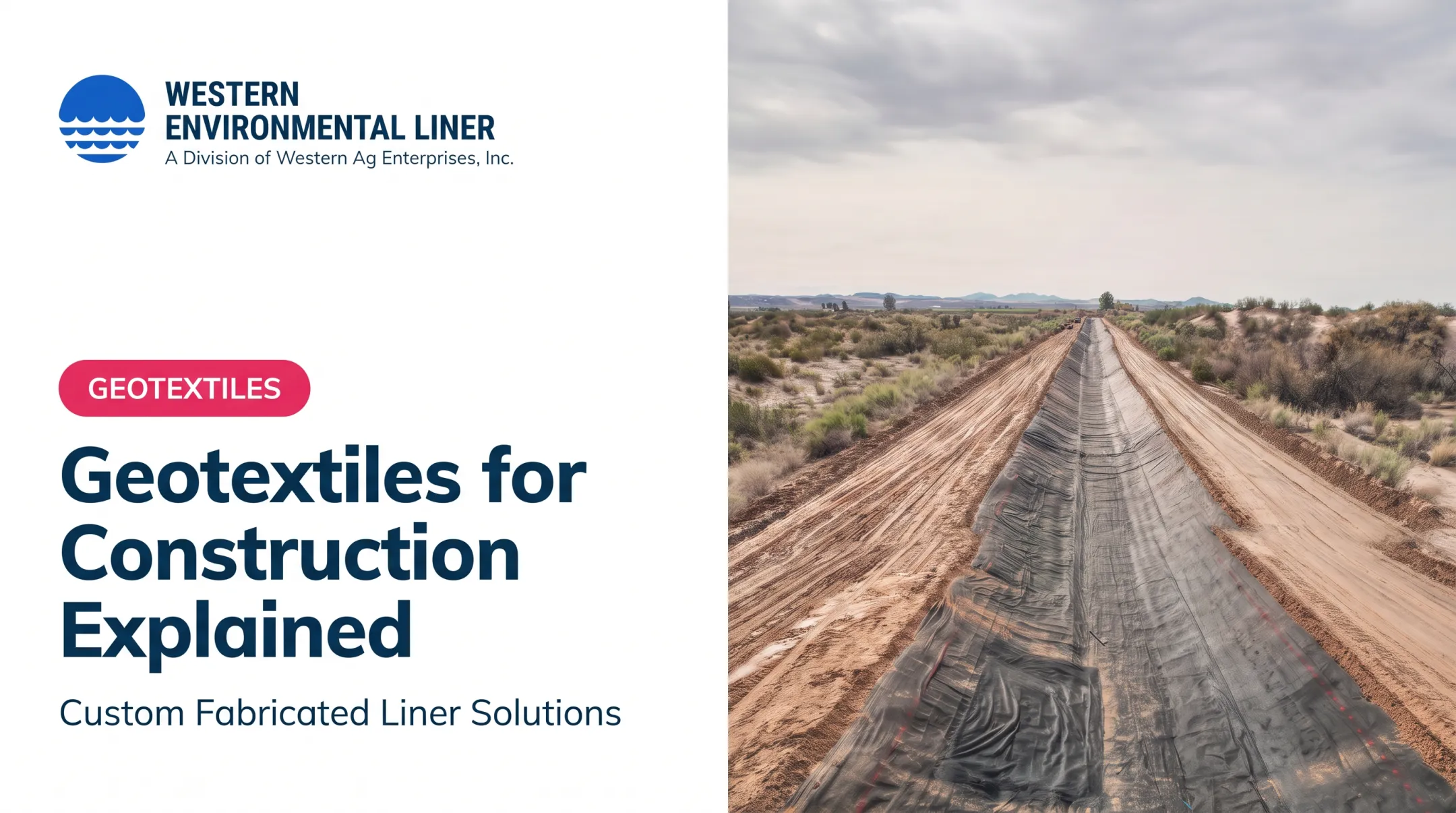
Geotextiles are flexible, permeable sheets. Woven versions use warp and weft threads. Nonwoven versions join continuous or staple fibers mechanically, thermally, or chemically. Knitted versions connect threads by knitting.
Typical uses include:
- Road and rail separation
- Drainage and filtration
- Erosion control and riprap underlayment
- Pipe wrapping
- Liner protection in landfills and ponds
- Limited reinforcement
Woven products tend to offer higher strength and dimensional stability. Nonwovens tend to offer better filtration, cushioning, and flexibility. Select woven or nonwoven based on project specifications.
Western Environmental Liner's needle-punched nonwoven geotextile is 100% polypropylene staple fiber, available from 4 oz to 32 oz. The 8 oz weight is the most common, and it works as a puncture-protecting underlayment beneath liners.
Geogrids
Geogrids are open networks of polymer ribs. They reinforce soil or aggregate by interlocking and spreading load. They are not barriers.
- Uniaxial: main strength along the roll; retaining walls and slopes
- Biaxial: strength in two directions; road bases and foundations
- Triaxial (triangular): multidirectional loading with more uniform properties
Design must account for installation damage, durability, and creep, not short-term strength alone. Subgrade conditions and installation quality matter too.
Geocells
Geocells are expandable, honeycomb-like three-dimensional cells that confine soil, sand, or aggregate. They stabilize:
- Unpaved roads
- Steep slopes, channels, and riverbanks
- Working platforms
Expect extra labor for deployment, anchoring, and filling. Choose perforated or non-perforated designs based on drainage needs.
Drainage, Composite, and Lightweight Materials
- Geonets: intersecting coarse strands forming an in-plane flow channel for liquid or gas
- Geopipes: perforated or solid pipes that collect or convey liquids and gases
- Geocomposites: two or more geosynthetics combined, such as a drainage core with a geotextile filter
- Geofoam: expanded polystyrene blocks used as lightweight fill
These appear behind retaining walls, beneath roads, around pipes, under landfill covers, and in leachate and gas collection. Geofoam is a fill solution, not a filter, grid, or barrier.
On New York's State Route 23A, the FHWA documented EPS geofoam that replaced upper slide-area material, cut slide-driving forces, and rehabilitated the roadway.
Barrier and Containment Materials
Geomembranes are continuous, relatively impermeable synthetic sheets. Common polymers:
- HDPE: stiffer, thermally field-welded
- LLDPE: more flexible, factory-fabricated or field-installed
- fPP: flexible polypropylene, reinforced or not
- PVC: flexible, but buried use limits UV exposure and plasticizer loss
- EPDM: nonreinforced or scrim-reinforced
- Reinforced polyethylene: fabric scrim construction; identify the specific product
Selection hinges on chemical compatibility, flexibility, UV exposure, temperature, thickness, seam method, and puncture resistance.
Geosynthetic clay liners (GCLs) are bentonite layers fixed between geotextiles or bonded to a geomembrane. They work with or beneath other liner systems in landfills, lagoons, mining, and agricultural containment.
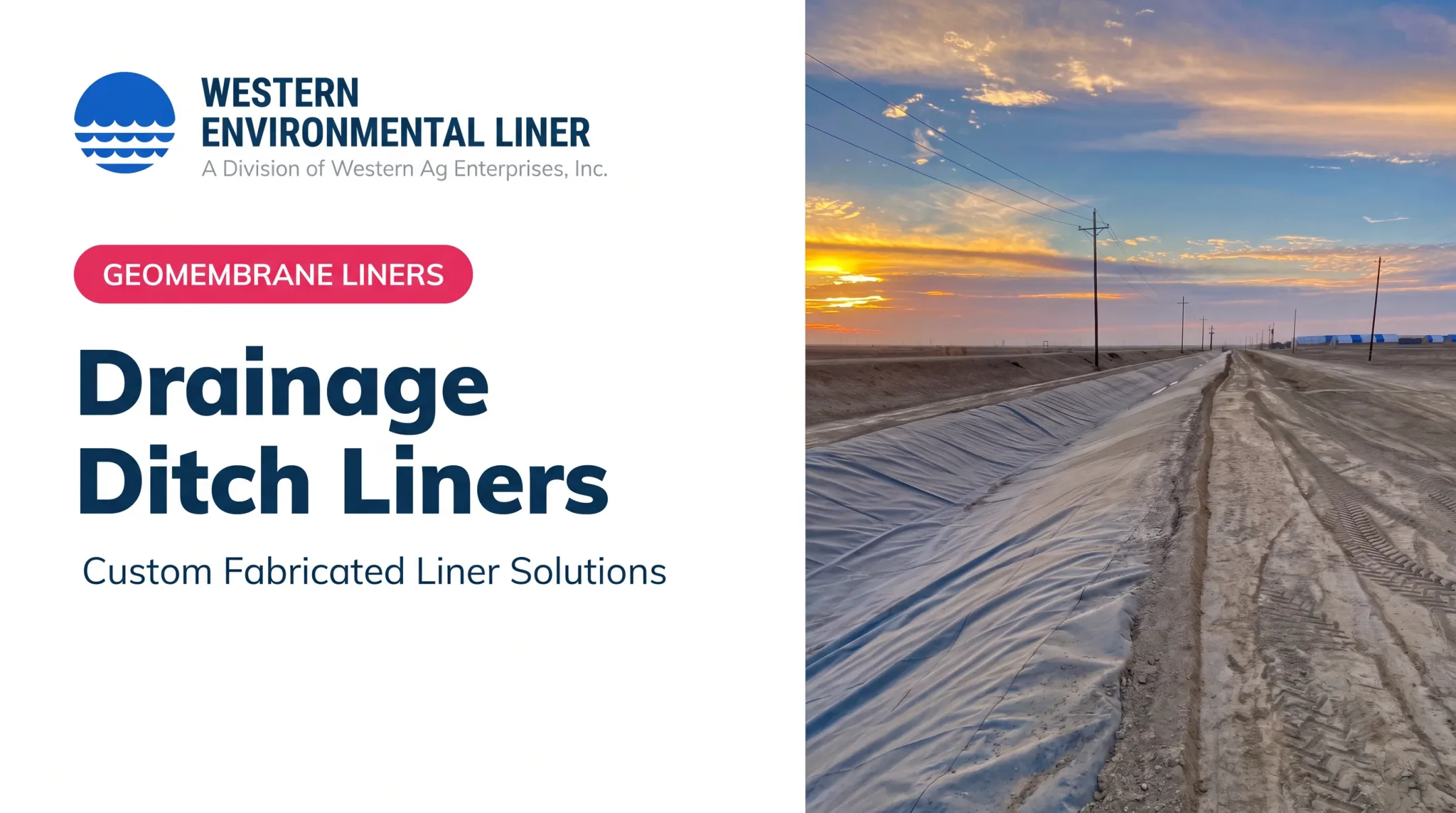
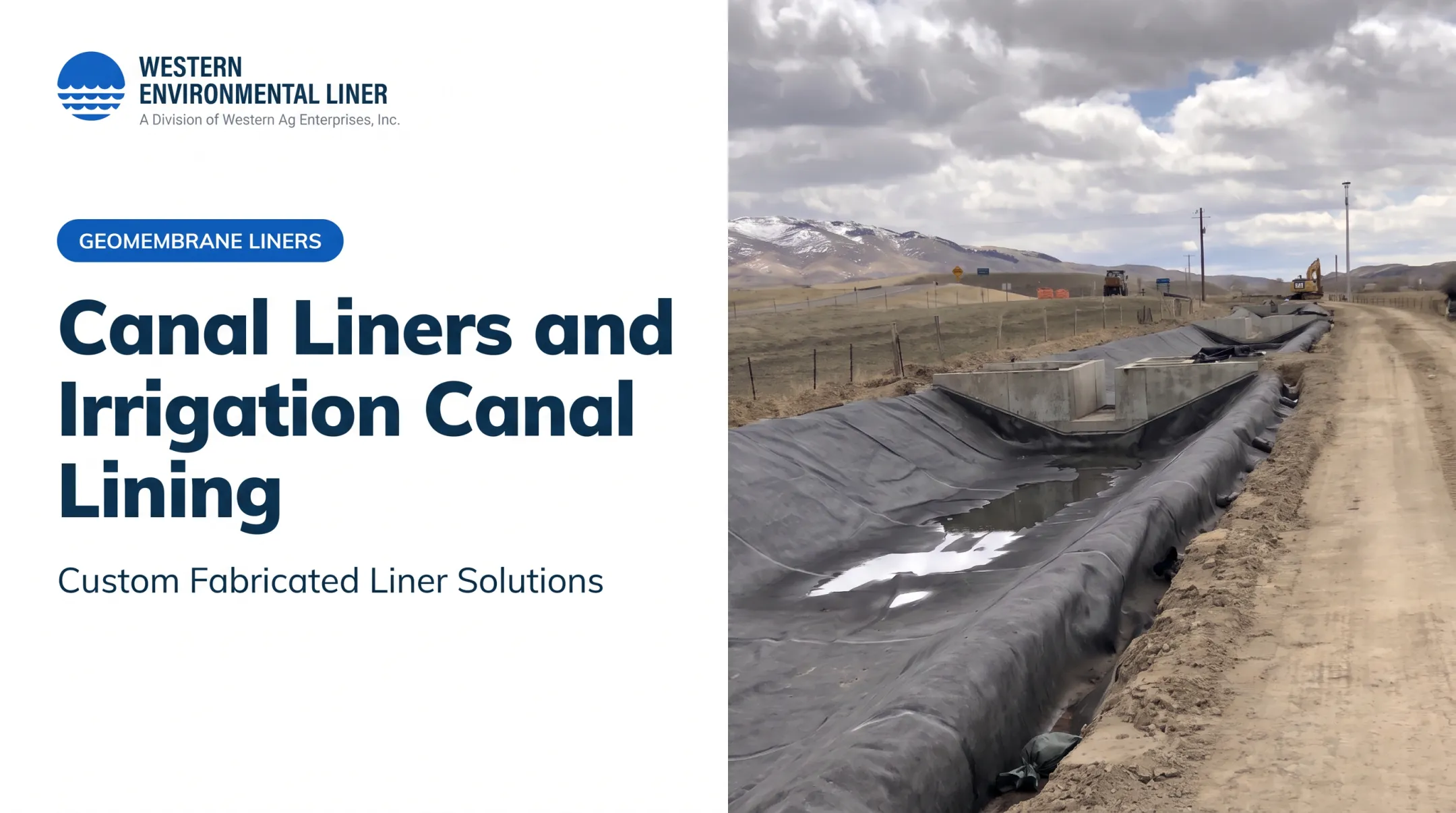
Containment uses include ponds, irrigation reservoirs, canals, ditches, waste lagoons, frac pads, landfills, and industrial secondary containment.
Western Environmental Liner custom-fabricates geomembrane panels in its factories, welds them before delivery, and offers turnkey installation by an IAGI-certified crew. One-piece liners reach 150,000 square feet.

How to Choose the Right Type of Geosynthetic Material
Start with the required function and site conditions, not the most advanced or widely advertised product.
Purpose and Site Conditions
Name the primary need: reinforcement, separation, filtration, drainage, erosion control, protection, lightweight fill, or containment. If you need more than one, consider a composite system.
Then assess the site:
- Soil type, groundwater, and slope
- Loading and settlement risk
- Flow rates and fluid chemistry
- UV exposure, temperature swings, and freeze-thaw
- Sharp aggregate or construction debris
Material Specifications
Compare these properties using manufacturer data:
- Tensile strength and stiffness
- Puncture resistance and thickness
- Permeability, opening size, and transmissivity
- Seam performance and friction
- Chemical compatibility
Treat data-sheet values as typical, not limiting.
Chemistry matters. New Mexico's pit rule requires compatibility with petroleum hydrocarbons, salts, and acidic or alkaline solutions. NRCS 521 requires manufacturer-recommended UV protection, and PVC and GCL installations need soil cover.
Scale and Constructability
Factor in constructability early:
- Project size and roll or panel dimensions
- Field seams, anchoring, and access
- Equipment and installer expertise
Prefabrication can simplify large or irregular sites. It does not remove the need for subgrade preparation and quality control. A pond subgrade should be smooth, dry, and free of rocks, roots, debris, and voids.
Lifecycle Cost and Compliance
Total cost covers material, freight, fabrication, preparation, installation, inspection, repair, and replacement. The International Geosynthetics Society calls for durability that matches design life, not just low initial spend. Verify engineering requirements, environmental regulations, and warranties before approval.

What to Check Before Finalising a Geosynthetic Material
What to Check Before Finalizing a Geosynthetic Material
Don't pick a product because it's cheapest, familiar, or newest. Match it to the function and the risk.
Documents to Review
- Manufacturer technical data and testing documentation
- Chemical compatibility information
- Installation instructions and seam or connection requirements
- Warranty terms
- Project and regulatory specifications
Rules are application-specific. Municipal landfills under 40 CFR 258.40 have a composite-liner route with a 60-mil HDPE option over at least 2 ft of compacted soil. New Mexico temporary pits call for 20-mil string-reinforced LLDPE or an approved equivalent. These are not interchangeable.
Design and Quality Assurance
Confirm the design covers:
- Subgrade preparation and drainage
- Anchoring, overlaps, and seams
- Protection layers and infill
- Weather exposure during construction
- Future inspection and repair access
Installed integrity is not guaranteed by material specs. A 2024 pond study of 195 projects found 15% exceeded 20 leaks per hectare. Seam testing, CQA, and certified installers (IAGI certifies technician welding proficiency) address different parts of that risk.

Higher upfront cost for better materials or qualified installation often reduces repairs later. Weigh that against the budget honestly.
Conclusion
Geosynthetics are a family of materials with different structures and functions. Geotextiles filter and separate, geogrids and geocells reinforce, drainage products move fluid, geofoam lightens loads, and geomembranes and GCLs contain.
Define the project objective, evaluate site and fluid conditions, review technical specifications, and involve qualified design or installation professionals before finalizing a system.
Frequently Asked Questions
What is a geogrid and how much does it cost?
A geogrid is an open-grid reinforcement product that interlocks with soil or aggregate. Cost varies with polymer, tensile strength, design, quantity, freight, site conditions, and installation, so get project-specific quotes.
What are geosynthetic materials?
They are manufactured products used with soil and other earth materials for reinforcement, separation, filtration, drainage, erosion control, protection, and containment.
What are the different types of geosynthetic materials?
The main types are geotextiles, geogrids, geocells, geonets, geopipes, geofoam, geocomposites, geomembranes, and geosynthetic clay liners. Each serves a different function.
What is the difference between geotextiles, geogrids, and other geosynthetic materials?
Geotextiles are permeable fabrics, geogrids reinforce, and geocells confine soil in 3D cells. Drainage and composite products move fluid, geofoam is lightweight fill, and geomembranes and GCLs form low-permeability barriers.
What is the purpose of a geotextile?
Geotextiles separate, filter, drain, control erosion, protect liners, and sometimes reinforce. Woven or nonwoven construction depends on the project's requirements.
What are geomembranes made of?
Synthetic polymers such as HDPE, LLDPE, polypropylene, PVC, and EPDM, chosen for impermeability, chemical resistance, flexibility, and UV stability. Confirm the polymer and compatibility for your application.