
Introduction
An aquaculture pond system is a planned water body plus the infrastructure that keeps animals alive and harvestable: inlets, drains, aeration, screens, and access. A stock pond or irrigation pond holds water. A production pond has to manage oxygen, solids, disease, and harvest.
Operators quickly run into stacked challenges: water retention, water quality, biosecurity, weather, harvest access, and permits. Permitting often hinges on meeting a formal design standard. NRCS Conservation Practice Standard 397 defines an aquaculture pond as an impoundment for farming freshwater or saltwater organisms, with design expectations that vary by species.
This guide covers pond types, sizing and site design, liner selection, construction details, and day-to-day operation.
Key Takeaways
- Match pond type to species, life stage, intensity, water supply, and harvest method.
- Size ponds from biomass, aeration, depth, and drainage, not a universal dimension.
- Line ponds where seepage or groundwater protection matters, and prepare the subgrade first.
- Treat aeration, drainage, biosecurity, and emergency plans as core system parts.
Types of Aquaculture Pond Systems
By construction method
- Earthen: Bare soil or compacted earth. Cheapest to build, but only works where soils hold water. Seepage design is site-specific.
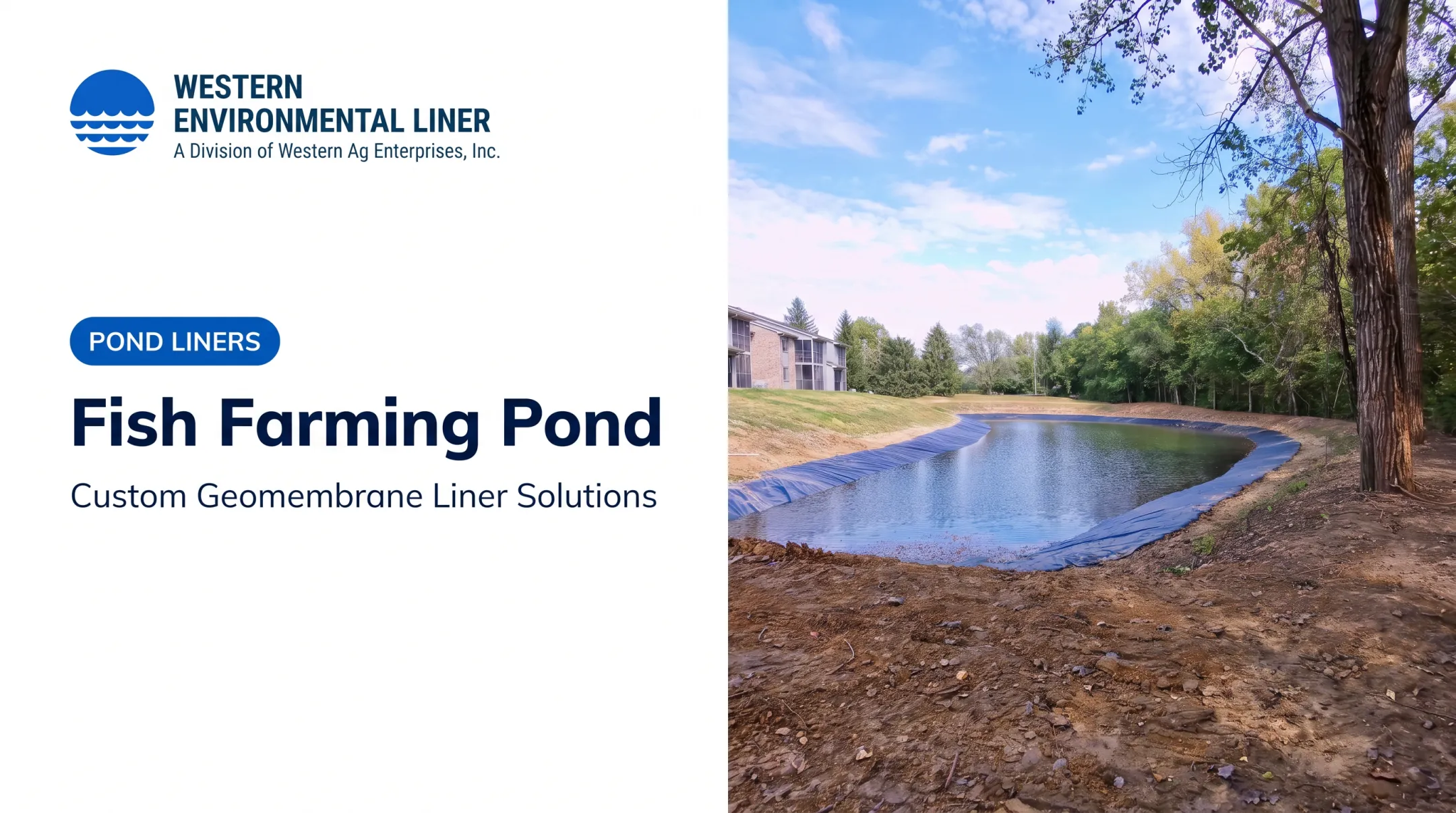
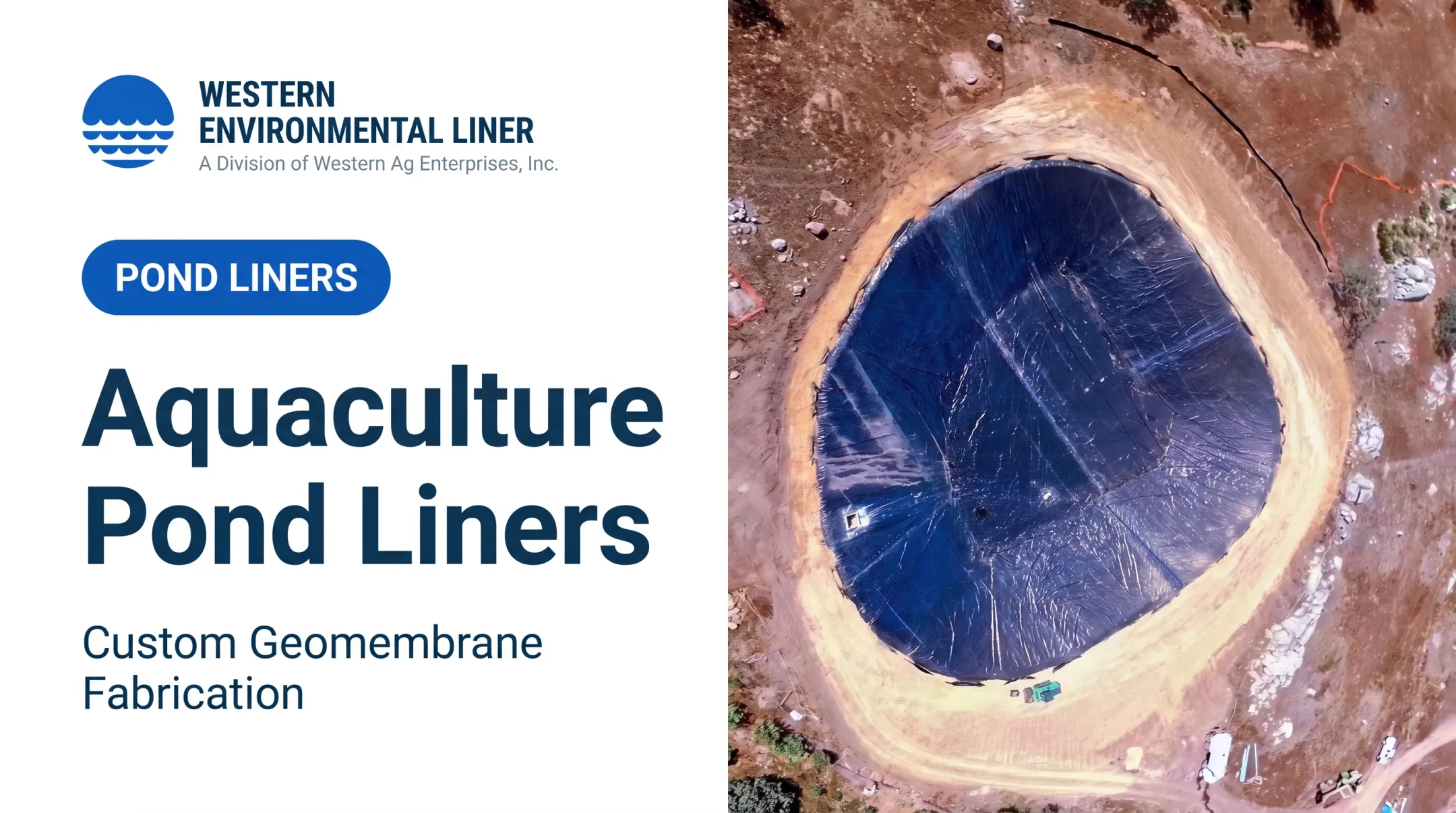
- Geomembrane-lined: A manufactured barrier. NRCS supports lining where excessive seepage or nutrient transport to groundwater must be controlled, using material compatible with the cultured organisms.
- Concrete: Reinforced or plain concrete reduces seepage, but joints and pipe penetrations need careful detailing.
- Hybrid: Earthen embankments with lined floors, or concrete structures at outlets and harvest basins.
Construction type does not set production intensity. High outputs occur in earthen shrimp ponds and aerated catfish ponds alike.
By production intensity
- Extensive: Low stocking density, little or no supplemental feed. Wind and water exchange manage water quality.
- Semi-intensive: Fertilization, supplemental feeding, and water exchange support higher stocking.
- Intensive: Natural food is not enough, so complete feeding and heavy aeration become necessary. Monitoring and labor rise with each step.
By function
- Nursery: Fry or fingerlings grow here before moving on. Catfish eggs incubate in a hatchery, then fry enter nursery ponds.
- Grow-out: Fingerlings reach market size.
- Broodstock and holding: Spawners and stock awaiting transfer.
- Quarantine: Isolation and observation of incoming animals to cut disease-introduction risk.
- Settling and treatment: SRAC reports that 2-4 hours of settling can substantially reduce suspended solids. Mississippi State's split-pond design allots roughly 15-20% of the area to fish and 80-85% to treatment.
Many farms link these into one flow: clean water in, production ponds, settling, then treatment before discharge.
Designing an Aquaculture Pond System
Set production goals first
Species, life stage, stocking plan, feeding method, and management level drive every dimension. No single standard exists. Examples from US extension sources:
| Species | Size and depth | Notes |
|---|---|---|
| Catfish | 8-10 acres easier to manage; 5-6 ft average depth | Intensive: 4-8 acres, 5-10 hp/acre aeration |
| Hybrid striped bass | 1-10 acre grow-out; depth up to 5 ft | Paddlewheels about 2 hp/acre; DO above 4 mg/L |
| Pacific white shrimp (2024 trial) | 0.1 ha earthen ponds | 25 shrimp/m², experimental only |
Catfish stocking in industry practice ranges from under 3,000 to over 18,000 fish per acre, with no consensus optimum. Stocking density and harvested yield are different measures of capacity.
Evaluate the site and water source
Check these before you commit:
- Soil: SRAC prefers 15-20% clay; well-graded soils with 5-10% clay can work. Coarse sand and gravel do not.
- Water budget: Rainfall, evaporation, and seepage set supplemental water needs.
- Groundwater and flood exposure: Plan for drainage if the pond bottom sits within 2 ft of seasonal high groundwater.
- Logistics: Equipment access, electrical service, and a reliable water source.
- Contaminants: NRCS calls for screening soils and incoming water for harmful chemicals.
Confirm permits before construction
Discharge, fill, species containment, and water withdrawal each need their own review.
EPA's NPDES guidance lists warmwater criteria of at least 30 discharge days a year and 100,000 lb of annual production. Point-source discharges to waters of the US still need coverage even if you fall below those thresholds. Section 404 governs fill in jurisdictional waters.
States add rules such as aquaculture registration or consumptive-use permits. Confirm each requirement with your state agency before construction.
Calculate volume and capacity
Volume is surface area times average depth. One acre-foot is 43,560 ft³. Irregular or sloped ponds need representative depth readings.
- NRCS 397 calls for edge depth of at least 3 ft and a floor slope toward the outlet of at least 0.2 ft per 100 ft.
- Mississippi State recommends catfish inside slopes of 3:1 to 4:1.
- Freeboard is crest elevation minus design water level, and it must allow for embankment settlement.
- Usable volume has to cover fish, circulation, sediment storage, and seasonal swings, not just the excavated footprint.
Plan hydraulics and support systems
Core water-control pieces include:
- Screened inlets, drains, and overflow structures
- Standpipes and harvest basins
- Aeration, pumps, and backup power
Keep clean inflow, production areas, settling zones, and discharge points separate. That layout improves water management and biosecurity.

Build in safety and resilience
- Stable embankments, safe slopes, and fencing.
- Predator control and escape prevention.
- Flood siting for restricted nonnative systems; Florida's 2023 BMPs require at least 1 ft above the 100-year flood elevation.
- Equipment sanitation and quarantine between ponds.
- Plans for outages, extreme rain, drought, freezing, liner damage, and disease.
Selecting Pond Liners and Planning Construction
When a liner makes sense
A liner reduces seepage, conserves water, isolates pond water from native soil, and helps protect groundwater. It also gives predictable performance where soils are poor.
It does not replace sound design, drainage, embankment stability, water-quality management, or permits.
Comparing materials
| Material | Key points |
|---|---|
| Reinforced polyethylene (RPE) | Strong tear and puncture resistance; common for larger ponds |
| Reinforced polypropylene (RPP) | Extra coating for UV and weathering; often used on smaller ponds; costs more |
| Compacted clay | NRCS 520 sets a seepage criterion; table minimum 12 in at depths up to 16 ft |
| Concrete | NRCS 522; joints and penetrations need detailing |
| Geotextile | Cushions the liner against angular stones; not a sealing barrier |
NRCS does not recommend PVC for aquatic production because leaching stabilizers may harm aquatic species. Test methods differ by polymer, so published elongation figures are not a flexibility ranking.
NSF/ANSI 61 addresses drinking-water contaminants, not fish health. Ask the supplier for documentation of aquatic use, seam performance, and compatibility with your water chemistry.
Specify the whole liner system
- Thickness and strength: Match to puncture risk and exposure. Western Environmental Liner's Aqua series spans 12 to 30 mil, with Aqua 24 rated for long-term non-hazardous containment.
- Seams: Factory-welded panels reduce field-weld risk. Western Environmental Liner calls field welding a leading cause of liner failure.
- Anchor trenches: At least 1 ft deep by 1 ft wide on earthen perimeters.
- Penetrations: Use custom pipe boots, and protect liners from pressure at outlets with splash pads or rip rap.
- Subgrade: Keep it flat, smooth, dry, and free of rocks, roots, and debris. Add at least 6 in of compacted bedding when needed; 8 oz geotextile is usually enough.
Installation quality control
A typical sequence:
- Inspect the subgrade.
- Place underlayment.
- Deploy the liner.
- Weld and test seams.
- Detail penetrations.
- Anchor the perimeter.
- Complete a final inspection and fill slowly.
NRCS guidance calls for passing trial-seam tests before production seaming, daily as-built panel sketches, a construction diary, and tested repairs. ASTM D5820 checks air-channel continuity on dual seams, not seam strength. Record weather, material IDs, and repairs.

A custom-fabrication option
Western Environmental Liner makes custom geomembrane liners at factories in Tolleson, Arizona; Romulus, New York; and Great Bend, Kansas. Panels run up to 300' x 300' and often need just one piece.
The company offers RPE, RPP, and geotextile along with turnkey installation by an IAGI-certified installer. Custom fish pond liners generally suit ponds of 10,000 square feet or larger.
The company does not handle earthwork or subgrade engineering, so those need a separate contractor. Confirm current specifications, warranties, and aquatic suitability for your species before ordering.
Operating and Maintaining an Aquaculture Pond System
Commission before stocking
Work through commissioning in order:
- Inspect the liner, embankments, drains, screens, aerators, pumps, and overflow controls.
- Fill the pond, check for leaks, and confirm water levels and circulation behave as designed.
- Record baseline water quality, then acclimate and stock according to species needs.
Monitor water quality
Record species, life stage, and units with every reading.
| Parameter | Benchmark |
|---|---|
| Catfish DO | Aeration commonly starts around 3-4 mg/L |
| Hybrid striped bass DO | Above 4 mg/L |
| pH | 6.5-9.0 desirable |
| Nitrite | Below 0.1 mg/L NO₂-N |
| Alkalinity | 50-150 mg/L as CaCO₃ |
| Tilapia temperature | Mortality begins below 50°F |
Ammonia toxicity rises with pH and temperature, so there is no single safe total ammonia figure. Feeding, biomass, weather, and aeration all shift these readings. NRCS notes that catfish ponds fed 30-50 kg/ha/day may occasionally need emergency aeration, and algal die-offs or ice cover can deplete oxygen.

Manage solids, feed, and vegetation
Overfeeding, accumulated solids, heavy vegetation, and poor circulation degrade water and raise disease risk. Mow banks and control aquatic weeds to reduce predator cover. Log these items routinely:
- Feeding and stocking
- Mortalities and treatments
- Water tests and maintenance
- Weather, plus water additions or discharges
Inspect the complete system
- Check liner surfaces, seams, anchors, and penetrations on a schedule.
- Walk embankments for erosion, and test inlets, outlets, screens, pumps, aerators, and fencing.
- Keep emergency overflow paths clear.
- Repair small defects promptly and restore original cover thickness.
- Review the full system after major storms; USDA's hurricane guide advises backup generation for aeration and post-flood checks for escaped fish and blocked drains.
Frequently Asked Questions
What are the different types of aquaculture ponds?
By construction: earthen, lined, and concrete. By intensity: extensive, semi-intensive, and intensive. By function: nursery, grow-out, broodstock, quarantine, settling, and treatment ponds.
What is the ideal pond size for aquaculture production?
It depends on species, stocking density, water supply, aeration, depth, harvest method, land, labor, and budget. Catfish ponds of 8-10 acres are common, while hybrid striped bass grow-out runs 1-10 acres. Use a site- and species-specific design.
How big is a 10,000-liter pond?
10,000 liters is about 2,640 gallons (10 cubic meters), a volume rather than a footprint. Rough footprints at that volume include about 16 ft × 7 ft at 3 ft average depth, 13 ft × 8 ft at 3 ft, or 33 ft × 7 ft at 1.5 ft.
When should an aquaculture pond be lined?
Line when soils are permeable, water is scarce, groundwater needs protection, or the subgrade is unsuitable or contaminated. Verify the material is suitable for aquatic organisms and meets local rules.
What type of pond liner is best for aquaculture?
It depends on soil, water chemistry, UV exposure, climate, pond shape, puncture risk, and installation method. Have a professional specify it, and get documentation of aquatic-use compatibility. NRCS advises against PVC for aquatic production.