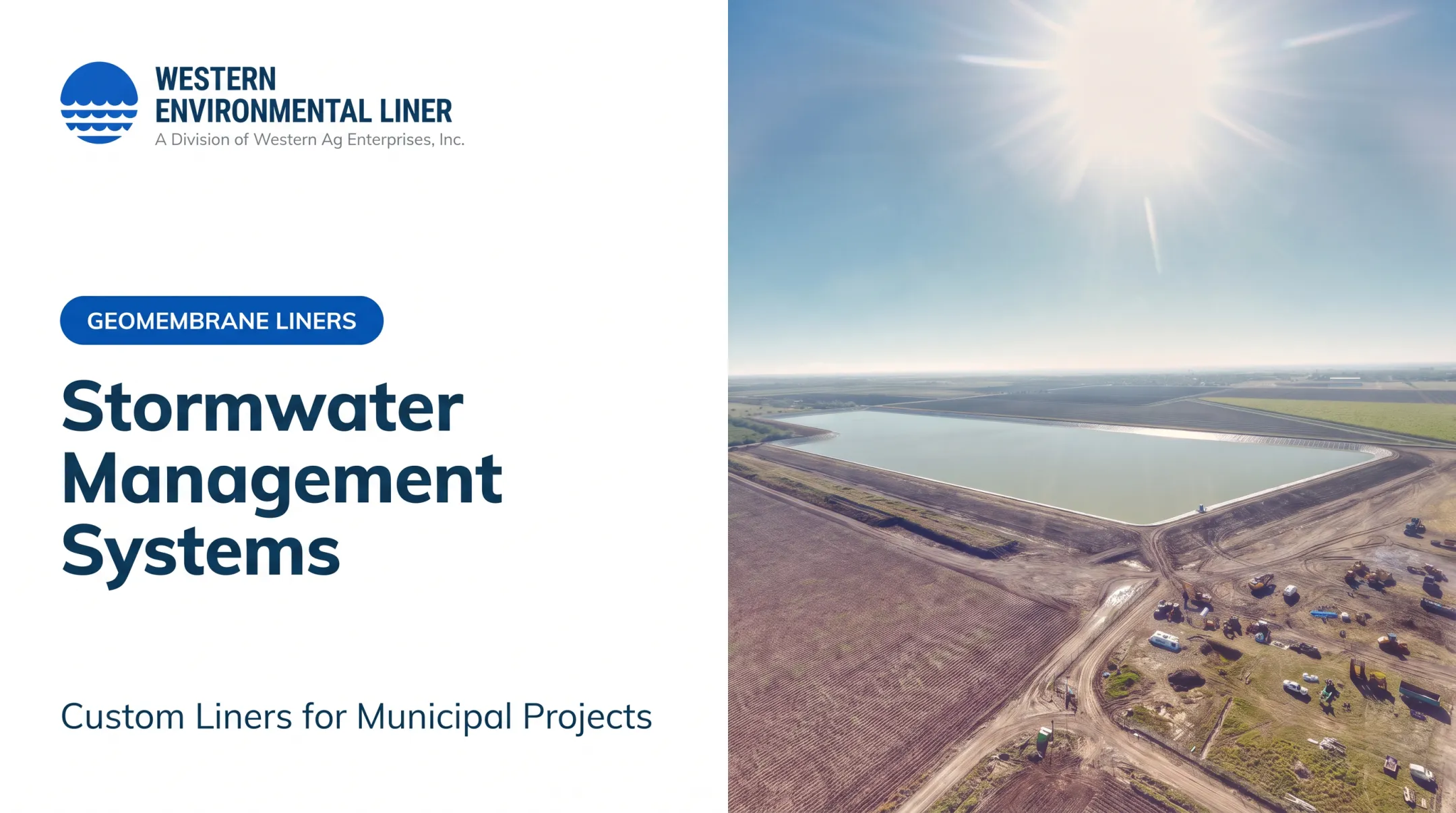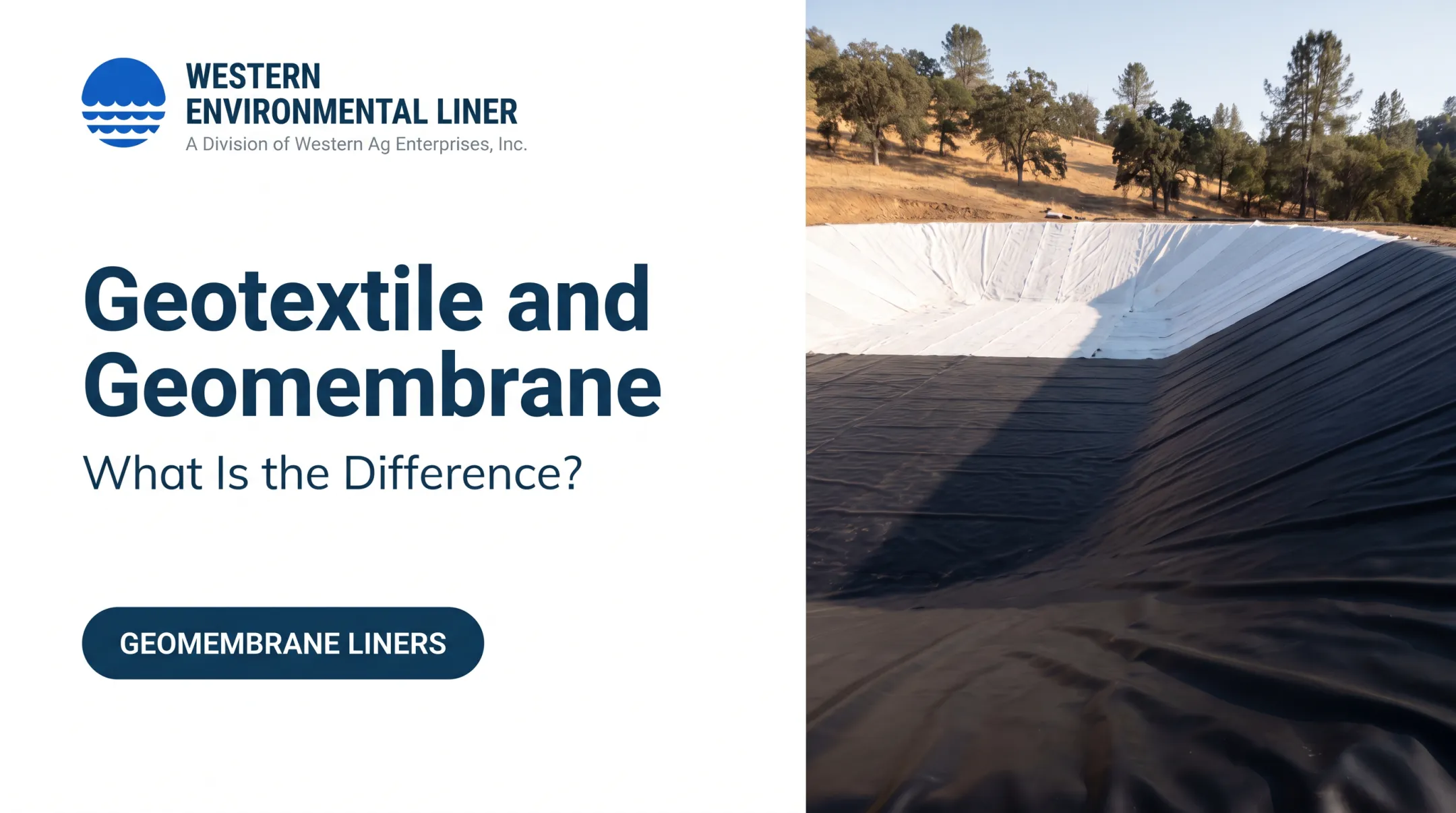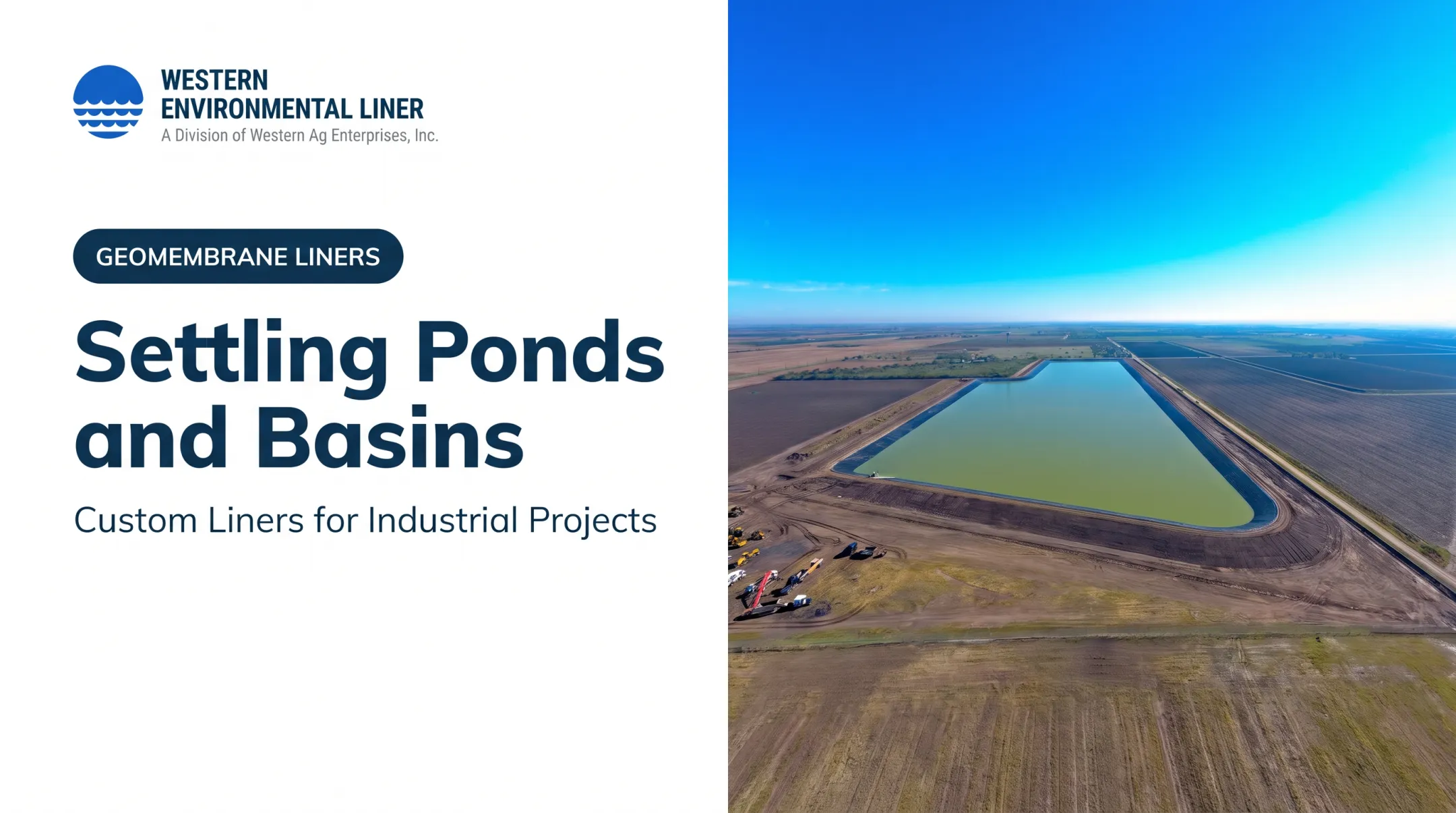

The choice matters for developers, farms, contractors, municipalities, and facility operators. It affects flood control, water-quality treatment, footprint, maintenance, safety, and permit approval. For scale, UF/IFAS cites at least 76,000 stormwater ponds in Florida alone, so these design decisions get made constantly.
This guide covers how each type works, how to choose, and when a geomembrane liner enters the conversation.
Key Takeaways
- Dry ponds (detention basins) hold stormwater temporarily, then drain to a mostly dry state.
- Wet ponds (retention ponds) keep a permanent pool and treat runoff continuously.
- Neither wins universally; soils, groundwater, land, climate, and local rules decide.
- A liner may be warranted for seepage control, but only after site investigation.
Dry Ponds vs Wet Ponds: Quick Comparison
| Factor | Dry pond | Wet pond |
|---|---|---|
| Normal state | Empty between storms | Permanent pool |
| Main job | Temporary storage, peak-flow control | Flow control plus ongoing treatment |
| Water quality | Sediment settling during detention | Longer holding time, biological uptake |
| Footprint | Large land need; base should stay above groundwater | Typically 1-3% of drainage area; can intersect groundwater |
| Maintenance | Mowing, erosion repair, outlet checks | Algae, aquatic vegetation, sediment, safety features |
| Cost and permits | Site-specific; set by local authority | Site-specific; set by local authority |
Treatment numbers to know
New Jersey's 2026 design guidance lists total suspended solids (TSS) removal of 40-60% for dry extended detention and 50-90% for wet ponds. Those are design rates for one state, and detention time controls the dry figure. Nutrient assumptions differ in method between sources, so don't treat them as a head-to-head ranking.

Maintenance and safety
- Dry ponds: semiannual inspections, slope mowing, and forebay sediment removal at about 50% capacity loss.
- Wet ponds: monthly to quarterly inspections and after major storms, plus sediment checks every 1-3 years.
- Wet ponds need open-water safety features such as benches and flatter slopes in some state criteria.
The authority having jurisdiction sets required storage, discharge, treatment, and safety criteria. Cost depends on the site.
What Is a Dry Pond?
A dry pond is a temporary storage basin, also called a detention pond or dry detention basin. It holds runoff after a storm, then drains so the basin stays dry between events.
Typical parts include:
- Inlet and forebay that catch coarse sediment
- Shallow low-flow channel for small flows
- Controlled riser or outlet that releases water slowly
- Emergency spillway for very large events
Dry ponds fit when the main goal is cutting downstream peak flows, when a permanent pool is impractical, or when land, groundwater, or maintenance conditions favor a basin that drains. EPA guidance treats them as typically suited to drainage areas of 10 acres or more.
They still need treatment features. Many include forebays, vegetation, and engineered outlets to improve water quality.
What Is a Wet Pond?
A wet pond is a retention pond built to hold a permanent pool. Extra stormwater rises above the normal water level during rain, then discharges through a controlled outlet. Settling and biological uptake treat runoff between storms.
Common uses include:
- Developments needing ongoing water-quality treatment
- Sites where a permanent water feature fits the design
- Some agricultural, recreational, or water-storage applications
A stormwater wet pond isn't automatically suitable for irrigation, recreation, or fish. EPA documents irrigation use, but the water balance must account for withdrawals.
UF/IFAS recommends testing water before fishing or irrigation use, and algae and low oxygen can harm fish. Each purpose needs its own design and approvals.
Wet ponds also depend on water supply. EPA generally points to 10-20 contributing acres in humid regions and regards them as unsuitable in arid climates.
What Do Dry and Wet Ponds Have in Common?
Both are engineered containment and drainage systems. Either one needs:
- Correctly sized storage and stable slopes
- Working inlets, outlets, and erosion protection
- Sediment and vegetation management
- Inspection access
- A long-term maintenance plan
Skip any of these and either pond type fails in practice.
Dry Ponds vs Wet Ponds: What Is Better for a Project?
Start with the priority. Is it peak-flow attenuation, permanent water, treatment, seepage control, land efficiency, lower maintenance, or aesthetics? Most projects mix several.
Site conditions decide feasibility
- Soils: rapidly draining soils make a wet pool hard to hold.
- Groundwater: a dry basin base shouldn't intersect it; wet ponds can.
- Climate: rainfall and evaporation determine whether a pool survives dry months.
- Water balance: New Jersey requires daily analysis for a wet, dry, and average year.
Get geotechnical and hydrologic evaluation before choosing a type.
Regulation varies
No nationwide rule mandates one pond type. Under the federal small-MS4 program, EPA's fact sheet describes post-construction controls for projects disturbing at least 1 acre, but states and municipalities set the details. Minnesota's manual, for example, accepts wet extended detention for water-quality goals while dry extended detention may only address quantity. Check your state, watershed, and city.

Situational guidance
- A dry pond tends to fit when temporary storage, land efficiency, and lower upkeep matter most.
- A wet pond tends to fit when permanent water and stronger continuous treatment are justified by the site.
Hydraulic suitability, treatment credit, and permit acceptance are three separate questions.
When Might a Geomembrane Liner Be Relevant?
Pond type and lining are separate decisions. A liner becomes relevant when soils leak too much to hold a dependable pool or when seepage matters for water or groundwater protection.
Common regulatory triggers include:
- NRCS Practice Standard 521 applies where natural soils have excessive seepage.
- Minnesota's manual flags wet ponds over soils infiltrating at 0.3 in/hr or more as a candidate for a liner.
- New Jersey calls for impermeable lining or soil modification where soil can't prevent excessive seepage.
Choosing a liner also means weighing design, material, anchoring, subgrade, and lifecycle choices. NRCS requires a smooth, unyielding subgrade, wind-uplift anchoring, and drainage where the invert sits within 2 feet of seasonal high groundwater.
Western Environmental Liner is a U.S. custom geomembrane manufacturer and installer. The company fabricates panels up to 300' x 300' and offers turnkey installation, with IAGI-certified installation and warranties up to 20 years. It does not handle earthwork or engineering design, so coordinate liner selection with your project engineer and regulators.
Real-World Example: Two Aging Dry Basins Near Raleigh
Researchers Wissler, Hunt, and McLaughlin studied two highway-runoff dry detention basins near Raleigh, North Carolina. Neither had received vegetation maintenance since construction in 2007.
The question was how unmaintained, aging basins actually perform. The team monitored for up to a year using flow-weighted storm sampling and an annual water balance, as published in 2020.
Results:
- Both basins cut runoff volume by more than 41%.
- Constituent-load reductions ranged 59-79% in one basin and 35-81% in the other.
- Removal varied by pollutant; ammonia removal wasn't significant in one basin.

Dry basins can keep working despite neglect, which supports them where upkeep is limited. They still may not match wet-pond treatment, and results depend on local soils and storms.
When seepage control matters for a pond, reservoir, lagoon, or other containment project, Western Environmental Liner can help with custom liner and installation requirements.
Conclusion
Dry and wet ponds solve related but different problems. The right pick depends on your water-management goal, soils, groundwater, space, regulations, and long-term maintenance plan.
Bring the owner, engineer, contractor, and regulator together early. Where seepage control is needed, add qualified geomembrane liner professionals before specifications are written.
Frequently Asked Questions
Should I buy a house near a retention pond?
Neither good nor bad by default. Check flood risk, who maintains the pond (Orlando assigns private pond upkeep to the owner), easements, access, safety features, drainage records, and insurance.
Why does Florida have retention ponds?
Heavy rain, flat terrain, development runoff, and high groundwater all drive their use. UF/IFAS notes ponds provide flood control and pollutant removal. Requirements vary by site and water-management district.
How do ponds not dry out?
Wet ponds are replenished by runoff, rainfall, and sometimes groundwater, balanced against seepage, overflow, and evaporation. Low-permeability soils or a liner help hold the pool. Dry ponds are designed to drain.
What is a wet pond?
A retention pond with a permanent pool. It stores stormwater temporarily above that pool, discharges through a controlled outlet, and keeps treating runoff through settling and biological uptake.
What is a dry pond?
A detention basin that stores stormwater during and after rain, then releases it through a controlled outlet. It's generally dry between events.
Which is better, a dry pond or a wet pond?
Neither automatically. Dry ponds suit temporary flow control on sites that drain. Wet ponds suit permanent water or stronger treatment when site conditions, maintenance, safety, and regulations support them.