
You'll mostly find them on rural and low-density properties with plenty of land, often where slow-draining clay soil rules out a conventional drainfield. This article covers how lagoons operate, where they suit, how they're designed and lined, which safety controls matter, and how to maintain one.
Key Takeaways
- Lagoons treat wastewater through settling, microbes, algae, oxygen, and retention time.
- They suit larger rural lots but demand careful siting, permitting, and fencing.
- Liners limit seepage and protect groundwater, depending on soil, regulations, and the engineered design.
- Persistent odors, erosion, mosquitoes, seepage, or odd water levels call for a professional.
What Is a Septic Lagoon System?
A septic lagoon, also called a sewage lagoon or wastewater stabilization pond, is a constructed basin that receives wastewater or pretreated effluent and treats it with natural biological processes. Missouri's rules describe it as a sealed earthen basin using natural, unaided processes.
The common household type is a facultative lagoon. "Effluent pond" has no standardized onsite definition, so terms vary by region.
How It Differs From Similar Systems
Similar names don't mean similar rules. Each of these has its own design, permits, and operating demands:
- Conventional septic system: a tank plus a soil drainfield, with no open water.
- Municipal wastewater lagoon: a large public-utility facility.
- Manure lagoon: livestock waste storage, with different loading and regulation.
- Anaerobic digester: an enclosed, managed reactor.
Where Lagoons Are Considered
Missouri and Nebraska both document residential lagoons where slow-percolating soils limit drainfields. Suitability still depends on soil, groundwater, climate, occupancy, setbacks, and local approval.
Always start with your state or county onsite wastewater authority.
How Does a Septic Lagoon System Work?
Main Components of the System
Components vary by design, but a typical setup includes:
- Household collection piping
- A septic tank or aeration unit for pretreatment
- Inlet structures
- One or more lagoon cells
- Outlet or dispersal structures, where permitted
- Berms (embankments) and access controls
- Optional aeration equipment
Pretreatment matters. Missouri recommends a properly sized septic tank or aeration unit ahead of the lagoon, and keeping that unit maintained reduces sludge buildup in the lagoon itself.
Natural Biological Treatment
Treatment happens in three zones:
- Aerobic surface: sunlight feeds oxygen-producing algae, and wind and rain add more oxygen. Aerobic bacteria break down organic matter here.
- Facultative middle: aerobic and anaerobic conditions mix in varying degrees.
- Anaerobic bottom: little oxygen, where settled solids form sludge and anaerobic organisms work on it.
Algae supply oxygen to bacteria, and bacteria release nutrients that algae use. That partnership improves wastewater quality, but it doesn't remove every contaminant or make the water safe for unrestricted discharge.
Retention, Discharge, and Evaporation
Wastewater stays in the lagoon long enough to settle and be treated. Nebraska's sizing approach balances design inflow, seepage, operating depth, precipitation, and evaporation. Nebraska requires complete retention, and Nebraska Extension notes most treated sewage returns to the environment through evaporation.

Other states differ. Missouri's household guidance requires overflow to disperse into soil on the originating property, away from natural drainage ditches. Discharge to surface water is never automatically acceptable. Follow only the method your permit approves.
What Are the Benefits and Limitations of Septic Lagoon Systems?
Potential Benefits
- Treatment relies on natural processes, without machinery in the pond itself
- Clay-rich, slow-draining sites can suit lagoons when drainfields can't absorb effluent
- Properties without sewer access gain a treatment option
Main Limitations
- Land: Many states require large lots; Nebraska sets a 3-acre minimum, and berms add area beyond the water surface.
- Odors and insects: Weeds can trap grease and scum, create odors, and attract insects. Long grass gives mosquitoes a breeding ground.
- Weather: Drought lowers water levels, and ice cover can cause odors.
- Safety: Drowning is a documented hazard of unfenced lagoons, and children and pets must stay out of wastewater.
Lagoon vs. Drainfield
| Factor | Lagoon | Septic tank and drainfield |
|---|---|---|
| Footprint | Large, with berms | Smaller, mostly buried |
| Open water | Yes, needs fencing | No |
| Soil fit | Slow-draining clay | Soils that absorb effluent |
| Upkeep | Vegetation, berms, water level, sludge | Tank pumping, drainfield care |
Neither is always cheaper or easier. Costs and effort depend on soil, site, local rules, and long-term operating responsibility.
How Are Septic Lagoon Systems Designed and Protected?
Site Feasibility and Permitting
Permits come first. Missouri requires one before installing or repairing most onsite systems, though some single-family lots may be exempt.
Requirements vary by state and locality. Nebraska's Title 124, effective June 27, 2022, offers a useful benchmark:
- No lagoon on a lot under 3 acres
- 50 ft from surface water and 100 ft from private wells
- Lagoon floor at least 2 ft above seasonal high groundwater or bedrock
- Dike top at least 1 ft above the 100-year flood elevation
A qualified designer or engineer must size the system based on projected flow, occupancy, climate, and available storage. Missouri guidance, for example, suggests at least 440 sq ft per bedroom (or 900 sq ft, whichever is greater) at a 3-ft operating level. That is state guidance, not a national formula.

Structural and Safety Features
Under Nebraska's rules, berms have inside slopes no steeper than 3H:1V and outside slopes no steeper than 4H:1V. Operating depth ranges from 2 to 5 ft with at least 12 inches of freeboard. Keep surface runoff out, and establish grass cover on disturbed areas to prevent erosion.
Access controls matter just as much:
- A 4-ft fence and a locked main gate
- A sign of at least 12 x 24 inches reading "NO TRESPASSING - WASTEWATER LAGOON"
- Vegetation kept off the water's edge, since it interferes with treatment and harbors mosquitoes
Liner and Seepage Control
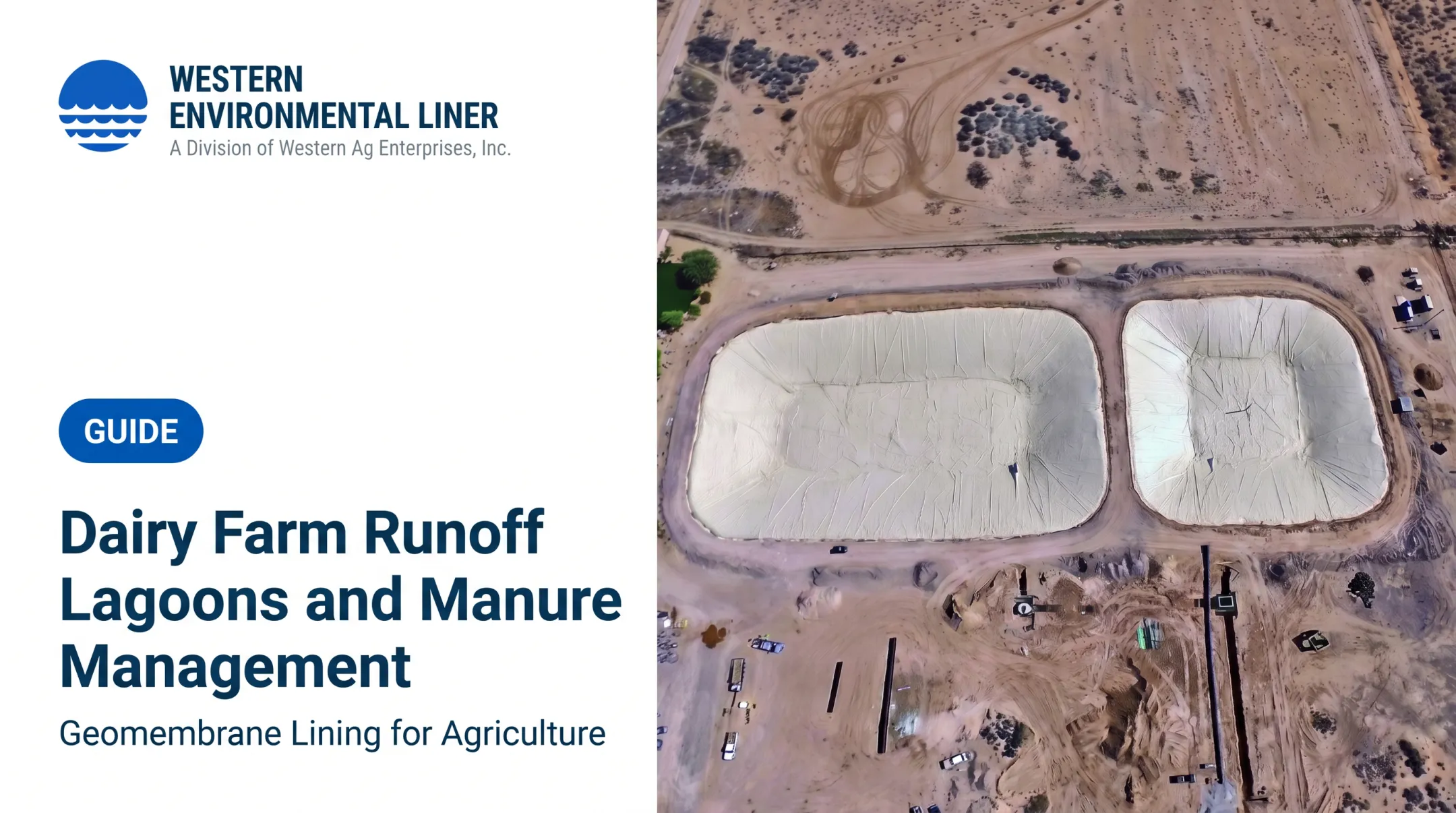
Whether you need a liner depends on regulations, soil, groundwater protection, and the engineer's design. Nebraska caps finished-basin seepage at 1/8 inch per day. If compaction can't achieve that, sodium bentonite or a synthetic liner may be used. According to Missouri's extension guidance, about 12 inches of compacted clay on the bottom and inside slopes generally provides an adequate seal.
Oklahoma offers a good picture of liner construction details. Its standards call for:
- Synthetic liners of at least 30 mils
- Sharp subgrade objects removed or covered with 4 inches of clean soil or sand
- Sealed seam overlaps of 4 to 6 inches
- Anchor trenches at least 6 inches deep
- UV and exposure protection
Seams can be checked with methods such as ASTM D5641 vacuum-chamber testing, with inspection before the lagoon is filled.
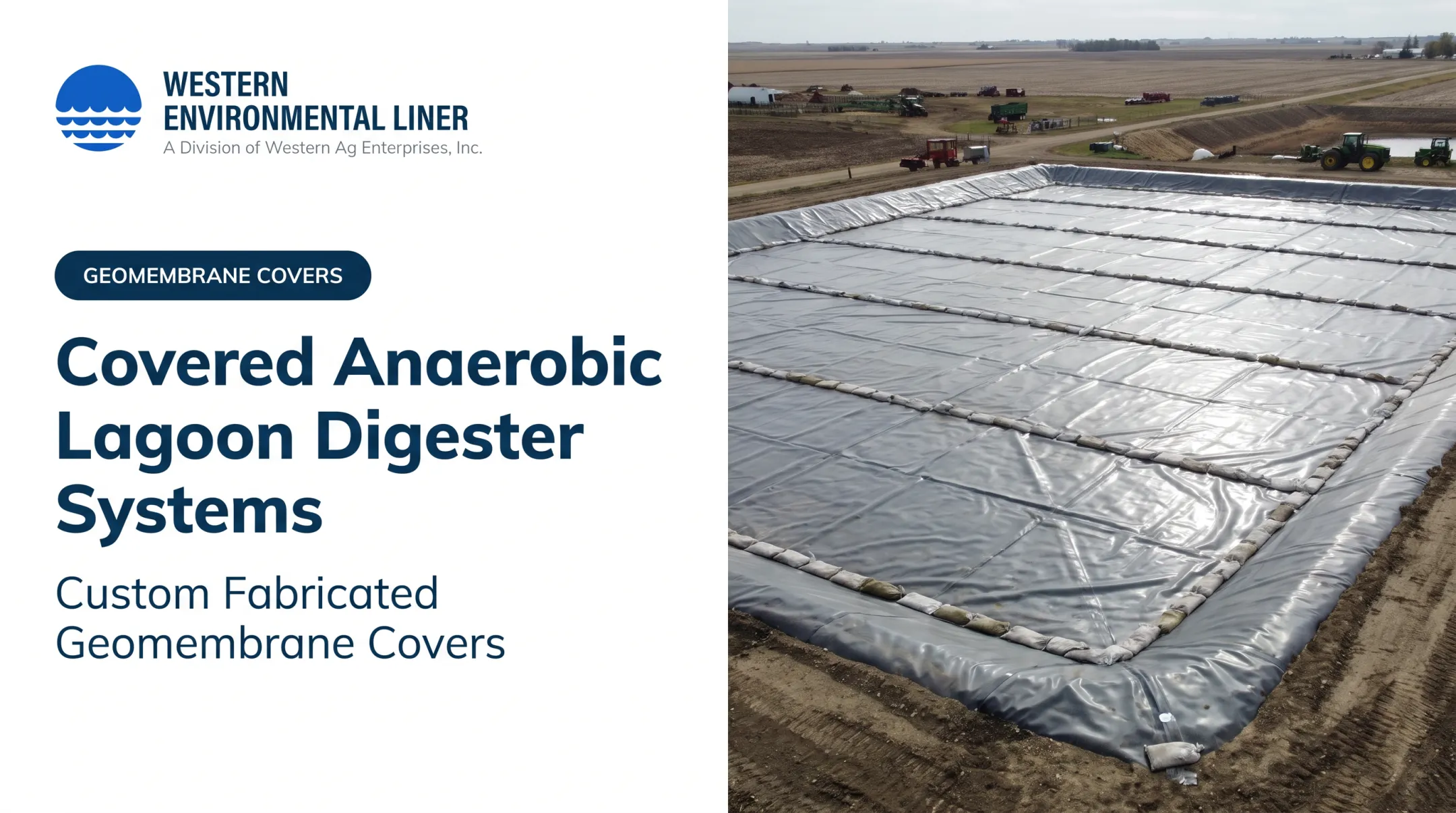
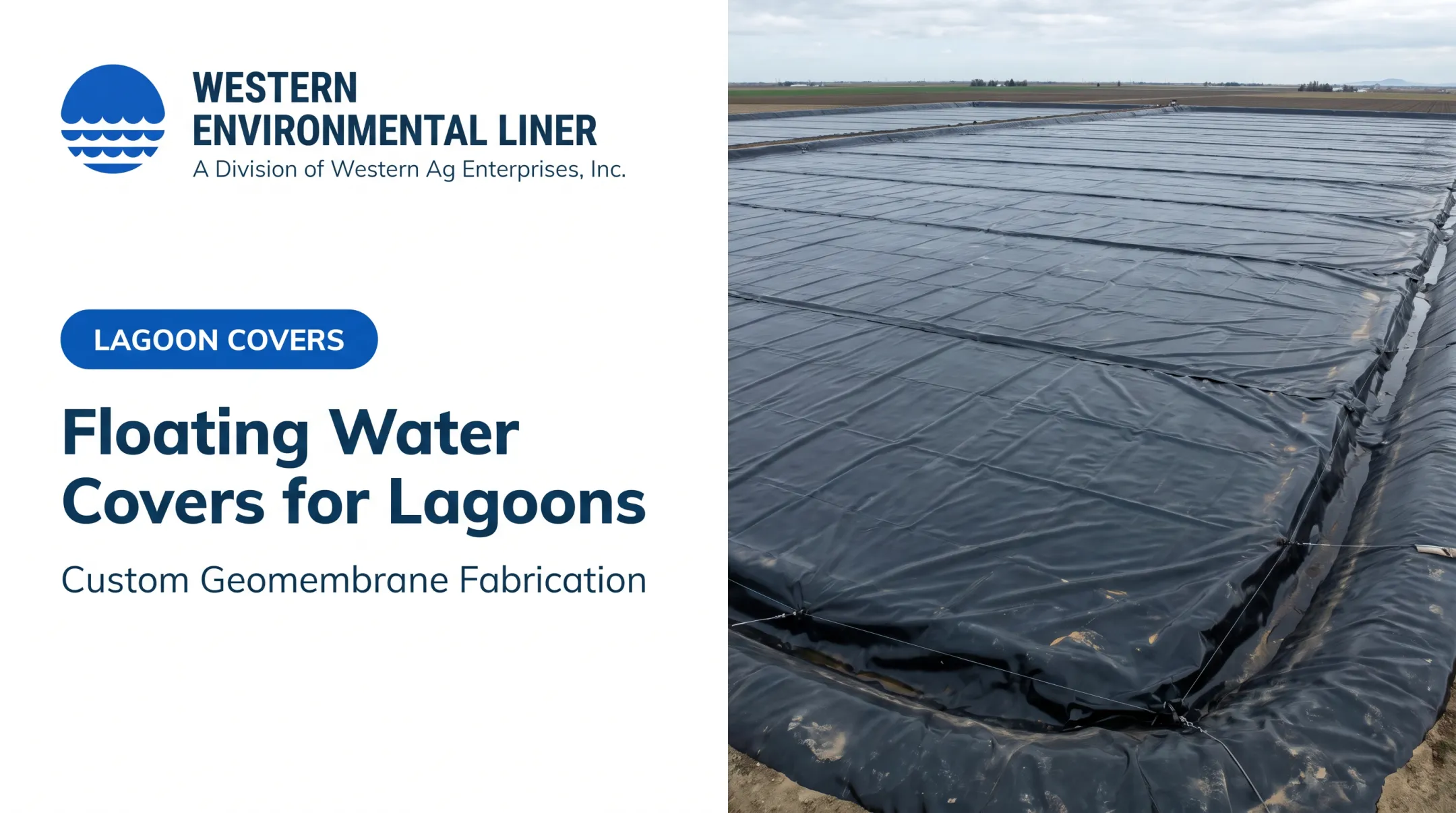
Where a custom geomembrane makes sense, Western Environmental Liner manufactures and installs custom containment liners, with panels up to 300' x 300', and offers technical support on anchoring and subgrade preparation. Your permitting authority and design engineer still decide what's required.
How Is a Septic Lagoon Maintained?
Routine Inspections and Vegetation Control
Missouri advises inspecting at least annually. Check:
- Water level and overflow
- Odors, scum, and algae
- Inlet and outlet structures
- Berms, erosion, and signs of seepage or stormwater entry
- Fencing, gates, and signs
Vegetation needs more frequent attention. Missouri recommends maintaining surrounding vegetation at least monthly in spring and summer, and Nebraska requires slope and dike-top grass to stay at 6 inches or less. Follow your approved maintenance plan so sunlight, wind, access, and bank stability aren't compromised.
Solids, Equipment, and Seasonal Conditions
Check sludge depth every two years or as needed. If you remove sludge, leave at least 18 inches of water above it. Maintain pumps, aerators, and tanks per the system design and your service provider's advice, not a universal schedule.
Seasons change the picture:
- Drought: Nebraska requires at least 2 ft of liquid depth, adding water if necessary. Persistent low levels may signal an oversized lagoon or a structural problem.
- Heavy rain: Operate without encroaching on freeboard, and use certified pumping if wastewater must be removed.
- Freezing: Low water raises freeze-solid risk.
Warning Signs and Professional Response
Call the responsible operator, designer, environmental authority, or a qualified service provider if you notice:
- Persistent foul odors or unusual water color
- Overflow or rapid water-level changes
- Mosquito breeding or stagnant patches
- Eroded banks, seepage, or a damaged liner
- Broken fencing
Don't enter the lagoon or disturb suspect areas. Don't patch a liner without evaluation, and don't pour in chemicals to "fix" odors without professional guidance.
Frequently Asked Questions
What do you call a septic pond?
Most commonly a septic lagoon, sewage lagoon, or wastewater stabilization pond. Household versions are also called facultative, oxidation, or photosynthetic ponds. Terminology varies by region.
How long do sewage lagoons last?
Missouri extension guidance cites up to 30 years with proper design, installation, and maintenance, but that is not a guarantee. Have the lagoon assessed based on construction, liner condition, sludge, and weather.
Can a leach field be unclogged?
That's a drainfield question, not a lagoon one. EPA notes solids can clog a drainfield, and wet, spongy soil without heavy rain can signal failure. Diagnose before any repair or replacement.
How does a septic lagoon work?
Settling and bacteria, algae, sunlight, oxygen, and long retention treat the wastewater in aerobic, facultative, and anaerobic zones. Discharge must follow the approved design.
Are septic lagoon systems safe?
A properly designed, permitted, maintained, and fenced lagoon can be managed safely. Open wastewater still poses drowning, contact, odor, and mosquito hazards that need controls.
How often should a septic lagoon be maintained?
Missouri suggests annual inspections, monthly vegetation care in spring and summer, and sludge checks every two years. Your design, local rules, and observed conditions set the real schedule.