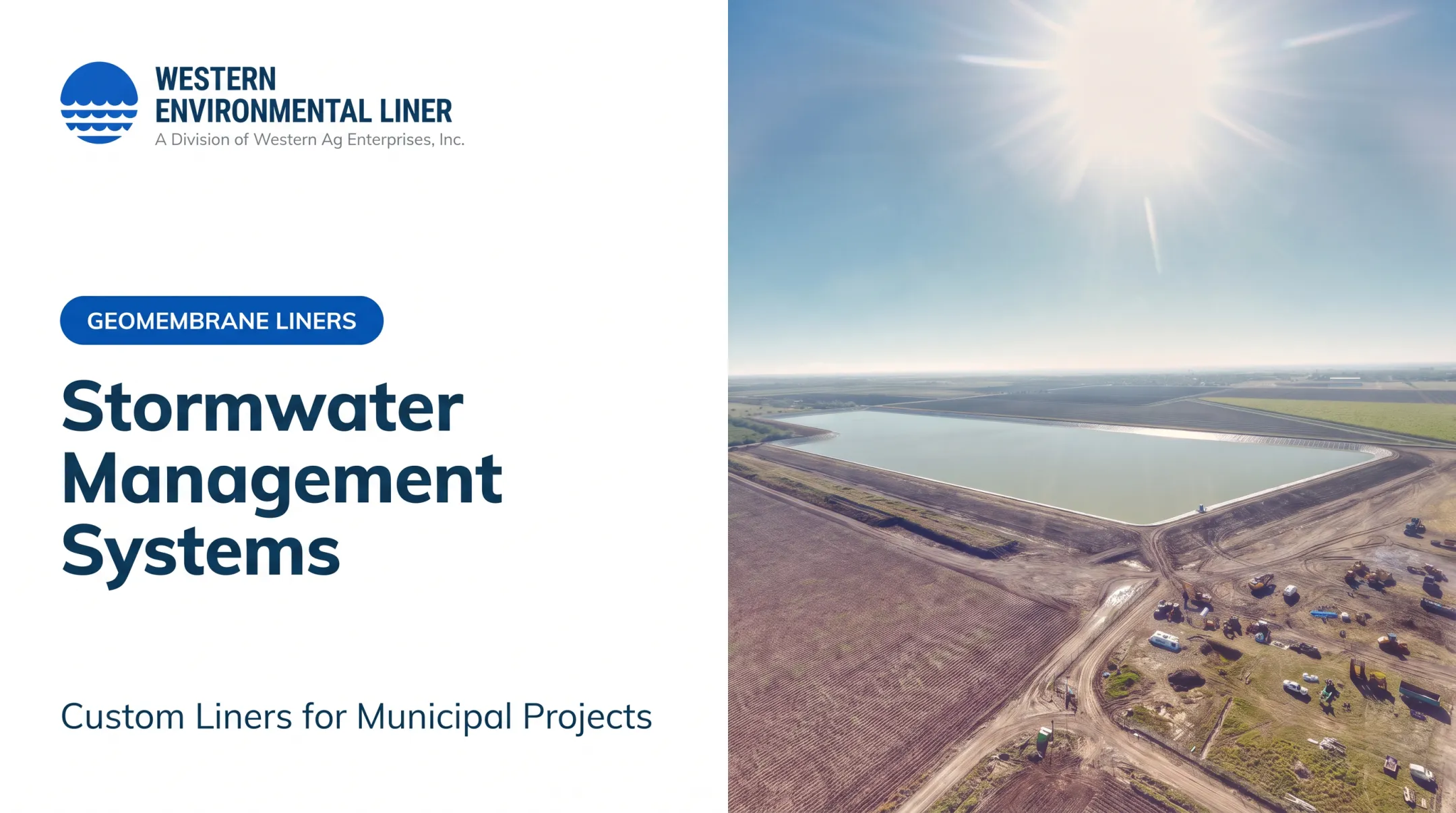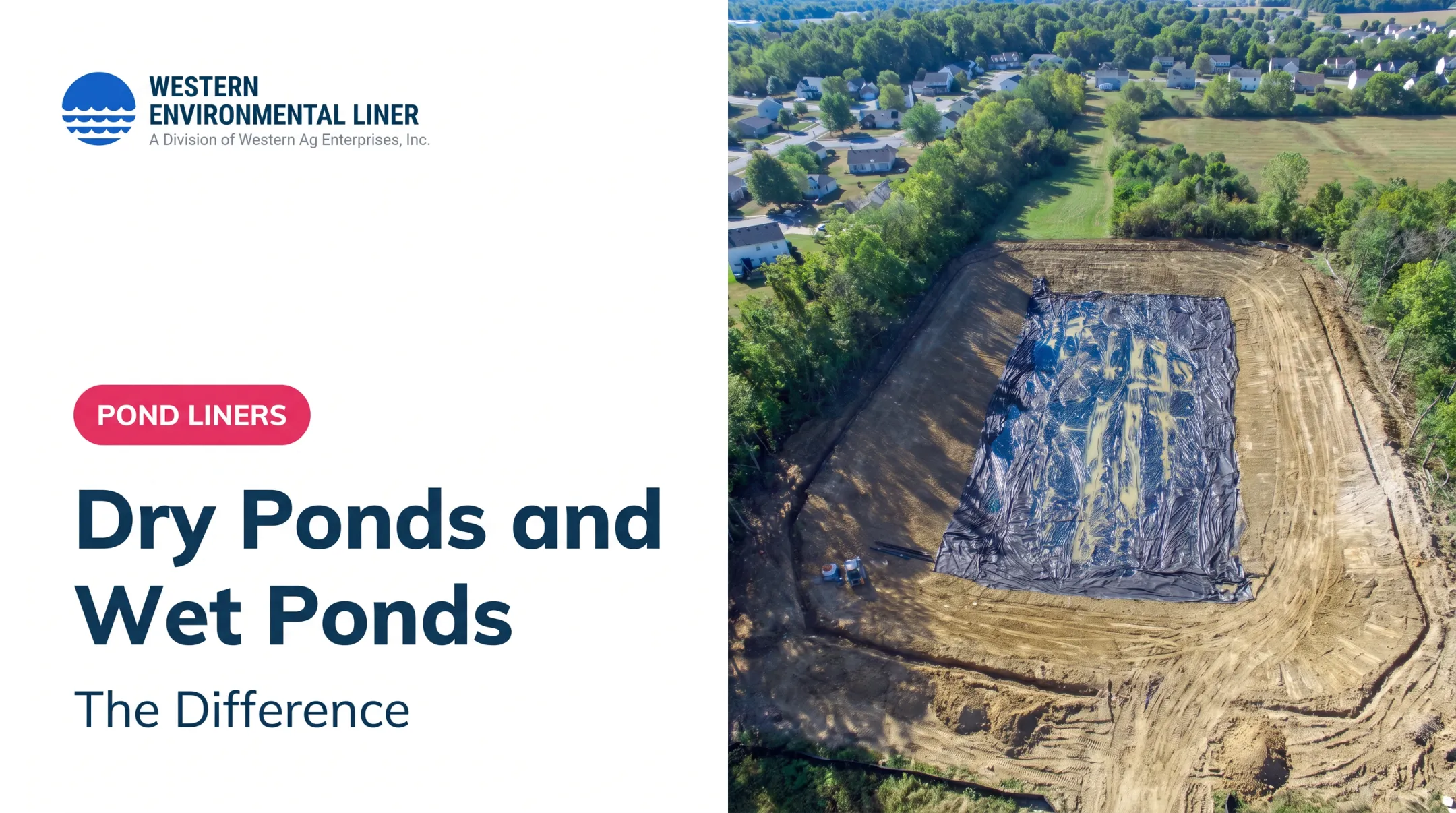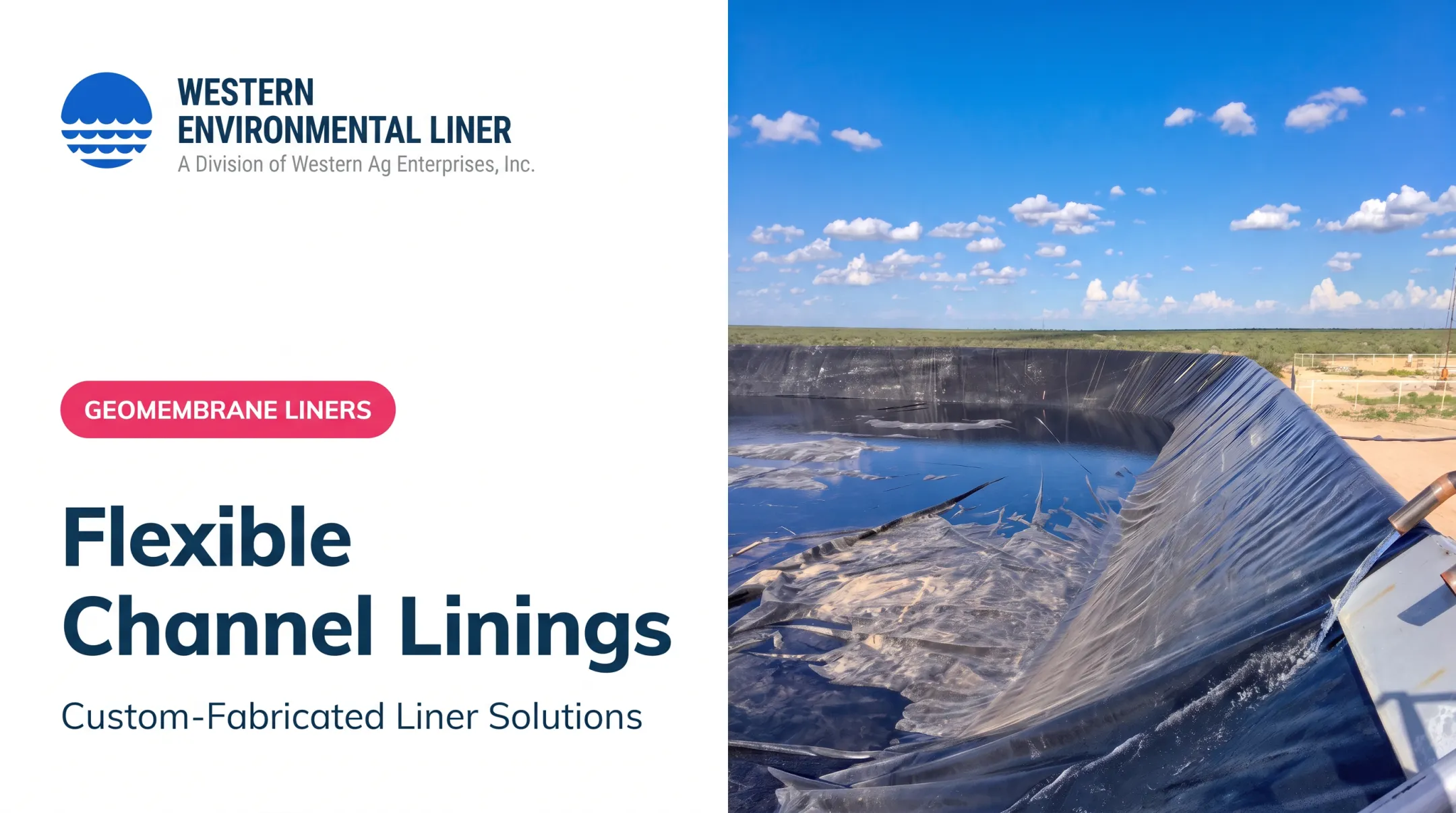

Sediment ponds and basins give that runoff time to drop its load before it moves on. This guide covers what they are, how the flow and settling components work, where they're used, when a geomembrane liner makes sense, and how inspection keeps them working.
Key Takeaways
- Basins hold runoff long enough for suspended particles to settle before discharge.
- Performance depends on controlled inflow, settling volume, a surface outlet, an emergency spillway, and stable slopes.
- Source control, inspections, sediment removal, and safe dewatering matter as much as construction.
- Liners solve seepage and containment problems, not erosion or hydraulic design.
What Is a Sediment Pond or Basin?
A sediment basin is an excavated or embankment-formed impoundment that captures sediment-laden runoff and slows it so soil particles settle out before discharge. EPA's fact sheet notes basins may be temporary or permanent, and may drain dry or hold a shallow pool.
Basin vs. pond terminology
The terms overlap. NRCS Standard 350 describes a sediment basin as one with an engineered outlet that detains runoff for settling, while "pond" is the broader impoundment category in NRCS Standard 378. Ohio uses "sediment settling basin," and EPA's mining guidance uses "sediment ponds." There is no universal technical distinction, so follow the wording of your permit and jurisdiction.
Why sedimentation causes trouble
- Lost storage: sediment buildup can eventually fill a reservoir, as USGS explains
- Higher turbidity and reduced water depth
- Nutrients, pathogens, and contaminants riding on particles
- Damaged aquatic habitat
- More frequent, costlier maintenance
How Does a Sediment Basin Work? Key Design Components
Water follows a path: drainage area, stabilized inflow channel, settling area, primary outlet, then an emergency spillway. Slowing and spreading the flow gives particles time to fall out. Requirements vary by state and permit, so treat the numbers below as examples.

Inflow channel and inlet protection
Stabilized channels, erosion-resistant surfaces, check structures, and forebays cut incoming velocity and trap coarser material before it reaches the main pool. EPA's construction general permit requires erosion controls and velocity dissipation at inlets and outlets, and keeps basins outside receiving waters and natural buffers.
Basin geometry and storage zones
Shape, flow length, depth, drainage area, sediment storage, freeboard, and maintenance access all shape performance. Benchmarks:
- EPA's 2022 CGP: storage for either the 2-year, 24-hour storm or 3,600 cubic feet per acre drained (alternatives, not additive)
- Ohio: flow-path-to-width ratio of at least 2:1, preferably up to 4:1
- North Carolina: 2:1 minimum, 6:1 maximum
Dead zones, short-circuiting, turbulence, and unstable side slopes shrink the effective volume.
Baffles and flow distribution
Porous baffles spread water across the basin, reduce turbulence, and block a straight shot from inlet to outlet. Ohio calls for at least 3 rows (2 for basins under 40 feet), while North Carolina specifies three coir baffles at quarter-length positions.
Layout, material, height, and anchoring should follow your project design, not a universal pattern.
Primary outlet and surface skimmer
Water near the surface is the clearest. EPA requires surface withdrawal unless infeasible, and Ohio describes skimmers pulling water just below the surface. Watch for clogging and discharge only to a stabilized location.
Drawdown criteria differ: Ohio specifies more than 48 hours but less than 7 days; North Carolina's skimmer guidance says 2 to 5 days. These are design criteria, not a guarantee that fine clay will settle.
Auxiliary spillway and emergency protection
An auxiliary spillway gives flows above the primary outlet a controlled route, preventing overtopping and embankment erosion. North Carolina specifies a 10-year storm spillway system with at least 1 foot of freeboard. NRCS 378 selects 10-, 25-, or 50-year storms by dam category.
Stabilize the spillway and keep it accessible for inspection.
Configuration matters
Auburn and Iowa DOT large-scale testing found a standard basin discharged turbidity 44% higher than inflow. A combined stabilization, forebay, and skimmer setup retained 96% of sediment mass. Always quote the configuration and metric with any efficiency claim.
Where Are Sediment Ponds and Basins Used?
Construction and earthwork sites
Temporary basins collect runoff from exposed soil before it leaves the site. Minnesota's permit, for example, requires a basin at qualifying common drainage locations serving 10 or more acres of disturbed soil (5 acres near specified special or impaired waters).
Basins come last. Perimeter controls, stabilized entrances, inlet protection, and soil cover should keep sediment from moving in the first place.
Municipal, commercial, and agricultural projects
- Stormwater treatment for land development and public works
- Irrigation and drainage systems
- Cropland, rangeland, and orchard runoff (Washington Ecology notes permanent-pool basins in dryland agriculture)
- Environmental restoration
Temporary construction controls differ from permanent water-management infrastructure, so confirm which one you're building.
Western Environmental Liner's Aqua 12 reinforced polyethylene, for example, is rated for two years exposed and used for temporary construction ponds. The Aqua series is guaranteed well over 20 years in buried stormwater applications.
Industrial and energy containment
Projects handling potentially contaminated liquids need more than settling volume. EPA's mineral-mining guidance covers sediment ponds, with treatment depending on flow and contaminants.
Expect liquid compatibility checks, seepage control, secondary containment, monitoring, and project-specific regulatory review.
What you gain
Well-run basins:
- Protect receiving waters
- Preserve downstream capacity
- Reduce turbidity
- Extend infrastructure life
Results still depend on maintenance and upstream erosion control.
When Does a Sediment Pond or Basin Need a Liner?
Not every sediment pond or basin needs a liner. NRCS Standard 521 points to lining where natural soils have excessive seepage, and where water conservation or groundwater and surface-water protection is needed.
Conditions that may justify lining
- Highly permeable soils or high seepage risk
- Groundwater protection
- Soluble rock such as limestone or dolomite
- Pollutant-bearing stormwater
- Specific liquid types, regulatory requirements, or severe consequences from leakage
A qualified designer should evaluate geotechnical conditions, containment objectives, and applicable requirements.
Selecting a liner system
Geotextiles are permeable and handle filtration, drainage, separation, and padding. Geomembranes are the very-low-permeability barrier.

Choose a system based on:
- Liquid compatibility
- UV and weather exposure
- Temperature range
- Puncture resistance and permeability
- Expected service life
Reinforced polyethylene, reinforced polypropylene, PVC, and other materials differ in price, longevity, and the liquids they can contain. Match the material to the actual liquid and site, not the product name. Datasheet values are product-specific, so request them from the manufacturer.
Subgrade preparation
Poor subgrade causes wrinkles, punctures, stress points, and leaks even with the right material. NRCS calls for a smooth, flat, unyielding foundation free of sharp stones and damaging objects. Western Environmental Liner's specification adds:
- Flat, smooth, dry surface free of rocks, roots, debris, and voids
- At least 6 inches of compacted bedding above the highest obstruction if the subgrade falls short
- Perimeter anchor trench 6 to 30 inches wide and 4 to 24 inches deep, depending on size and slope
- Geotextile under, over, or on both sides for extra protection (8-ounce is most common)
- Careful detailing around outlets, penetrations, and spillways
Earthwork and subgrade design belong to your engineer and contractor.
Factory fabrication and installation
Factory-welded panels cut field seams, labor time, and potential leak points. NRCS inspection guidance also notes that factory fabrication reduces field seams.
Western Environmental Liner fabricates custom panels up to 300' x 300' and one-piece liners up to 150,000 square feet. The company provides technical support on slopes and anchoring and offers turnkey installation as an IAGI-certified installer. If you're planning a large sediment pond or basin, a free quote on materials, fabrication, subgrade requirements, and installation can help avoid rework later.
What a liner cannot solve
A liner doesn't keep sediment out, replace inlet stabilization, guarantee settling, or eliminate the outlet and spillway. You still need engineered hydraulics, safe dewatering, sediment removal, inspections, and repairs.
Sediment Pond and Basin Maintenance: Inspection, Removal, and Repairs
Inspect after storms and during operation
EPA's general schedule is every 7 calendar days, or every 14 days plus within 24 hours of 0.25 inch of rain in 24 hours. Ohio calls for weekly checks and after storms over 0.5 inch. Check:
- Inlet channels, embankments, and side slopes
- Baffles, skimmers, outlet pipes, and spillways
- Freeboard, turbidity, and vegetation
- Erosion, burrowing animals, and debris
- Visible liner damage
Log dates, storm conditions, defects, fixes, and photos so you can track performance.
Monitor sediment accumulation
Probe, measure depths, or survey to confirm remaining storage. EPA requires keeping at least half the design capacity; Ohio says remove sediment at 50% of its storage zone, or sooner if it blocks inflow or outflow.

Your approved design, permit, and owner requirements set the actual thresholds.
Remove sediment safely
Plan drawdown, access, equipment, dewatering, handling, and disposal or reuse. Avoid resuspending material, and never discharge sediment-laden water to streams or drainageways.
If the drainage area is industrial, urban, or contaminated, testing may be required. Minnesota's MPCA guidance specifies PAH, arsenic, and copper testing for stormwater pond sediment, a state rule rather than a national one.
Repair and restore
Common repairs include:
- Eroded channels and unstable slopes
- Clogged outlets and blocked spillways
- Damaged baffles
- Embankment settlement
- Liner punctures or seam problems
Address the cause, such as excessive inflow velocity or poor drainage, not just the visible damage.
Know when to retrofit or replace
Warning signs include:
- Repeated overtopping
- Persistent seepage
- Insufficient storage
- A changed drainage area or higher sediment loads
- A basin that can't be maintained safely
Reassess hydraulics, liner, outlet, and maintenance plan with qualified professionals before expanding or rebuilding.
Frequently Asked Questions
How long does it take for sediment to settle in a pond?
No universal timeframe exists. It depends on particle size, depth, velocity, turbulence, temperature, and basin design. Engineered basins provide the detention time needed for the target sediment.
Why is sedimentation in water bad?
It reduces storage capacity, raises turbidity, and carries nutrients and pollutants. It also harms aquatic habitat, increases maintenance, and can trigger downstream or regulatory problems.
What is a sediment pond?
It's a pond or basin that temporarily stores sediment-laden runoff, slows the water, and lets suspended soil settle before controlled discharge.
How is a sediment basin different from a detention or retention pond?
A sediment basin targets suspended solids. Detention ponds generally manage peak flows, and retention ponds hold water longer. One project can combine functions.
Do sediment ponds need liners?
Only when site conditions justify it, such as seepage control, liquid containment, or regulatory requirements. A liner never replaces proper design, erosion control, or maintenance.