
Introduction
A compost pile can work fine without a cover. So why do so many gardeners and farm operators reach for a tarp anyway?
Because weather sometimes wins. Weeks of rain drown a pile, cold snaps stall it, wind dries it out, and pests move in. A cover can help, but it creates a trade-off: shelter from the weather versus the air and moisture that decomposition needs.
This guide covers when to cover, which cover type fits, how to install it, and how backyard advice differs from large-scale operations.
Key Takeaways
- An active pile doesn't automatically need a cover; climate, feedstock, and system decide.
- Never seal a waterproof tarp tight against the compost.
- Raised, breathable, or ventilated covers give rain protection without smothering the pile.
- Finished compost needs protection from prolonged rain and runoff.
Do You Need to Cover a Compost Pile?
Usually not. A cover becomes useful when weather pushes the pile out of its working range.
When a cover can help
Composting works best at roughly 40% to 60% moisture, according to NC State Extension. The field check: squeeze a handful and get a drop or two of water, like a wrung-out sponge.
Covers help in these situations:
- Prolonged rain that waterlogs the pile and displaces air
- Cold weather, where a cover helps hold warmth
- Dry, windy spells that dry out the outer layer
- Finished compost, which can lose nutrients to leaching
Oregon State's farm guidance recommends rainy-season covering and notes that loosely weighted plastic helps keep nutrients from leaching during heavy rain. A cover works best on a pile that already has a good mix of greens and browns, enough moisture, and airflow.
EPA's home guidance suggests two to three times as much brown material as green by volume.
When leaving it uncovered is better
Normal rainfall supplies free moisture. A well-built pile on well-drained ground also breathes naturally.
A cover cannot fix:
- An unbalanced carbon-to-nitrogen mix
- Compaction or poor structure
- Soggy material that needs turning
Fix those first. Then decide on a cover.
Match the decision to your system
| System | Cover and airflow notes |
|---|---|
| Open pile | No bin needed; a tarp can trap moisture |
| Wire or pallet bin | Ventilation stays essential |
| Enclosed bin or tumbler | Enclosed doesn't mean airtight; oxygen is still required |
| Aerated static pile | Sits over aeration pipes; commercial versions may use a finished-compost blanket |
Quick checklist:
- How much rain do you get?
- How cold are the winters?
- How big is the pile, and how often do you turn it?
- Does it hold food scraps or attract pests?
- Is the material active or finished?
Compost Pile Cover Options: Which Type Is Right?
No single option fits every pile. The main choices are waterproof tarps, breathable fabric, raised lids, manufactured bin lids, and biolayer covers.
Waterproof tarps
Tarps suit temporary protection from heavy rain, snow, or storms. Colorado State recommends them to stop outer-layer drying and says to remove them for watering, additions, and aeration.
The risk is oxygen. Arkansas Extension warns that a cover resting directly on compost may cut off oxygen. Treat a tarp as a weather shield, not a wrap:
- Leave a gap for air movement
- Pull it off when turning, inspecting, or rewetting
- Remove it during mild, dry stretches
Breathable fabric and raised lids
A rigid lid raised above the pile sheds rain, lasts longer, and lets air move. It also opens easily, which suits small piles and bins. Breathable fabric lets some air and moisture through but may wear faster.
For most home composters, a supported lid beats soft plastic lying on the material. Michigan State suggests a lid or tarp in summer for shade and moisture retention, with large ventilation holes screened.
Biolayer covers for larger systems
Home and bin covers handle most backyard piles. Larger commercial systems sometimes take a different approach.
In some aerated static pile systems, a blanket of finished compost insulates the pile and helps manage surface emissions. EPA's biosolids illustration shows a 6 to 12 inch layer, but that is a design example, not a mandate.

Cover depth, odor control, and pathogen reduction depend on feedstock, process design, and local rules. Commercial operators should design the cover and aeration together.
Choosing the material
Weigh these factors:
- Weather exposure and expected wind
- UV resistance and desired service life
- Pile size and turning equipment
- Repairability
- How often the cover must move
Manufacturer estimates vary by class. ECS reports fleece covers usually last 4 to 10 years, and microporous fabric typically 5 to 8, with high UV exposure shortening both. A generic tarp rarely matches those service lives.
How to Cover a Compost Pile Correctly
Start with the site. Choose well-drained ground with access year-round, and keep the pile off fences and structures. Shape it so water sheds: Oregon State notes that tall piles with narrow tops and steep sides shed rain better than flat ones.
Size and position the cover
Measure the pile. Buy enough material to protect the top and upper sides without creating a low spot where water pools. The cover should not press on the pile, block all air exchange, or make turning difficult.
Preserve airflow and moisture
Build an air gap with a simple frame, hoops, a rigid lid, or an elevated cover. No standard clearance exists, so check beneath the cover regularly for:
- Excess wetness or dryness
- Heat or odor
- Visible mold
If something's off, adjust the cover. Tighter is not better.
Secure it safely
Use ground stakes, sandbags, straps, weighted edges, or a frame. Oregon State recommends weighted or tied tarps that shed water and hold in high wind. Avoid sharp fasteners that tear fabric, and don't concentrate stress on one small section. Check tie-down points after storms.

Maintain and remove it
Open or remove the cover for turning, mixing, rewetting, and inspection. A little rain can even help a dry pile.
For care, clean and dry the cover before folding it, store it out of the sun, and patch small tears early. Watch for UV damage, abrasion, mildew, and weakened grommets.
Compost Covers for Farms and Commercial Sites
Larger operations face added concerns:
- Equipment access and wind loading
- Worker safety and turning schedules
- Odor, stormwater, and regulations
Covers and aerated static piles
Cover porosity and moisture affect airflow resistance, blower needs, surface temperatures, and condensation. ECS reports that when condensation wets engineered cover fabric, airflow resistance increases. Optimize the mix and aeration before relying on a cover to control emissions.
Requirements differ by jurisdiction. Washington requires an ASP cover, such as synthetic material or finished compost, for pathogen-reduction temperatures and vector control. Federal pathogen rules in 40 CFR Part 503 apply to sewage sludge, not backyard piles. Check current federal, state, and local requirements for stormwater, runoff, odor, and biosolids.
When a cover is part of a containment system
A surface cover sits above the compost. A geomembrane liner sits beneath a pad, pond, or runoff area. A cover alone does not stop seepage into soil.
NRCS Code 317 calls for covers where precipitation is considerable, plus groundwater protection and safe leachate collection. Liners for leachate ponds fall under separate NRCS standards.
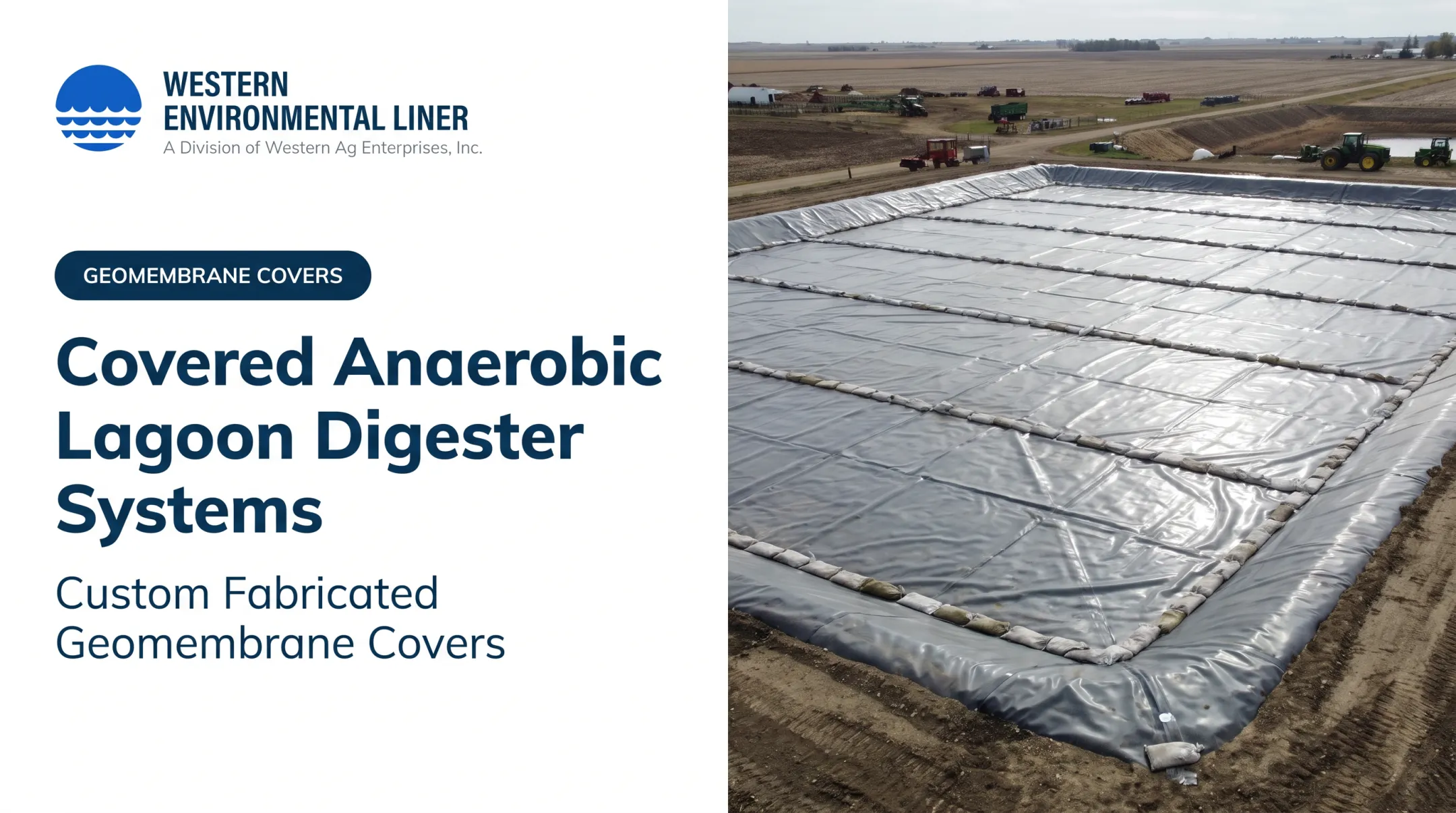
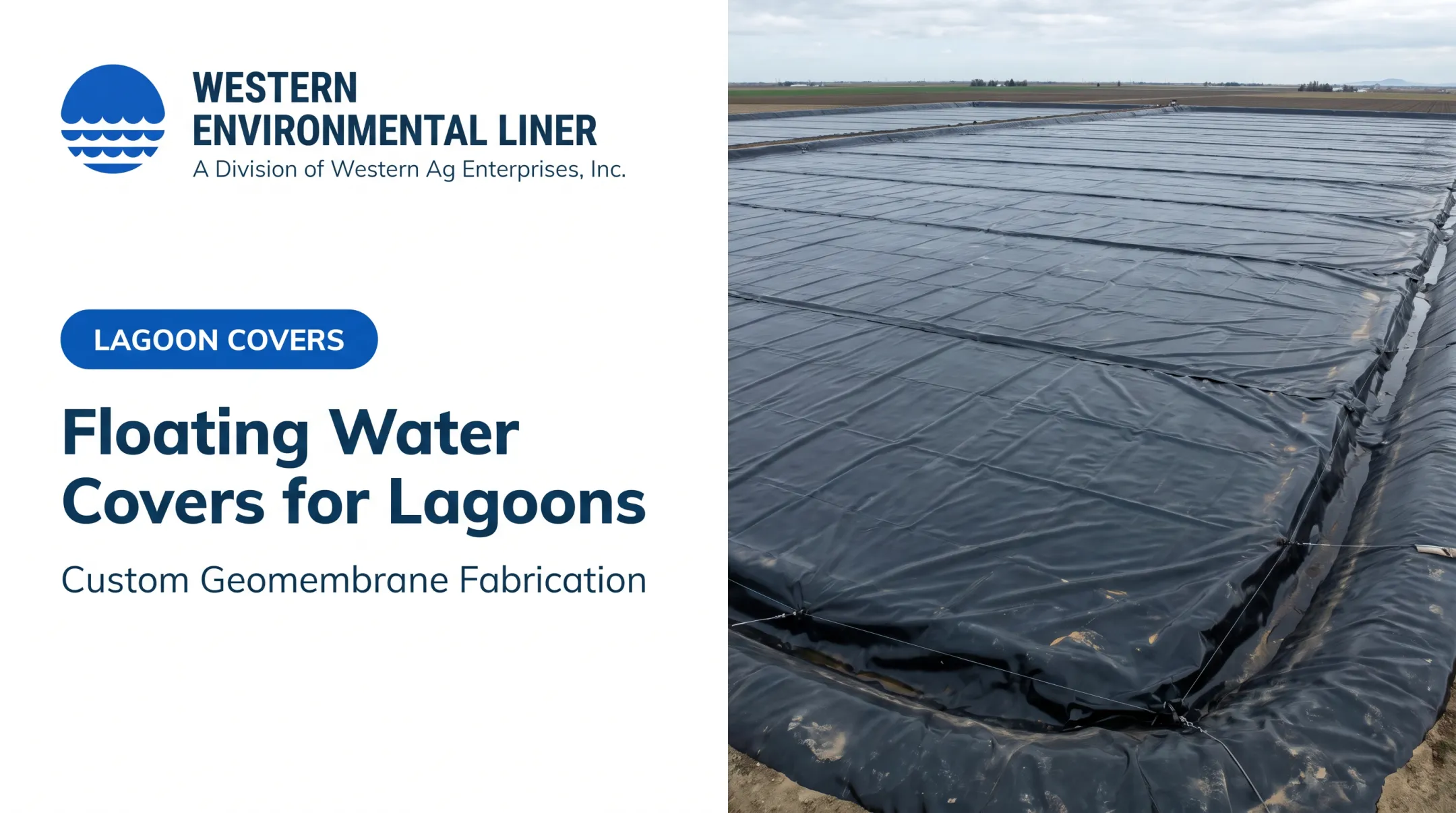
For larger agricultural, industrial, or municipal projects, Western Environmental Liner fabricates custom geomembrane liners, including factory-welded panels up to 300' x 300' and one-piece liners up to 150,000 square feet. It also offers technical support and turnkey installation through its IAGI-certified crews. Its work focuses on liquid and soil containment, not subgrade engineering or earthwork.

Common Compost Cover Problems and Maintenance
| Symptom | Likely cause | Fix |
|---|---|---|
| Foul odor, slimy material | Too wet, low oxygen | Raise cover, add dry browns, turn |
| Slow decomposition | Dry, wet, or poor C:N mix | Check moisture, rebalance |
| Dry pile | Overexposure or sealed cover blocking rain | Rewet, allow rain in |
| Condensation | Impermeable cover | Vent or remove temporarily |
| Torn cover | Wind, UV, abrasion | Inspect and repair |
Too wet, too dry, or too little air
A tight tarp, poor drainage, or heavy rain can turn a pile anaerobic. Colorado State University notes excess water displaces air and promotes odors.
A tarp can also block rainfall so completely that the pile dries out. Loosen or raise the cover, add dry browns, turn the pile, and check often.
Wind, UV, and condensation
Flapping edges, pooled water, snow, ice, and repeated folding wear covers out. Inspect seams, grommets, anchor points, and thinning fabric.
UV is a leading cause of plastic breakdown, so outdoor covers need UV stabilization. If condensation builds, open or reposition the cover.
Pests and poor feedstock
A cover is not rodent-proof. Washington State University says rats may nest in dry, undisturbed compost. To discourage them:
- Turn the pile and keep it moist
- Bury food scraps under 4 to 8 inches of browns
- Skip meat, dairy, and greasy food
- Use a lid and 1/4 inch strong wire mesh
Follow local guidance on food waste and animal materials.
Frequently Asked Questions
Do I have to cover my compost pile?
No. Most active piles can stay uncovered. Excess rain, cold, dryness, pests, or finished-compost storage may justify a ventilated cover.
Do rats live in compost heaps?
They can, especially where food scraps are accessible and the pile sits undisturbed. Pair a cover with suitable inputs, airflow, and pest-resistant construction like fine mesh.
Are rotating compost bins worth it?
Tumblers keep pests out and make turning easy, but batches are smaller. Oregon State notes air, water, and material needs stay the same, and it doesn't establish a speed advantage.
What is the best material for covering a compost pile?
It depends on weather and method. Breathable fabric, a raised lid, or a temporary waterproof tarp each serve different purposes.
Can a tarp make a compost pile too wet or too dry?
Yes. A tarp can trap condensation, block rain completely, or restrict air. Check moisture regularly and adjust the cover.
How do you secure a compost pile cover in windy weather?
Use weighted or anchored edges, enough overlap, and protected tie-down points. Inspect after storms, and avoid compressing the pile or using fasteners that tear the cover.