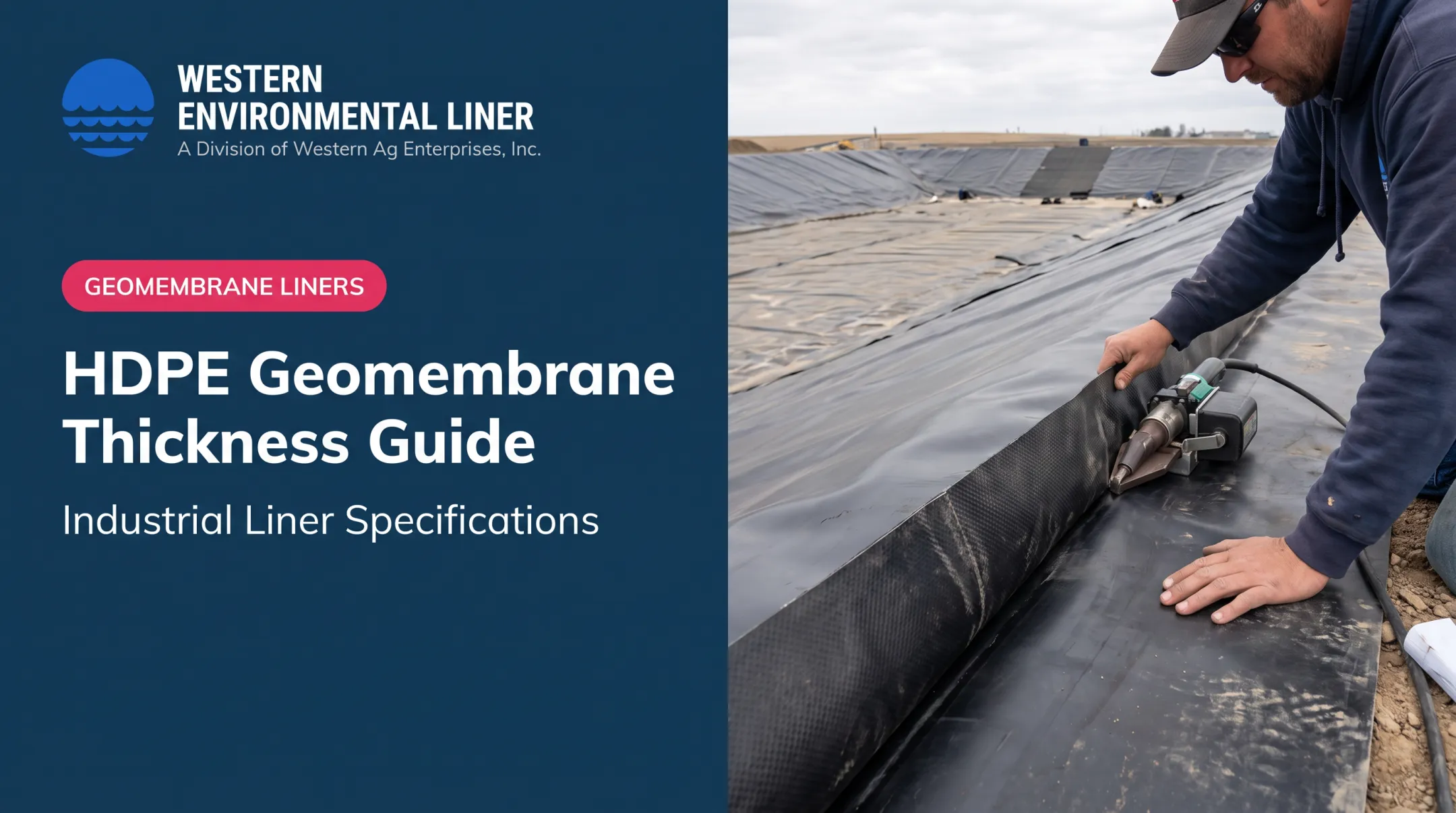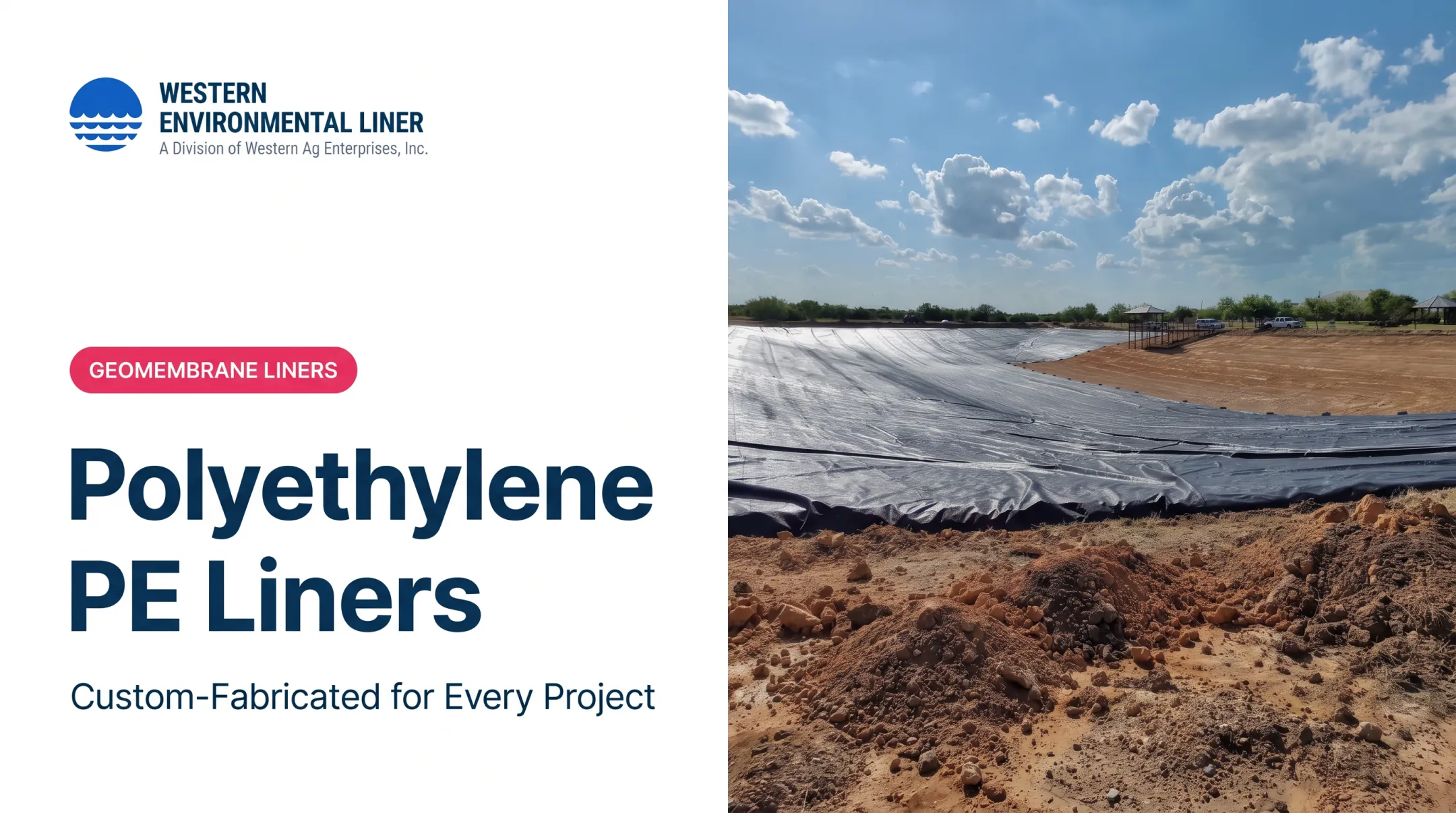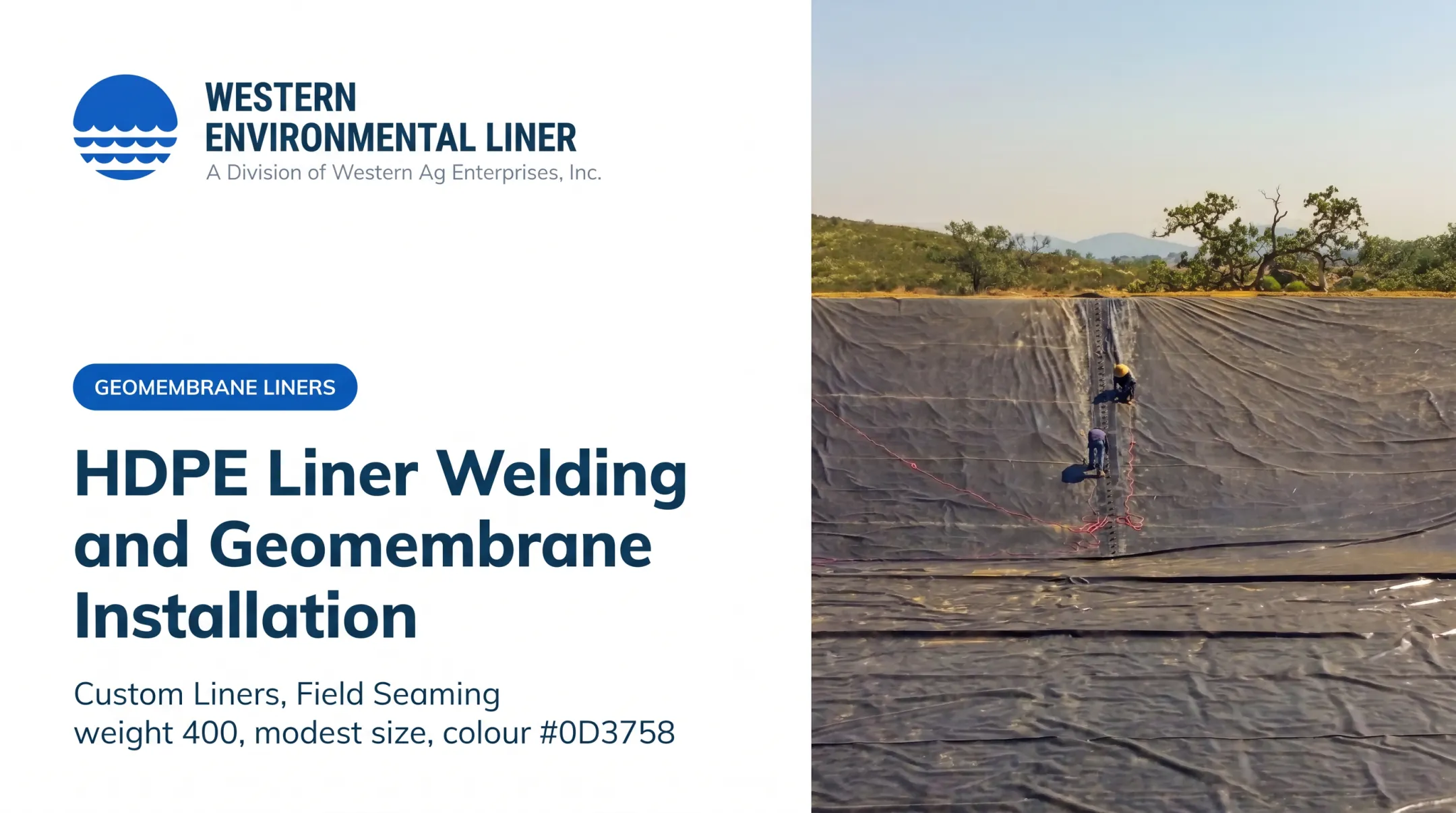

The right product depends on the polymer, manufacturing method, core thickness, texture profile, number of textured sides, slope, contained material, and installation conditions. This guide compares the main texturing methods, explains when smooth liners are enough, and walks through specification, installation, and verification.
Key Takeaways
- Polyethylene provides the barrier; texture mainly adds interface friction.
- Co-extruded, embossed, and spray-textured sheets differ in texture consistency and core thickness.
- Smooth, single-sided, and double-sided liners suit different interfaces.
- Interface testing, subgrade prep, seaming, and CQA matter as much as the data sheet.
What Are Textured Polyethylene Geomembranes?
Definition and barrier function
A polyethylene geomembrane is a manufactured polymer sheet that limits the movement of water, wastewater, leachate, chemicals, or process liquids through soil. GRI defines a geomembrane as an essentially impermeable synthetic sheet used for containment. That is a barrier definition, not a promise of zero installed leakage.
A textured product has an intentionally rough or patterned surface on one or both sides. GRI's GM13 (HDPE) and GM17 (LLDPE) specifications cover both smooth and textured sheets.
Why texture matters
Surface spikes, called asperities, create mechanical interlock with soil and other geosynthetics. That raises interface shear resistance and helps stabilize liner systems on slopes.
Friction is not impermeability, though. Texture does not make the sheet tighter, and performance depends on the adjoining materials and loads.
HDPE, LLDPE, and geotextiles
The two polyethylene options behave differently:
- HDPE (GM13 density of 0.940 g/cc or higher) is stiffer, with a wider chemical-resistance range per Layfield's guidance, though it is more susceptible to stress cracking.
- LLDPE (0.939 g/cc or lower) is more flexible, so it tolerates settlement better. Solmax points to waste-settlement deformation as a reason to choose it for landfill caps.
Both specifications require carbon black, oxidative induction time (OIT), and UV evaluation. These are formulation requirements, not service-life guarantees.
A geomembrane is a fluid barrier. A geotextile handles separation, filtration, drainage, or protection, and filtration by definition lets fluid pass.
How Textured Polyethylene Geomembranes Are Manufactured
Co-extruded or blown-film texturing
Gas, typically nitrogen, is introduced into the surface layers during extrusion. It expands and escapes, leaving irregular asperities. The result is high surface friction, and rough surfaces can engage nonwoven geotextiles through a hook-and-loop effect.
Technical literature, including a 2008 Thiel and Erickson paper, reports concerns worth qualifying:
- Variable asperity height
- Stress risers that can affect break strength and elongation
- Possible core-thickness variation
- Lay-flat behavior that depends on the product
Structured or flat-die embossed texturing
Patterned rollers form the texture in the hot sheet. AGRU describes its MicroSpike product as flat die-cast, and manufacturers claim more consistent asperity height and core thickness. Atarfil also attributes better lay-flat to less inherent curvature.
Treat these as manufacturer claims, not universal guarantees. Check current data sheets and independent sources before relying on strength, elongation, or stress-crack figures.
Spray or impingement texturing
Atomized molten polyethylene is applied to a previously made smooth sheet. The process is described as preserving base-sheet tensile properties and creating strong hook-and-loop interaction with nonwovens.
Tradeoffs include:
- Added production steps
- Surface uniformity
- Bonding of the applied layer
- Cost
- Availability
Comparing outcomes
No method wins everywhere. Compare them on:
- Texture uniformity and asperity height
- Nominal core thickness
- Tensile and puncture performance
- Handling and smooth welding edges
- Quality-control sampling

Relevant tests and standards include:
| Property | Method |
|---|---|
| Asperity height | ASTM D7466 (height only, not spacing or full profile) |
| Core thickness | ASTM D5994 |
| Tensile | ASTM D6693 |
| Puncture / tear | ASTM D4833 / D1004 |
| Stress crack | ASTM D5397 |
| Interface shear | ASTM D5321 |
Confirm the current edition of each, along with GRI GM13 (Rev. 19) or GM17 (Rev. 17), before specifying.
Textured vs. Smooth Geomembranes: When Is Each Right?
Start with the interfaces
Begin with what sits above and below the liner, plus slope geometry, normal load, and the cost of slippage. GRI-GM17 treats shear strength as site- and product-specific, and asperity height does not set a universal slope threshold. Run slope-stability and interface-shear analysis for the actual project.
Single-sided versus double-sided
Single-sided texture works when one interface needs extra friction. Double-sided texture fits cases where both faces touch materials that need shear resistance. The USBR places the textured face against a protective geotextile on slopes. Orientation matters, and the rougher face is not automatically right for every adjoining material.
Smooth, textured, and hybrid
A project may use smooth liner on flat floors and textured liner on slopes. That balances friction needs against welding, deployment, and material cost.
One peer-reviewed study of 2 mm HDPE, published in PMC, shows why the contact material matters:
| Contact material | Smooth peak, degrees | Textured peak, degrees |
|---|---|---|
| Fine sand | 28.96 | 32.72 |
| Sandy gravel | 30.62 | 36.81 |
| Geotextile | 11.61 | 20.88 |

These are experiment-specific values, not design numbers.
Tradeoffs and data
- Textured sheets add friction and slope stability but can complicate deployment, wrinkle management, seaming, and inspection
- Smooth sheets deploy and weld more easily but offer less grip
Visible roughness does not prove performance. Before you specify a product, review:
- Data sheet and core thickness
- Asperity profile and mechanical properties
- Compatibility information
- Direct-shear results on real or representative interfaces
Applications and Benefits Across Containment Projects
Waste, wastewater, and municipal work
Textured liners are common on landfill slopes and caps, wastewater lagoons, stormwater basins, leachate containment, and remediation areas where slope grip matters.
Federal rules set thickness, not texture: 40 CFR 258.40 composite liners call for HDPE of at least 60 mil, and 40 CFR 257.70 does the same for new coal ash landfills. Contained material, regulations, layers, and slope stability drive the final choice.
Agriculture, water, and aquaculture
Irrigation reservoirs, ranch ponds, manure lagoons, canals, and fish ponds are common uses. NRCS Standard 521 lists 60 mil for wastewater and 30 mil for clear water. Texture helps hold cover soil on embankments and side slopes. A smooth surface is often enough on a basin floor.
Energy, industrial, and commercial
Typical projects include frac pads, secondary containment, industrial lagoons, process-water basins, mining containment, and golf-course lakes. The Umm Wu'al tailings ponds, for example, use double-sided GSE HD FrictionFlex.
In these settings, weigh:
- Chemical compatibility and UV exposure
- Equipment traffic and protection layers
- Regulatory requirements
- Maintenance access
How to Specify, Install, and Verify a Textured Polyethylene Geomembrane
Gather project inputs first
Define these before requesting a quote:
- Containment fluid, temperature, and chemical exposure
- Design life, climate, and UV exposure
- Slope geometry and subgrade conditions
- Overlying and underlying materials, and drainage needs
- Liner dimensions, anchoring, and applicable regulations
Review the full specification
Confirm these items in the spec:
- Resin type, core thickness, and roll size
- Texture height, profile, and number of textured sides
- Tensile and elongation, tear and puncture resistance
- Stress-crack resistance, carbon black, and OIT
GM13 and GM17 call for 2.0–3.0% carbon black and a 16 mil minimum average asperity height. For 60 mil textured HDPE, GM13 lists break strength of 90 lb/in and 500 hours stress-crack resistance.
Core thickness and peak-to-valley thickness differ on a textured sheet. GM13 allows an average no more than 5% below nominal. Don't judge compliance from one caliper reading at a texture peak.

Prepare the subgrade and protect the membrane
The subgrade should be smooth, stable, compacted, and free of rocks, roots, debris, and voids. Western Environmental Liner recommends at least 6 inches of compacted bedding above the highest obstruction when the subgrade can't meet that standard. Backfill of 4 inches is enough where animal traffic is not a concern; use at least 12 inches where wildlife is.
Other points:
- Geotextile in 8-, 12-, or 16-ounce weights adds protection; 8-ounce is the most common.
- Avoid dragging equipment across the liner.
- Orient the textured face deliberately.
- Leave slack for thermal movement, since thermal wrinkles concentrate stress at seams.
Seam, inspect, and document
Use qualified crews and wedge or extrusion welding. GM19a covers seam requirements, and extrusion surfaces generally need light grinding. Texture should not interfere with the weld area; AGRU advises removing structured studs where extrusion repairs or penetrations are welded.
Verification has two layers:
- Destructive testing: ASTM D6392 evaluates seam peel and shear.
- Nondestructive testing: air-channel (D5820) and vacuum-chamber (D5641) tests show continuity, not strength.
Keep panel IDs, seam maps, repair records, and final inspection documents. Project CQA requirements govern.
Custom fabrication and installation support
Western Environmental Liner supports custom geomembrane projects as an IAGI-certified installer, including:
- Factory-fabricated panels up to 300' x 300'
- One-piece liners up to 150,000 square feet
- Turnkey installation
- Guidance on subgrade preparation, anchoring, and slope conditions
Earthwork and engineering design are outside its scope. Before requesting a quote, confirm material availability, project size, design requirements, and whether a textured product fits.
Frequently Asked Questions
What is HDPE geomembrane?
It is a barrier sheet made from high-density polyethylene, commonly used for liquid and environmental containment. Surface texture is a separate product characteristic.
What is the difference between geomembrane and geotextile?
A geomembrane mainly limits fluid migration. A geotextile is generally used for separation, filtration, drainage, reinforcement, or protection.
Is HDPE a polymer or plastic?
Both. HDPE is a thermoplastic polymer made from polyethylene, and geomembrane manufacturers extrude it into sheet.
What is the difference between textured and smooth geomembranes?
Both can provide a low-permeability barrier. Textured sheets add surface friction where movement or slope stability is a concern.
Should I use a single-sided or double-sided textured geomembrane?
It depends on whether one or both faces need interface friction. Follow the engineer's slope-stability analysis and interface testing.