
Introduction
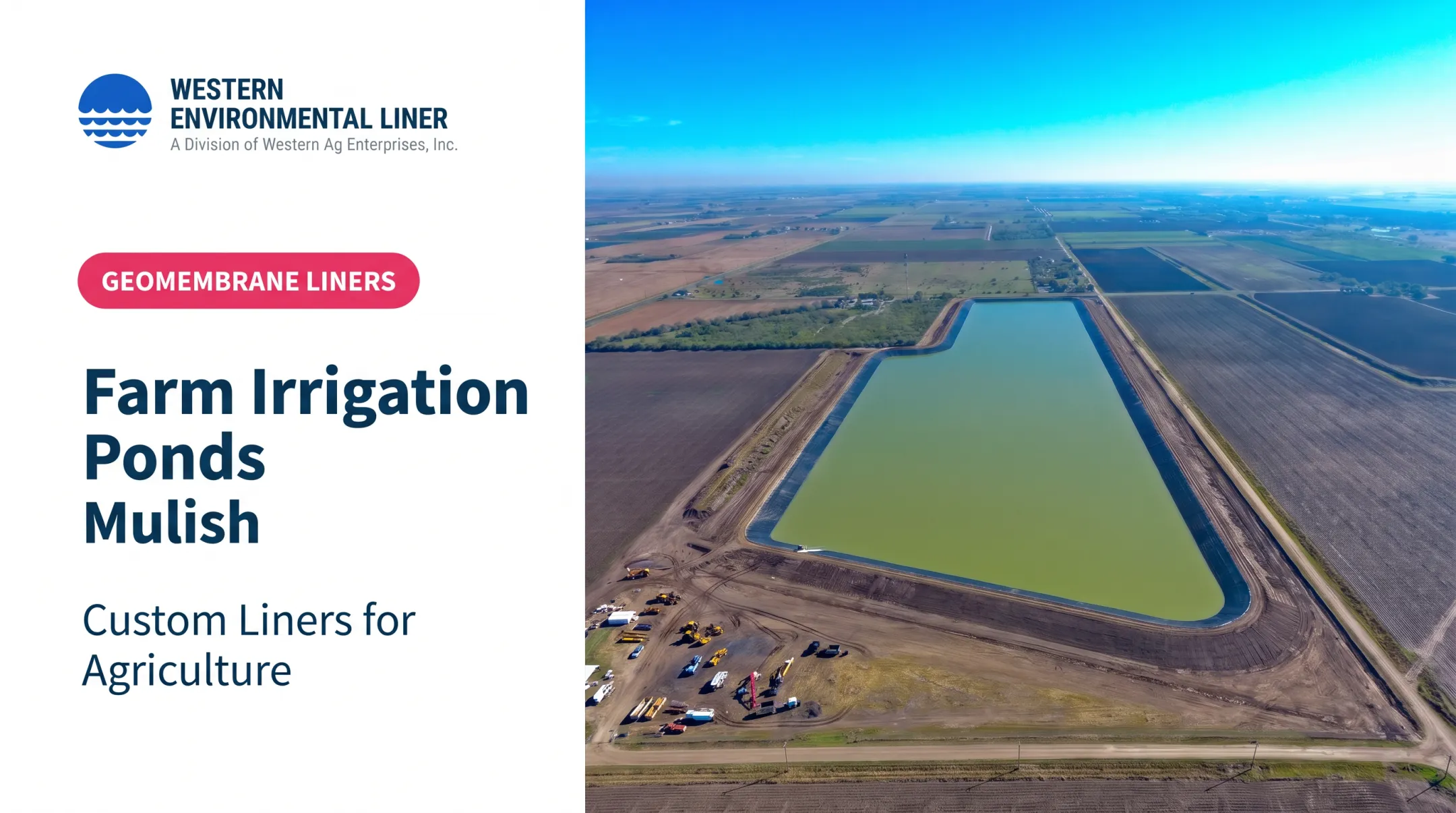
A farm pond is more than a hole filled with water. It can store irrigation supply, water livestock, hold fish, slow runoff, shelter wildlife, and give a family somewhere to fish on a Sunday. Sometimes it does several of those jobs at once.
Many operations struggle with seepage, unreliable storage, or runoff that leaves the property instead of staying put. A farm pond is a constructed or managed water body on agricultural land.
Getting one right means deciding on purpose, site, water source, construction, lining, maintenance, safety, and regulations, in roughly that order.
The right design depends on what the pond is for, your soil and watershed, who lives downstream, and the rules where you farm. This overview walks through each decision.
Key Takeaways
- Farm ponds serve irrigation, livestock, fish, fire protection, runoff control, wildlife, or recreation.
- Start with a defined purpose, a suitable site, a water budget, and professional review of dams and spillways.
- Liners control seepage in poor soils, but the material must match water, soil, slope, and use.
- Inspection, water-quality checks, and safety planning continue long after construction.
Farm Pond Types: Classifying Ponds by Purpose
What Makes a Pond a Farm Pond?
NRCS Practice Standard 378 describes a pond as a water impoundment built by embankment, excavated dugout, or both. Terminology shifts by region. Texas A&M AgriLife calls ranch ponds "tanks," while elsewhere a "stock tank" is a watering trough.
Farm ponds differ from neighboring structures:
- Natural ponds form without construction.
- Retention basins hold water permanently.
- Detention basins hold stormwater temporarily and release it slowly, per K-State guidance.
- Waste storage ponds and treatment lagoons have their own NRCS standards (313 and 359).
One pond can serve a primary purpose plus secondary uses, but those uses often conflict. Livestock access, fish habitat, irrigation withdrawal, and swimming each demand different management.
Common Types of Farm Ponds
Irrigation and storage ponds capture runoff or hold pumped water for crops. Withdrawals, inflows, and seasonal levels drive the plan.
Livestock, fishing, and wildlife ponds have different priorities:
- Livestock ponds need controlled access and stable banks.
- Fish ponds need adequate depth, oxygen, and a stocking plan.
- Wildlife ponds favor gradual shorelines and native vegetation.
Fire, stormwater, erosion-control, and waste ponds differ from clean-water ponds. Waste lagoons and regulated containment facilities require specialized engineering and compliance review. Do not treat those facilities as ordinary farm ponds.
Why Farms Build Ponds
Water Storage and Irrigation
A pond stores runoff or other approved water so a farm can bridge gaps between rains. UF/IFAS sizing guidance weighs:
- Growing season and effective rainfall
- Crop demand and irrigation efficiency
- Acreage and inflow
An undersized watershed may never fill the pond. Evaporation cuts into that supply further. Oklahoma State estimates May-October shallow-water evaporation averages 28.1 to 44.4 inches depending on region, and it rises in drought. That's why no universal acreage-to-irrigation rule exists. Verify water rights, withdrawal limits, and local restrictions before you count on a source.
Livestock, Aquaculture, and Farm Production
NRCS pond guidance links unrestricted livestock access to bank erosion, sediment, and nutrient enrichment. Alternative watering systems and fencing reduce those impacts.
Aquaculture needs its own design choices. NC State suggests ponds of at least 1 acre with an average depth of 6-8 feet. Missouri Extension recommends nighttime dissolved oxygen of at least 5 ppm. Talk to a fisheries or agricultural specialist before stocking.

Fire Protection and Water-Management Benefits
A well-placed pond can supply a dry hydrant, a permanent nonpressurized suction-pipe assembly under NRCS Standard 432. The standard calls for a water-balance evaluation and coordination with local fire officials on location and access.
Ponds can also detain flow and reduce erosion. Benefits vary by region, and not every pond improves drought resilience or flood control. Check local data before counting on either.
Recreation and Wildlife
Fishing, boating, swimming, hunting, and scenery are common secondary uses. Each adds requirements:
- Water quality and gentle slopes
- Signage and rescue equipment
- Liability planning
For wildlife, NRCS recommends shoreline buffers of trees, shrubs, grasses, and forbs, with at least 50 feet suggested as wildlife guidance (not a legal setback). Bare, simplified shorelines, heavy chemical use, and poorly chosen fish all erode ecological value.
Costs, Tradeoffs, and Limitations
Oklahoma State identifies earthmoving as the largest construction cost, followed by clearing, pipe, seeding, and mulching. Ongoing burdens and risks include:
- Evaporation and seepage
- Sediment buildup
- Algae and invasive plants
- Maintenance and permitting
- Dam or spillway failure
A pond is likely worth it when you can answer yes to most of these:
- Do you have a written use and a measurable water need?
- Does the watershed reliably supply the volume, after evaporation and seepage?
- Do soils hold water, or is lining within budget?
- Is the downstream area safe if the dam fails?
- Are permits and water rights confirmed?
- Can you commit to inspection and upkeep for decades?
Planning and Building a Farm Pond
Define the Pond's Purpose and Water Requirements
Begin with a written use plan: irrigation demand, livestock or fish needs, emergency storage, recreation, habitat, expected withdrawals, and acceptable seasonal level swings.
Intended use then drives size, depth, intake and outlet design, water-quality needs, access limits, fish habitat, and whether a liner or cover makes sense.
Evaluate the Site, Soil, Watershed, and Downstream Area
Look at:
- Topography, drainage patterns, and watershed size
- Rainfall and groundwater
- Soil permeability, clay content, and bedrock
- Existing wetlands and flood-prone areas
- Nearby contamination or nutrient sources
NRCS calls for investigating foundation, embankment, spillway, and borrow materials through pits, trenches, or borings. Also study the area downstream.
FEMA's hazard classes (low, significant, high) describe the consequences of failure, not structural condition. A dam above a road, home, or livestock facility deserves far more scrutiny.
Involve qualified help early: NRCS field offices, state conservation authorities, engineers, and fish and wildlife agencies.
Check Permits and Regulatory Requirements
Identify federal, state, county, and local requirements before you move soil, alter drainage, build a dam, divert water, modify a wetland, install a dry hydrant, or create a waste-storage facility.
Federal rules are conditional. EPA's Section 404 guidance lists farm and stock pond construction among exemptions, but recapture applies when both a new use and reduced reach or flow occur.
State rules differ: Kansas, for instance, sets dam-permit thresholds by height and storage. Contacting one agency doesn't guarantee approval or cover every obligation.
Design the Basin, Dam, Spillway, and Water-Control Structures
Key elements include:
- Basin grading and compacted embankment in lifts, with a core trench tied into impervious material
- Principal and emergency spillways that pass the design storm safely
- Freeboard, which NRCS measures as at least 1 foot between the design high-water elevation in the auxiliary spillway and the settled embankment top
- Drains, intakes, overflow routes, and level controls
- Erosion-resistant slopes and safe maintenance access
Fill quality and water management matter as much as the structures themselves. Keep clean water separate from manure, fertilizer, and pesticides. Rock, branches, and organic material make poor dam fill.
Have an engineer review any dam or structure whose failure could affect people, property, roads, utilities, or waterways. NRCS notes its national standards aren't site installation plans, so local guidance governs.
Plan Construction and Quality Control
The general sequence runs:
- Site preparation
- Excavation and grading
- Subgrade preparation
- Dam and spillway construction
- Liner or soil sealing, if needed
- Inlet and outlet installation
- Filling, stabilization, and inspection

Shortcuts cost money. Rushed filling, poor compaction, sharp rocks, weak drainage, and unprotected penetrations lead to leaks, erosion, and settlement.
Do Farm Ponds Need a Liner?
When a Liner May Be Appropriate
Not every farm pond needs one. Native clay soils may hold water well. Sandy, fractured, rocky, or inconsistent soils may leak unacceptably. Even clay can be permeable unless it is perfectly compacted.
A geomembrane is worth evaluating when:
- Water conservation is a priority
- Native soils are unreliable
- Basin geometry is steep or difficult
- Downstream areas are sensitive
- Clean-water storage or predictable containment is required
Separate normal evaporation from leakage. A pond dropping steadily in cool, calm weather suggests a seepage problem, not just evaporation.
NRCS draws a line between options: Standard 521 covers geomembranes and geosynthetic clay liners, while 520 covers compacted soil, including bentonite treatment. Neither sets a universal seepage threshold; soil suitability requires site investigation.
Select Materials for the Intended Use
Common options include reinforced polyethylene (RPE), reinforced polypropylene (RPP), PVC, EPDM, and HDPE, often with a geotextile cushion. Compare:
- UV exposure and flexibility
- Puncture resistance and temperature range
- Chemical compatibility
- Expected service conditions
Western Environmental Liner describes RPE as the best-value choice for most applications, in thicknesses from 12 to 60 mil, and RPP as typically the pick for exposed installations. It also notes exposed PVC can last a fraction as long as buried PVC. Manufacturer test data shouldn't be read as a universal ranking or lifespan promise.

Use matters. Irrigation, livestock, fish, recreation, and fire-suppression water each have different requirements. Manufacturers report NSF/ANSI 61 potable certification and fish-safe claims for some products. Livestock suitability is product-specific, so confirm the exact material with the manufacturer.
Prepare the Basin and Install the Liner Correctly
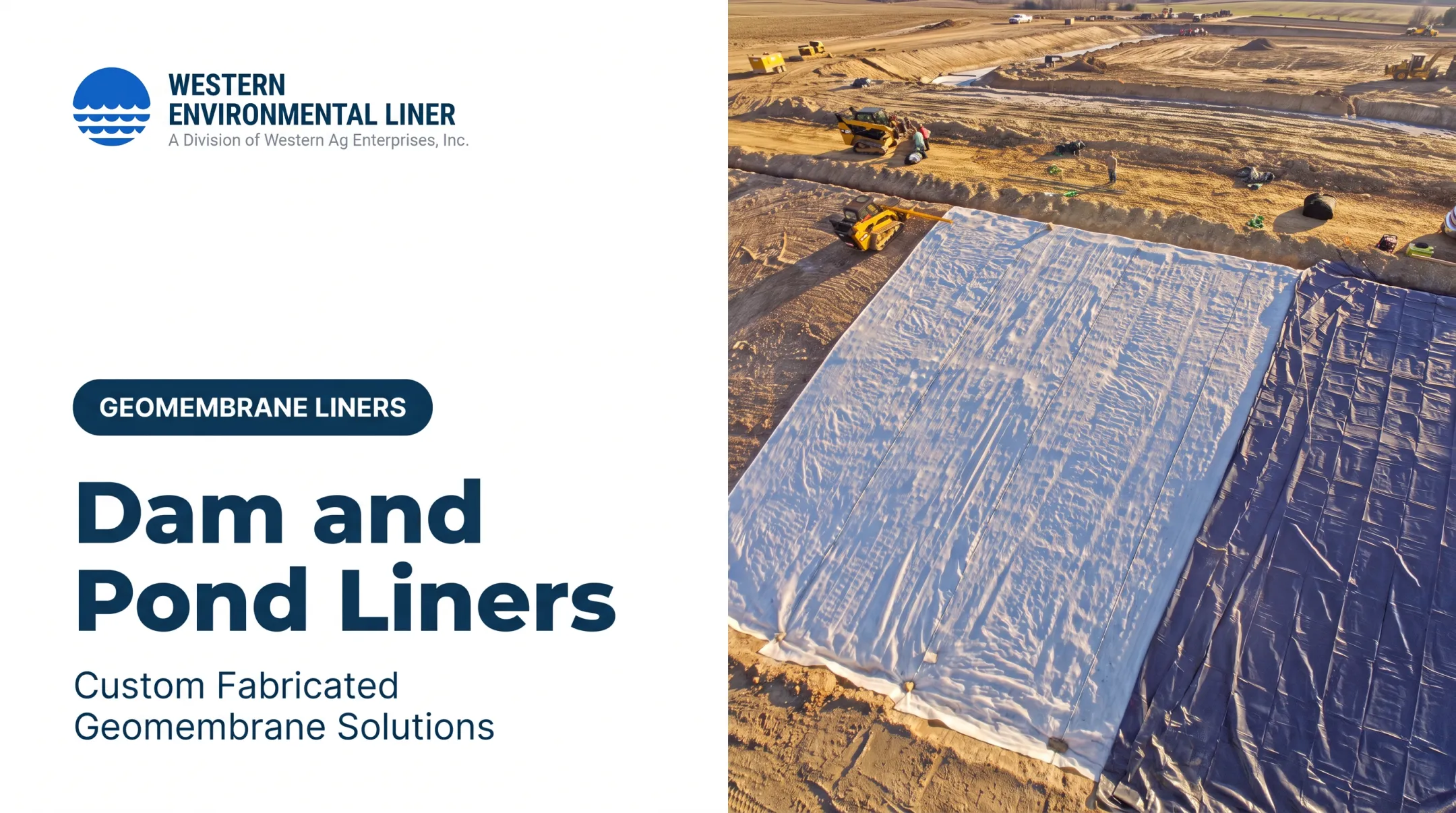
Subgrade quality decides how a liner performs. Western Environmental Liner recommends a subgrade that is flat, smooth, dry, and free of rocks, roots, vegetation, debris, voids, and protrusions. Where obstructions remain, add at least 6 inches of compacted bedding above the highest one.
Other installation points:
- Compacted backfill of 4 inches minimum where animal traffic isn't a puncture concern, 12 inches where wildlife traffic is
- Geotextile (8-ounce is most common) for added protection
- Anchor trenches, which can run 6 to 30 inches wide and 4 to 24 inches deep depending on pond size and slope
- Careful pipe penetrations, corners, and transitions
- Groundwater control beneath the liner
Panel fabrication matters as well. Factory-welded panels cut field seams, and Western Environmental Liner says preformed liners can reduce field welds by as much as 90%.
Western Environmental Liner as a Custom Pond-Liner Option
Western Environmental Liner is an Arizona-based manufacturer and installer serving all 50 states, with factories in Tolleson, Arizona; Romulus, New York; and Great Bend, Kansas. It fabricates custom panels up to 300' x 300' and one-piece liners up to 150,000 square feet. It offers turnkey installation and is an IAGI-certified installer.
Its team provides technical support on slope ratios, anchoring, and subgrade preparation. It does not handle excavation, earthwork, or engineering design of the subgrade.
Larger or technically complex ponds can't be matched to a liner by dimensions alone. The company offers a free consultation and quote, so request a project-specific evaluation before specifications are written.
Verify Installation and Plan for the Liner's Service Life
Quality assurance comes down to testing and records:
- Seam testing: air-channel testing (ASTM D5820) for dual-track seams, vacuum-chamber testing (ASTM D5641) for patches and defects
- Visual inspection and documentation
- Protective layers and controlled filling
- Re-inspection after installation and after major weather events
NRCS 521 expects installer or manufacturer certification against specifications and periodic checks for tears, punctures, and interfaces. Warranties vary: Western Environmental Liner cites 10- to 20-year weathering and UV warranties on custom liners, depending on product. A warranty term isn't a promise of lifespan, so read the exclusions and repair requirements.
Farm Pond Maintenance, Safety, and Environmental Stewardship
Inspect the Pond and Water-Control Structures
Walk the pond regularly and check:
- Water level changes and seepage
- New wet spots (a possible sign of serious dam trouble, according to Oklahoma State University Extension)
- Animal burrows, cracking, slumping, and settlement
- Crown ruts and erosion
- Spillway blockage or erosion
- Pipes, trash racks, and drains
- Exposed liner, fencing, and vegetation
Don't let woody growth take over the dam. Deal with sediment, shoreline erosion, invasive plants, algae, and small defects early, before they become structural or water-quality problems. Never clear an operating intake by swimming or boating out to it.
Manage Water Quality, Fish, Livestock, and Wildlife
Watch turbidity, nutrients, oxygen, algae, odors, and fish stress. Missouri Extension explains that manure and fertilizer nutrients feed blooms, and decay then consumes oxygen. Aeration gives fish a refuge but doesn't fix the cause.

Get qualified advice before applying treatments, fertilizers, or herbicides, and before introducing fish. Vegetated buffers, controlled livestock access, safe withdrawal points, and responsible stocking protect the pond's long-term productivity.
Build a Pond-Safety Plan
Penn State's farm pond safety guidance includes supervising children, fencing or locking access, posting rules, and never swimming alone. For swimming ponds, keep rescue gear ready: a secured post, rope, buoy, and reaching pole.
Plan for:
- Drowning hazards and stable banks
- Thin ice (no ice is completely safe)
- Submerged structures and electrical equipment
- Routes for equipment and emergency responders
- Liability and site-specific requirements (consult local authorities or safety professionals)
Regularly review who has access, including family members and the public.
Frequently Asked Questions
What are the main types of farm ponds?
Irrigation, livestock, fishing, fire-protection, stormwater or erosion-control, wildlife, recreation, and waste-storage ponds. Design requirements differ by purpose, and waste facilities need specialized engineering.
How many fish can you have in a 1,000-gallon farm pond?
No safe universal number exists based on volume alone. Species, fish size, oxygen, temperature, depth, water quality, aeration, and feeding all matter. NC State's rates are per surface acre, so get professional stocking advice.
What is the purpose of a farm pond?
Water storage, irrigation, livestock watering, aquaculture, fire protection, runoff management, wildlife habitat, and recreation. The intended purpose determines the design.
Do farm ponds need a liner?
Some soils hold water naturally. Porous or unreliable soils may justify a geomembrane. Evaluate soil, seepage risk, intended use, and installation requirements first.
What should you consider before building a farm pond?
Purpose, water source, watershed, soil, topography, dam and spillway safety, downstream risk, permits, budget, and maintenance. Have professionals review the dam and spillway design.
How do you maintain a farm pond?
Inspect embankments, spillways, and water levels regularly. Manage sediment, vegetation, algae, and water quality, control livestock access, balance fish populations, and keep safety equipment ready.