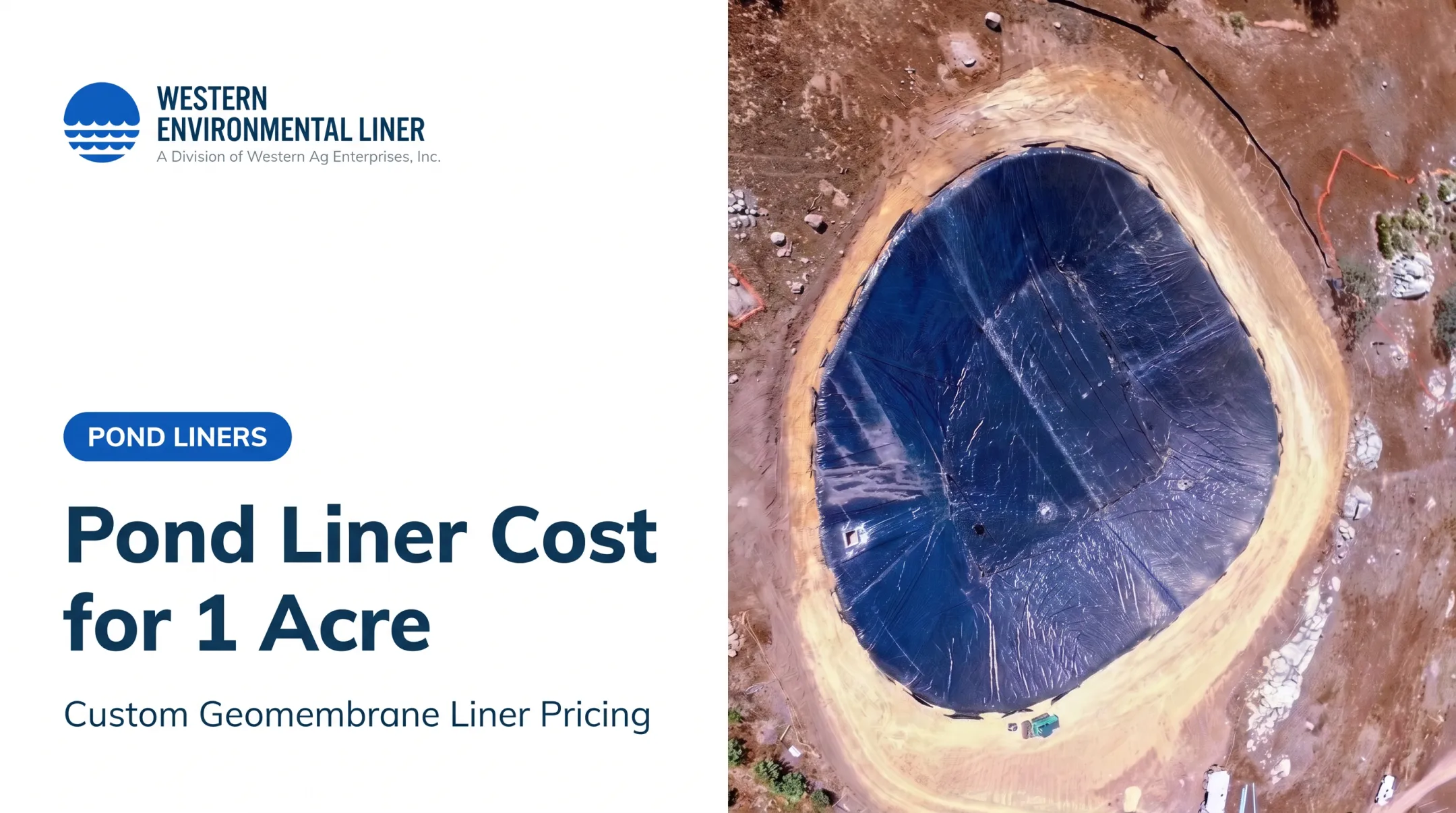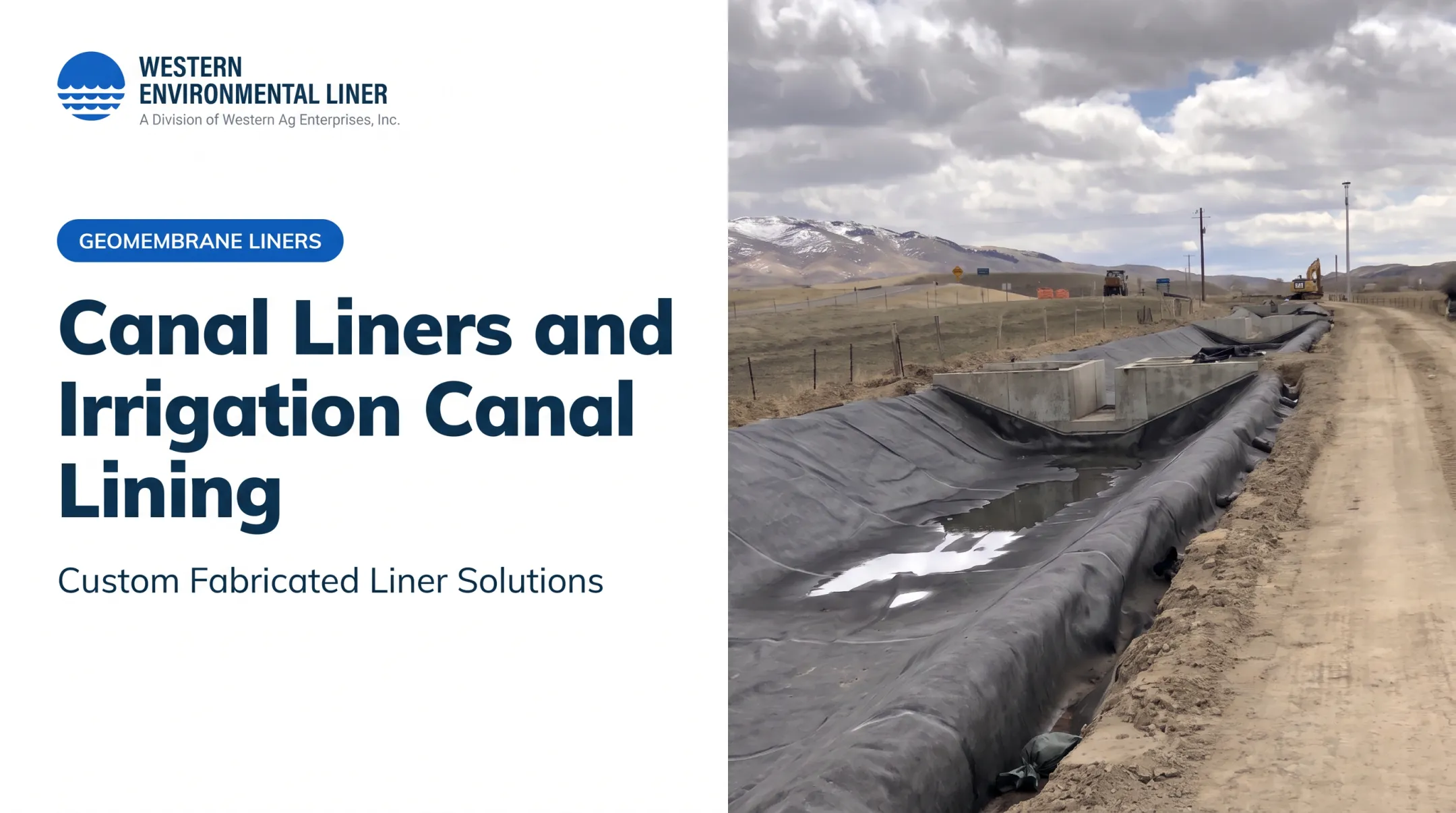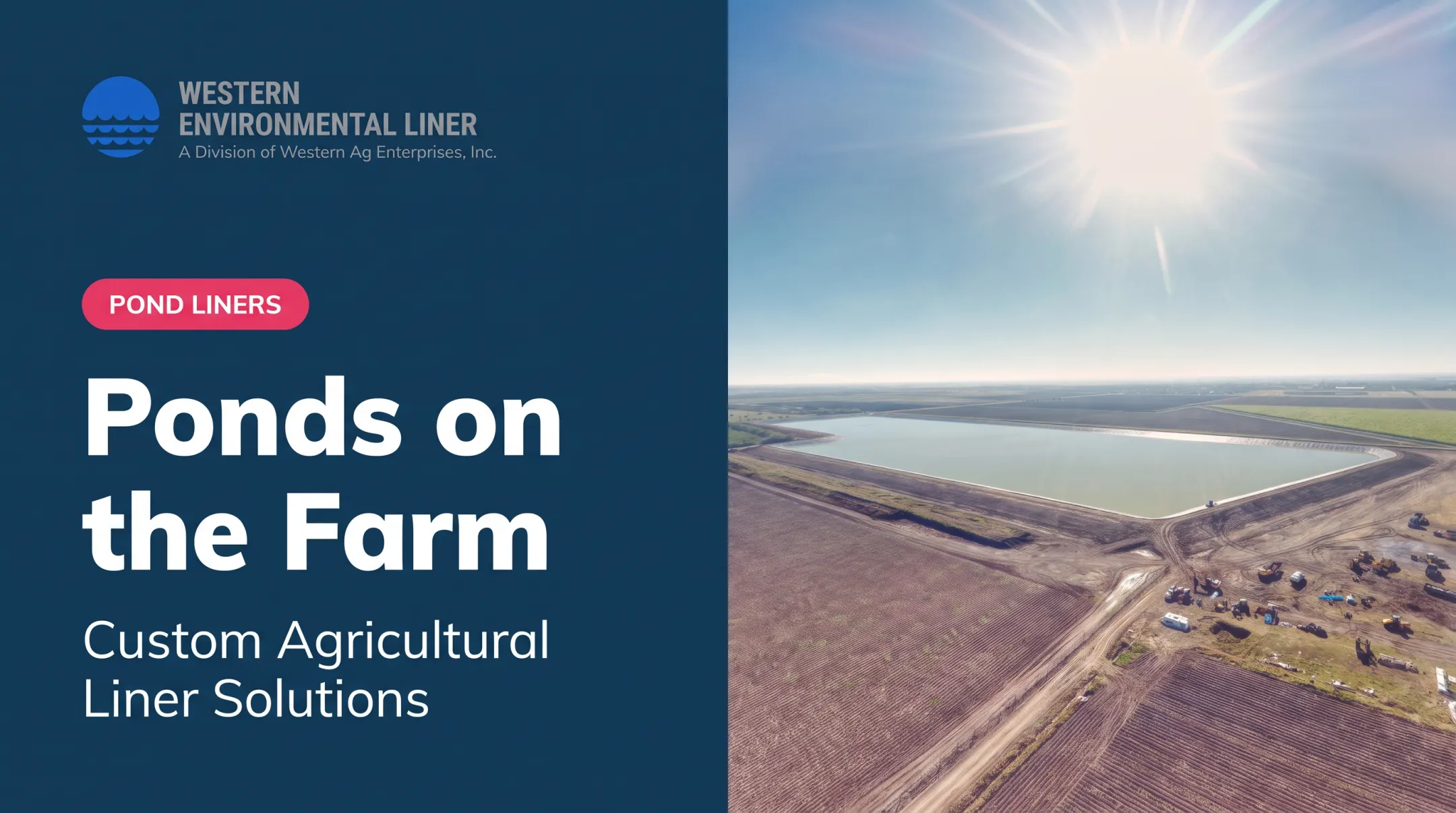

USDA reports 212,714 farms irrigated 53.1 million acres in 2023, applying 81.0 million acre-feet. An irrigation reservoir is a purpose-built basin that stores, regulates, or recovers water for that work, including captured rainfall, surface water, and properly managed irrigation return flows.
This guide covers reservoir types, benefits, sizing, site selection, structural components, geomembrane liners, monitoring, maintenance, and project planning.
Key Takeaways
- A reservoir can serve as primary, supplemental, emergency, or re-regulated supply.
- Size it from crop demand, refill sources, losses, land, and your drought-resilience target.
- Inlets, spillways, slopes, subgrade, and liners all drive long-term performance.
- Check permits, water quality, safety, and lifecycle cost before construction.
What Is an Irrigation Reservoir?
NRCS Code 436 defines it as "a constructed dam, pit, or tank used to store water for irrigation." It differs from a natural lake, a stormwater detention pond, or a waste lagoon. NRCS treats waste storage (Code 313) as a separate structure, not an irrigation-water reservoir.
Functional Types
- Storage reservoirs hold surface water, groundwater, or rainfall for later irrigation.
- Re-regulation reservoirs hold water inside a distribution system to improve delivery timing and cut unnecessary discharge.
- Tailwater recovery reservoirs capture irrigation runoff for settling, treatment, and reuse.
Physical form is independent of function. A basin can be excavated, embankment-built, or a combination, and any of the three functions can use any form.
Names You'll Encounter
Farm reservoir, irrigation pond, containment pond, tailwater recovery pond, and water storage basin all appear in practice. Federal sources use function-specific terms rather than one standard name, and legal definitions vary by state. Use "tailwater recovery pond" only when the basin actually collects runoff for reuse.
Why Irrigation Reservoirs Matter
NRCS applies Code 436 where supply is insufficient during all or part of the irrigation season and water can be stored for later use. That covers short shortages, delayed deliveries, and dry spells. Drought.gov reported 43.4% of the lower 48 in drought on November 3, 2026. That is a land-area figure, not a measure of cropland exposure.
What Stored Water Can Do
- Buffer timing. Storage smooths the gap between when water is available and when crops need it.
- Cut waste. Reclamation's 8,000-acre-foot Brock Reservoir in California's Imperial Valley captures flows that otherwise couldn't be stored. Modeling estimates average conservation of 55,620 acre-feet per year from 2013 to 2019. That is modeled, not metered.
- Reduce runoff leaving the property. Capturing rainfall and return flows keeps usable water on site.
Water Quality: Benefits and Limits
Settling time can remove sediment. A USDA-ARS study of six Mississippi Delta tailwater recovery systems found exported solids, phosphorus, and nitrogen loads fell 43%, 32%, and 44%. Concentrations did not drop, though. Results varied with overflow volume and how full the system was.

Operational water can also carry fertilizers, pesticides, pathogens, and salts. Plan for treatment before reuse. Don't assume a reservoir cleans water or raises yields without evidence.
Planning and Sizing an Irrigation Reservoir
Start With the Job
Decide whether the basin is for primary irrigation, supplemental supply, emergency backup, tailwater recovery, re-regulation, stormwater capture, or a mix. The answer drives everything else.
Build the Water Budget
NRCS's National Engineering Handbook (Part 650, Chapter 11) bases storage planning on these inputs:
- Irrigated acreage and crop water requirements (ETc = ETr x Kc, per Nebraska Extension)
- Effective rainfall and application efficiency
- Peak-day demand, plus downtime
- Expected inflow and refill rate
- Evaporation, which the handbook puts anywhere from 3 feet or less to 6 feet or more per year depending on region
- Seepage, which should ordinarily stay under 2 to 3 inches per month
- Sediment storage over the design life
Use pump meters, flow records, and agronomic data instead of guesses. Leave room for future acreage changes. Be careful with online calculators: NC State's water-needs tool excludes evaporation and seepage, so its output isn't a full budget.
Evaluate the Site
- Topography and soils, backed by geotechnical investigation
- Water-table depth (Clemson suggests the bottom sit at least 1 meter, or about 3 feet, above groundwater)
- Distance to fields and sources, pump elevation, and power
- Equipment access, wildlife concerns, and space for a forebay or connected basins
Engineering Comes Last, and It's Required
NRCS Code 378 calls for at least 1 foot of freeboard where it applies, plus auxiliary spillway provisions.
Final capacity, embankment geometry, spillways, and hazard classification need project-specific engineering under federal, state, and local rules. NRCS also says national standards alone shouldn't be used to design a practice; check your local Field Office Technical Guide.
Designing, Lining, and Managing the Reservoir
Structural Components
- Inlets, conveyance channels, outlets, and pump intakes
- Emergency spillway and freeboard
- Embankments with erosion protection
- Access routes, fencing, and safety signage
Placement matters. Separating the inlet from the outlet lengthens hydraulic residence time, and a properly set pump intake keeps you from drawing sediment straight into the system.
Sediment and Erosion Control
Stabilize inflow paths with vegetated or lined channels. Add a sediment forebay ahead of the main basin and leave an accessible cleanout area. Clemson discusses 3:1 or 4:1 side slopes depending on soil, which is a starting point rather than a universal answer. Check sediment depth at least annually.
When to Line
A geomembrane makes sense when seepage, water conservation, permeable soils, groundwater interaction, or regulatory containment is a concern. Select material on chemical compatibility, UV exposure, puncture and tear resistance, flexibility, temperature, subgrade, and project life.

NRCS Code 521 (August 2023R) is the current federal reference for geomembrane pond lining. It points to Material Specification 594, which references standards by material:
- GRI GM13 for HDPE
- GM17 for LLDPE
- ASTM D7613 for reinforced flexible polypropylene
- GM21 for EPDM
- ASTM D7176 for PVC
Where the invert sits within 2 feet of seasonal high groundwater, Code 521 addresses drainage and uplift.
Where Western Environmental Liner Fits
Western Environmental Liner manufactures and installs custom geomembrane liners for agricultural containment. Options include reinforced polyethylene (RPE) and reinforced polypropylene (RPP), fabricated in factory panels up to 300' x 300', with one-piece liners up to 150,000 square feet.
RPE pairs an LLDPE coating for UV resistance with an HDPE scrim for puncture and tear strength. The company is an IAGI-certified installer and offers technical support on anchoring, slope ratios, and subgrade preparation. Confirm any material choice with the manufacturer and your engineer.
The company doesn't do excavation or engineering design, so plan for those separately.
Installation Quality and Upkeep
Subgrade is where liners succeed or fail. Western Environmental Liner's guidance calls for a flat, smooth, dry surface free of rocks, roots, and debris. If that isn't achievable, use at least 6 inches of compacted bedding over the highest obstruction.
Cover with 4 inches of compacted backfill, or at least 12 inches where wildlife traffic is a concern. Geotextile in 8 oz (the most common) up to 16 oz can protect the liner.
Then manage it over time:
- Inspect seams, penetrations, and anchors, and test per Code 521
- Monitor water level and watch for liner ballooning
- Inspect after storms
- Sample water near the intake, at intake depth
- Control algae, which can clog irrigation equipment, per Purdue Extension
- Remove sediment as it accumulates
Project Costs, Permits, and Implementation
What Drives Cost
Several line items drive the total:
- Earthwork and embankments
- Liner, geotextile, fabrication, and welding
- Pumps, piping, and power
- Spillway, access, fencing, and monitoring
- Permitting and long-term maintenance
Scope changes raise costs quickly. Costs vary widely by site, so get local quotes rather than relying on a national average.
For reference, Kansas's FY2026 EQIP schedule lists Code 521 flexible membrane at $18.97 per square yard without drainage or venting and $27.12 with it. Those are program payment figures, not contractor quotes. EQIP applications are accepted year-round, but funding is competitive.

Permits Vary by State
Treat these as separate questions, because one approval doesn't cover the others:
- Water rights: Texas generally requires authorization to use state surface water.
- Dam safety: California's jurisdiction starts at dams over 6 feet high holding 50 acre-feet or more, or 25 feet high and over 15 acre-feet, with some exemptions.
- Reservoir review: Oregon offers an alternate route for storage under 9.2 acre-feet or dams under 10 feet.
- Withdrawal reporting: Arkansas requires annual reports for surface withdrawals of 1 acre-foot per year or more.
- Clean Water Act Section 404: Fill in jurisdictional waters generally needs a permit, with limited farm-pond exemptions decided site by site.
- Construction stormwater: NPDES coverage generally applies at 1 acre or more of disturbance.
Preconstruction Checklist
- Document your water source and demand.
- Survey the site.
- Get engineering and geotechnical input.
- Confirm capacity and hydraulic routing.
- Select liner materials.
- Plan construction access.
- Set an inspection schedule.
- Define how you'll measure performance after filling.
Frequently Asked Questions
What is the main purpose of a reservoir?
A reservoir stores and manages water so it's available when demand exceeds immediate supply. Irrigation reservoirs also support re-regulation, runoff recovery, and drought preparedness.
What is the 30/30 rule for irrigation?
UC Agriculture and Natural Resources describes it as a limit for quarter-inch drip tubing: 30 feet per run and 30 gallons per hour. It's about friction loss, not reservoir sizing or watering duration.
What are the three types of reservoirs?
In agriculture, the common functional types are storage, re-regulation, and tailwater recovery. Classifications vary by source and jurisdiction.
What is a water reservoir called?
Common terms include irrigation reservoir, farm reservoir, irrigation pond, and containment pond. Reserve "tailwater recovery pond" for basins that actually collect runoff for reuse.
How do you size an irrigation reservoir?
Base capacity on crop demand, irrigated area, storage duration, refill sources, rainfall, evaporation, seepage, sediment, and site limits. Final numbers need engineering review.
Does an irrigation reservoir need a liner?
It depends on soil permeability, seepage risk, groundwater, water quality, regulations, and economics. A qualified engineer or geomembrane specialist should evaluate the site.