
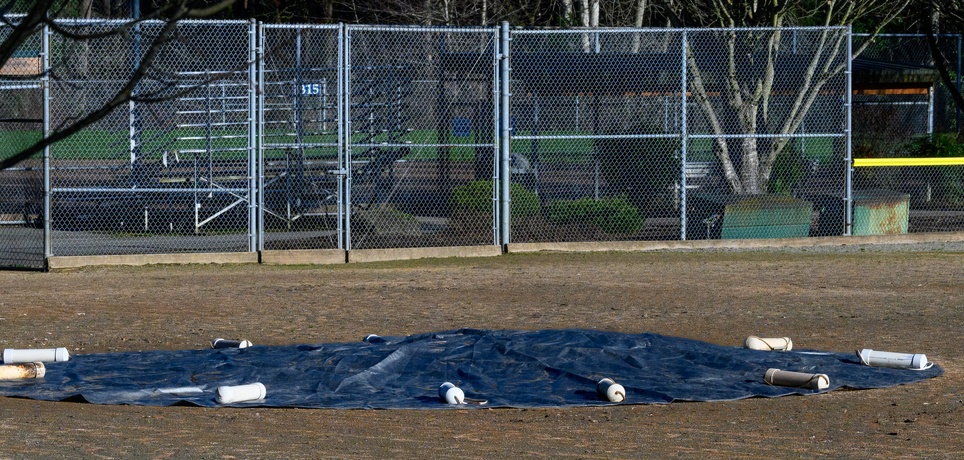
A softball tarp needs to match your field layout and your maintenance routine. Pick a tarp that runs short, and you invite puddles, seepage, and muddy edges. Go oversized without a plan, and crews fight extra weight, extra folds, and tricky anchoring. The right size makes setup faster and helps protect the surface you work hard to maintain. Continue reading to understand what you need to know about softball tarp sizes.
Start With What You Want To Cover
First, decide what you need to protect on game day and on rainy days. Some teams only cover the infield skin, while others cover the infield plus base paths for better continuity. You may also want separate covers for the mound circle, home plate area, or bullpen spaces. Write down the coverage zones before you shop so you do not size your tarp around guesses.
Common Softball Field Measurements
Measure the area you want to cover, then add working room for anchoring and overlap. Take your longest length and width measurements across the zone, not just the baseline distances. Check for lips, warning track transitions, and irrigation heads that change how water moves. When you compare options for tarps for softball fields, match your measurements to the tarp footprint and the anchoring method you plan to use.
Fabric, Weight, and Handling
Size interacts with material thickness and reinforcement. A large tarp in a heavier fabric can feel like a different product than the same size in a lighter fabric. Consider how many people handle it, how you store it, and how often you deploy it during a season. If you want fewer seams and easier placement, ask about custom fabrication that creates larger panels to your layout.
Sizing Mistakes To Avoid
Do not ignore drainage patterns and slope. Water will find the lowest point, and a poorly placed tarp can funnel runoff toward the infield edge. Do not forget perimeter space for stakes, sandbags, or water tubes. Do not size a tarp to the fence line if crews need a clear path for pulls and folds.
Wrap Up
Softball tarp sizing starts with clear coverage goals, accurate measurements, and a plan for anchoring and handling. When you align those elements, you achieve faster setups and fewer post-storm repairs. If you need a custom size or a large one-piece build, Western Environmental Liner can help you think through layout, fabrication, and long-term durability for demanding sites.