
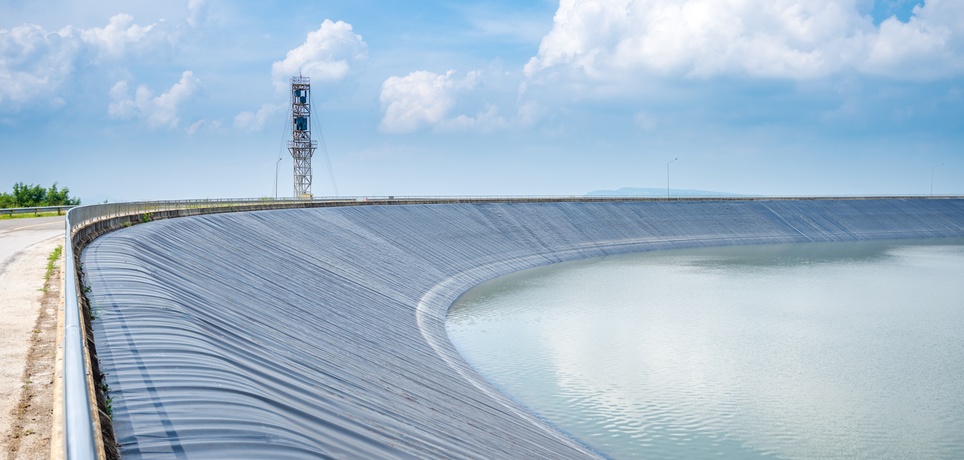
Lakes and waste lagoons are both bodies of standing water, but they differ in purpose, design, and environmental role. Understanding these differences is important, particularly in environmental management, land use planning, and public health.
Lake
A lake is often a naturally occurring body of surface water, typically formed through geological processes such as glaciation, tectonic activity, volcanic action, or river damming by natural means. Increasingly as an area develops, lakes may also be artificial reservoirs created by humans, but they’re still designed to function in ways that resemble natural lakes.
Ecologically, lakes provide habitat for fish, birds, aquatic plants, and microorganisms, forming complex and often delicate ecosystems. Hydrologically, lakes store freshwater, regulate local climates, recharge groundwater, and moderate floods and droughts. For human use, lakes are widely used for drinking-water supply, irrigation, recreation, fishing, transportation, and sometimes hydroelectric power when associated with dams.
Because lakes often connect to surrounding watersheds, they are subject to strict environmental protections. Water quality is expected to support life and, in many cases, human contact. Any contamination of a lake can have downstream consequences for rivers, aquifers, and communities.
Lagoon
Waste lagoons, sometimes called treatment lagoons or holding lagoons, are entirely human-made structures designed specifically to store, treat, or stabilize waste. They are commonly used in municipal wastewater treatment, industrial processes, mining operations, and agricultural settings such as large livestock facilities.
The purpose of a waste lagoon is containment and controlled treatment. Lagoons are engineered to hold wastewater, sludge, manure, or industrial byproducts long enough for physical, chemical, or biological processes to reduce harmful constituents. For example, in wastewater treatment, lagoons may allow solids to settle and bacteria to break down organic material. In agriculture, manure lagoons store animal waste until it can be safely applied to fields as fertilizer.
Unlike lakes, waste lagoons are typically lined with clay, synthetic membranes, or other barriers to prevent leakage into soil and groundwater – and the more toxic the contents, the more important becomes a completely impermeable lagoon liner, even sometimes requiring double layers of a geomembrane. Waste lagoons are intentionally isolated from natural waterways, fenced off, and closely regulated. The water in a waste lagoon is not intended to support wildlife or human contact and may contain pathogens, nutrients, heavy metals, or toxic compounds.
Key Differences
The most important distinction between a lake and a lagoon is the intended purpose. Lakes exist, or are created, to support natural systems and human use of clean water, while waste lagoons exist to manage and mitigate pollution. A lake is part of the living water cycle; a waste lagoon is part of a waste management system.
Lakes are generally open systems, interacting with rainfall, streams, groundwater, and living organisms. Waste lagoons are closed or semi-closed systems, carefully controlled to prevent environmental release except under regulated conditions. Where a lake is valued for its clarity, biodiversity, and recreational potential, a waste lagoon is valued for its ability to safely contain and treat material that would otherwise harm the environment.
Lakes invite human and animal interaction, while waste lagoons must be avoided and managed with caution. Regulations, monitoring requirements, and land-use decisions depend heavily on this distinction.
Stormwater Management
As a sidenote, stormwater management sits somewhere between the natural world of lakes and the engineered world of waste lagoons. Both ponds and lakes can play a role in stormwater management.
In modern stormwater engineering, detention ponds and retention ponds are explicitly designed to manage runoff from roads, parking lots, and developments. Detention ponds temporarily hold stormwater and release it slowly to reduce flooding and erosion downstream, while retention ponds hold a permanent pool of water and also provide some water quality treatment through settling and biological uptake.
In some developments, or regions with abundant natural water bodies, an existing lake may function as a receiving body for stormwater. In such cases, storm drains may discharge into the lake, and the lake will provide storage, sediment settling, and attenuation of peak flows simply by virtue of its size. However, this approach is increasingly regulated or discouraged, because untreated stormwater carries sediment, nutrients, oils, metals, and other pollutants that can degrade lake water quality and cause problems such as algal blooms or oxygen depletion. Stormwater management is primarily a pond-based practice, with lakes occasionally involved to receive water flow, or as oversized, pond-like systems created for both aesthetics and runoff control. But there’s no single definition that distinguishes a lake from a pond. Both, however, can be distinguished from a waste lagoon.